Getting enough prebiotics on a busy weeknight can feel like one more chore. But prebiotics aren't complicated, and you don't need a fancy supplement aisle to get them. The idea is simple: feed the good bacteria already living in your gut. And if you're already cooking vegetarian meals—or want to start—you're in a great position.
Below, three expert-backed ingredient swaps that add prebiotic fiber to any fast vegetarian meal. No obscure powders, no hour-long prep. These are real foods you can buy at a regular grocery store and use tonight.
Swap 1: Replace white rice with cooled, cooked whole grains (like barley or sorghum)
Cooked and then cooled whole grains—think barley, sorghum, or even brown rice—contain a form of starch called resistant starch. When you cook a grain and then let it cool (in the fridge for a few hours or overnight), some of the starch changes structure. Your small intestine can't digest it, so it travels to your colon, where your gut bacteria ferment it. That's prebiotic action.
How to do it fast: Cook a batch of barley or sorghum on Sunday. Spread it on a tray to cool, then refrigerate. During the week, reheat what you need. In a stir-fry, burrito bowl, or even a quick soup, this swap takes zero extra time after the initial cook. If you're in a rush, even 30 minutes of cooling in the fridge before serving creates some resistant starch.
A quick tip: Don't toss the cooking water from grains—use it as a base for soups or to cook lentils. It contains water-soluble prebiotic fibers that leached out during cooking.
Swap 2: Use raw (or barely cooked) chicory root slaw or endive instead of lettuce
Chicory root is one of the richest natural sources of inulin, a well-studied prebiotic fiber. You don't have to eat isolated inulin powder—you can eat the whole plant. Belgian endive, radicchio, and escarole are all forms of chicory. They have a slightly bitter edge, which balances beautifully in salads, tacos, or grain bowls.
How to do it fast: Swap out iceberg or romaine for sliced radicchio or endive in any cold dish. Or make a quick slaw: shred raw chicory (or a mix of radicchio and carrot), toss with a simple lemon-tahini dressing, and let it sit for 5 minutes. That brief rest softens the bitterness. This works as a side, a taco topping, or a bed for roasted vegetables. You can buy pre-shredded coleslaw mix and add a handful of sliced radicchio—no chopping required.
Swap 3: Add a spoonful of cooked, cooled lentils to almost any dish
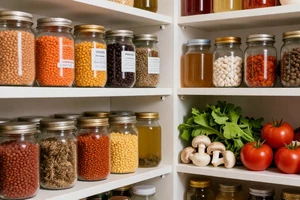
Lentils are already a fiber powerhouse for vegetarians. But here's the prebiotic upgrade: cook them, cool them, and then add them to meals. Like grains, lentils develop resistant starch when cooled. They also provide a slow-release fuel source for gut bacteria, especially the types that produce butyrate, a short-chain fatty acid linked to gut health.
How to do it fast: Keep a container of cooked brown or green lentils in the fridge. Stir a few spoonfuls into marinara sauce, fold them into scrambled eggs or tofu, toss them into a salad, or add them to a quick curry. You don't need to reheat them—cold lentils straight from the fridge work in salads and bowls. If you're making a warm dish, add them at the very end so they don't get overcooked.
Why these swaps work without extra effort
All three swaps rely on the same principle: thermal cycling (cooking then cooling) transforms certain carbohydrates into a form your gut bacteria love. You're not adding a new ingredient; you're changing how you handle an ingredient you might already use. These shifts also increase the total fiber in your meal without changing the flavor profile dramatically. A bowl of barley with roasted vegetables still tastes like a bowl of grains and vegetables. A lentil-enriched soup tastes like a heartier soup.
If you're new to prebiotics, start with one swap per week. Your digestive system may adjust gradually, especially if you're not used to high-fiber foods. Drink plenty of water throughout the day to help fiber do its job comfortably.
The goal isn't perfection. It's making small, repeatable changes that support your gut microbiome every time you eat. These three swaps are designed for speed and real life—no extra grocery trips, no special equipment, just smarter use of what's already in your kitchen.