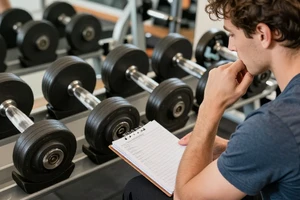

You finished your set, racked the barbell, and now you're thirsty. Reaching for a drink seems straightforward, but for a beginner navigating strength training, the choice you make in those first 30 minutes can either help your muscles rebuild or sabotage the work you just did. Hydration is about more than just wetting your whistle—it's about nutrient timing, electrolyte balance, and giving your body the raw materials it needs to adapt and get stronger.
While water is almost always a solid bet, several popular beverages can interfere with recovery by causing inflammation, dehydration, or a blood sugar crash. Here are three drinks beginners should avoid after a strength session, and what to reach for instead.
Why what you drink matters for muscle recovery
Strength training creates micro-tears in muscle fibers. Your body repairs these tears during rest, making the muscle denser and stronger. This process requires fluid for nutrient transport, protein synthesis, and clearing metabolic waste. A poor drink choice can slow this process or even make you feel worse.
1. Sugary sports drinks and fruit juices
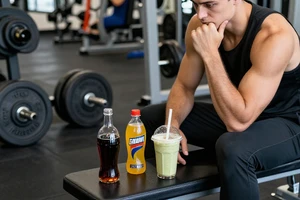
It seems logical—you sweated, so you need electrolytes. However, most commercial sports drinks and many fruit juices are packed with added sugar. For a beginner doing a standard strength workout (roughly 45–60 minutes), you likely haven't depleted your glycogen stores enough to need that rapid sugar influx. Consuming high-sugar drinks immediately post-workout can spike your insulin, leading to an energy crash later. More importantly, liquid sugar can promote inflammation, which works against the anti-inflammatory state you want for muscle repair.
The exception would be if you are doing prolonged, intense endurance work, but for a typical strength session, the sugar does more harm than good.
Skip the neon-colored bottles and the “healthy” juice blends. Your muscles need water and protein, not a sugar rush.
2. Carbonated soft drinks (including diet soda)
Cola, lemon-lime soda, and even sparkling water with artificial sweeteners pose a double problem. First, carbonation itself causes gas and bloating, which is uncomfortable when your core is still active from lifting. Second, the phosphoric acid found in many dark sodas can interfere with calcium absorption. Your muscles rely on calcium for contraction, and recovery requires calcium signaling. Diet sodas, while sugar-free, still contain acids and artificial sweeteners that can disrupt gut health and increase cravings.
From a practical standpoint, fizzy drinks can make you feel full without providing hydration—often leading you to drink less total fluid than you need.
A note on sparkling water
Plain, unsweetened sparkling water is less problematic than soda, but it can still cause bloating for some people. Still water is a safer bet if you are prone to digestive sensitivity after training.
3. Alcohol (any kind, immediately after training)
This is the most impactful drink to avoid. Alcohol is a diuretic, meaning it forces your kidneys to flush out more water than the drink contained. After a workout where you already lost fluid through sweat, alcohol amplifies dehydration. It also directly interferes with muscle protein synthesis—the process that repairs muscle tissue. Studies show that alcohol consumption post-exercise can reduce the body's ability to adapt to training by up to 37 percent, depending on the dose.
Even a single drink within an hour after strength training can blunt testosterone production and raise cortisol levels, shifting your body into a catabolic (muscle-breaking) state. For beginners trying to establish a routine, this can stall progress and increase soreness.
Better post-workout drink choices for beginners
If you leave the gym and want to optimize recovery, stick with these three options:
- Plain water (the gold standard—drink 16–24 ounces for moderate sessions)
- Chocolate milk (a natural ratio of carbs to protein, plus electrolytes like calcium and potassium—research supports this as a recovery drink)
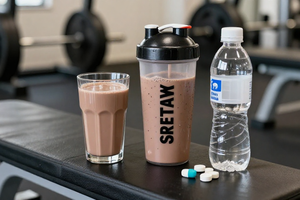
- Whey or plant-based protein shake (if you haven't eaten in 2–3 hours before training, this provides rapid amino acids for repair)
For beginners, simple, whole-food-based hydration wins. You do not need expensive supplements or trendy recovery drinks. Your body mostly needs water, a bit of protein, and time.
When you might need something more
If your strength training lasts longer than 90 minutes, is extremely heavy (like high-rep squat sets), or you're training in a hot environment, an electrolyte drink without added sugar becomes useful. Look for one with around 50–100 mg of sodium and 30–50 mg of potassium per serving, and under 10 grams of sugar. Coconut water is another option, though it's lower in sodium.
Otherwise, trust simple hydration. Your recovery will thank you, and your next workout will feel noticeably better.