
Your lower back doesn't have to be the weak link in your squat. Too often, tight hips or stiff ankles force your spine to do the bending that your joints should be doing — and that's when pain creeps in. Instead of avoiding squats, start with three mobility moves that build a stable foundation.
The goal isn't just to loosen up. It's to give your hips and ankles the range of motion they need so your lower back can stay neutral and braced throughout the movement. Here are the three exercises I'd suggest for any lifter — especially beginners — who wants to squat heavier and ache less.
Why squat mobility matters for your lower back
When your ankles can't flex forward enough, your torso has to tip forward to keep you balanced. That forward lean puts extra shear force on your lumbar spine. Same story with tight hip flexors: they yank your pelvis into an anterior tilt, and your lower back arches to compensate. The result is a squat that looks and feels unstable, and a spine that takes the load it wasn't meant to handle.
Improving mobility at the ankles and hips creates a longer, stronger lever. Your torso stays upright, your core fires correctly, and your lower back stays in a neutral position that can safely transmit force through your legs.
1. Deep squat with heel-elevated hold
This is my go-to reset for anyone who struggles to keep their chest up during a squat. It addresses ankle range of motion and hip opening in one exercise.
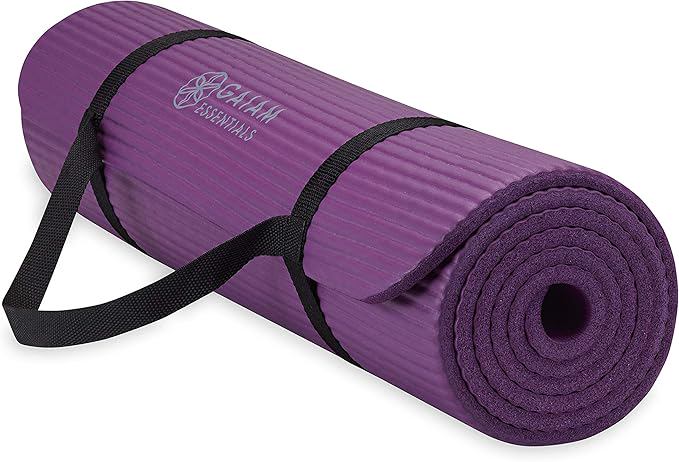
How to do it: Place a small weight plate (or a folded yoga mat) under your heels. Stand with feet shoulder-width apart, toes turned out slightly. Lower into a full squat — aim for thighs parallel or deeper — and hold the bottom position. Keep your chest proud and your elbows pressing gently against your inner knees to encourage external rotation at the hips.
Mobility benefit: The heel lift compensates for insufficient ankle dorsiflexion, allowing you to sit deeper without your torso collapsing forward. Over time, you'll work toward performing this hold without the heel support.
Try this: Hold for 30 seconds, rest 15 seconds, repeat 3 times. Do this before every squat session.
2. Half-kneeling hip flexor stretch
Your hip flexors are a hidden culprit in lower back pain during squats. If they're tight from sitting all day, they pull your pelvis forward every time you descend into a squat. This stretch directly addresses that tension.
How to do it: Kneel on your right knee, left foot flat on the floor in front of you with your left knee bent at 90 degrees. Place both hands on your left thigh. Gently squeeze your right glute and push your hips forward until you feel a stretch in the front of your right hip. Keep your torso upright — don't lean forward.
Mobility benefit: This stretches the rectus femoris and psoas, two muscles that commonly limit hip extension. Better hip extension means less anterior pelvic tilt and a straighter spine when you squat.
Pro tip: Breathe deeply into the stretch. Exhale as you drive your hips forward. Hold for 45 seconds per side, and do 2 sets per leg.
3. Thoracic spine rotation (half-kneeling)
This might surprise you — but a stiff upper back can cause your lower back to overwork during a squat. If you can't rotate or extend through your mid-back, your body will steal that motion from your lumbar spine instead.
How to do it: Start in the same half-kneeling position as the hip flexor stretch (right knee down, left foot forward). Place your left hand behind your head, elbow wide. Keeping your hips square, rotate your torso to the right, lifting your left elbow toward the ceiling. Go as far as you comfortably can without moving your hips. Return to center. That's one rep.
Mobility benefit: Opening up thoracic rotation allows your upper back to remain stable and your lower back to stay neutral when you're loaded in a squat. It also improves your ability to keep the barbell in a balanced position over your mid-foot.
Do this: 8 slow reps per side, 2 sets. Think about rotating from your rib cage, not your lower back.
How to combine these into a warm-up routine
Spend about 8 to 10 minutes on these three exercises before you touch a barbell. The sequence matters: start with the deep squat hold to open up the hips and ankles, then move to the half-kneeling hip flexor stretch, and finish with the thoracic rotations. Your body will feel looser, and your squats will feel noticeably more controlled. Stick with this warm-up for at least three weeks — that's usually how long it takes to see lasting changes in squat depth and lower-back comfort.
Frequently Asked Questions
Can these exercises help if I already have lower back pain?
Yes, but approach them gently. If any movement sharpens your pain, stop and check with a physical therapist or healthcare provider first. These exercises are designed for prevention and maintenance, not as a treatment for acute injury.
How often should I do these mobility exercises?
Daily is fine, but at minimum do them before every squat session. For faster progress, add them to a morning or post-work routine on non-lifting days as well.
Can I skip these if I only squat with light weights?
Mobility matters regardless of load. Poor form with light weight still reinforces faulty movement patterns that can lead to pain over time. These exercises help you build good habits from the start.
What if I can't hold the bottom of the squat position in exercise 1?
Use a taller heel wedge — a thicker plate, a rolled mat, or even a low box under your glutes. The goal is to feel stable and comfortable in the bottom position, not to force a range of motion you don't yet have.