You pushed yourself in a new workout, lifted heavier, or finally tackled that challenging routine. The next day, a familiar ache settles into your muscles. For anyone committed to strength training, this delayed onset muscle soreness (DOMS) is a common, even expected, companion on the fitness journey. It’s a sign of adaptation, of your body rebuilding stronger. But sometimes, that ache whispers a different, more urgent story. The line between productive soreness and a potential injury can feel frustratingly thin, especially when you’re eager to get back to your routine.
Learning to listen to your body’s specific language is one of the most crucial skills in sustainable fitness. It protects your progress and prevents minor issues from becoming major setbacks. While general muscle soreness is diffuse and follows predictable patterns, pain signaling an injury often communicates with sharper, more localized clarity. Let’s explore the two most telling warning signs that what you’re feeling may need more than just rest and recovery.
1. The Pain Is Sharp, Localized, and Persistent
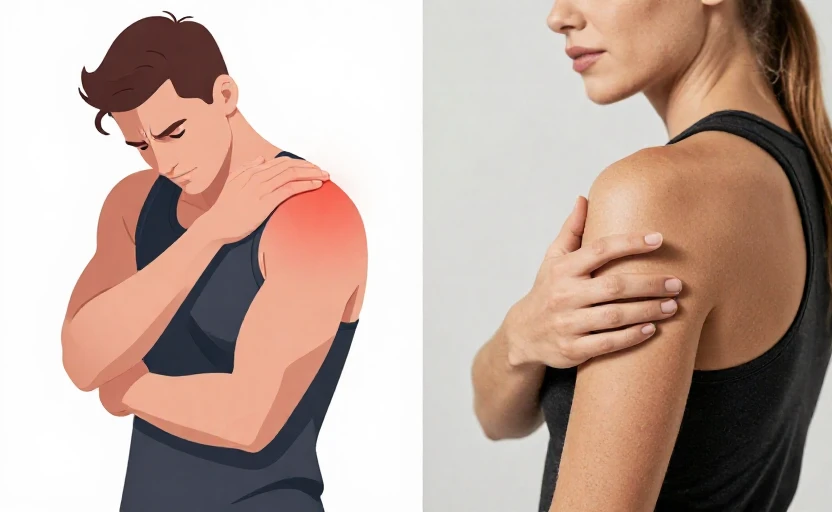
This is the most distinct red flag. Normal muscle soreness from a tough workout is typically a dull, general ache or stiffness. It feels like a full-body fatigue or a specific muscle group that’s tender to the touch and stiff when moving. The sensation is diffuse—you can’t pinpoint it to one exact spot with your finger.
Injury pain, in contrast, often presents as sharp, stabbing, or pinching. It’s highly localized. You can usually press one specific point and say, “The pain is right here.” This type of pain doesn’t just linger in the background; it often protests loudly during specific movements or when you apply pressure.
A key question to ask yourself: Does the pain significantly change or intensify with a particular motion, like raising your arm overhead, rotating your shoulder, or taking a step? If the answer is yes, it’s a strong indicator of something more than general soreness.
Persistent pain is another critical factor. DOMS usually peaks within 24 to 72 hours after exercise and then gradually improves. You feel better each day, especially once you start moving gently. Pain from an injury, however, often plateaus or even worsens over that same 72-hour period. It doesn’t follow the “it hurts but it’s getting better” narrative. If the pain remains sharp and unchanged for several days, or if it intensifies with normal daily activity, it’s time to pay serious attention.
2. You Notice Swelling, Significant Bruising, or Joint Involvement
Your visual inspection matters. General muscle soreness rarely comes with visible signs. You might feel tight and a bit puffy, but you won’t see dramatic swelling or discoloration.
The presence of noticeable swelling around a joint or muscle is a classic sign of inflammation due to tissue damage. This isn’t the subtle “pump” from a workout; it’s a visible puffiness or fullness that may feel warm to the touch. Similarly, bruising (ecchymosis) indicates that blood vessels have been damaged, which is common with strains, sprains, or tears.
Perhaps the most important distinction is joint pain versus muscle pain. DOMS affects the muscle belly—the fleshy part between joints. Pain that seems to originate deep within a joint itself—your knee, shoulder, elbow, or ankle—is a major warning sign. This could point to ligament sprains, tendon issues, or other joint-related injuries that require a different approach than muscle recovery.
- Swelling: Visible puffiness, especially around a joint.
- Bruising: Unexplained discoloration at the site of pain.
- Joint-Specific Pain: Aching, pinching, or instability deep within a joint, not just the muscles surrounding it.
What to Do If You Recognize These Signs
First, don’t panic. Recognizing a potential injury early is a positive step toward proper healing. The immediate protocol is often summarized as P.E.A.C.E. & L.O.V.E., a modern evolution of the old R.I.C.E. method, emphasizing a more holistic approach to soft tissue injury.
Initially, focus on Protection (avoid movements that cause sharp pain), Elevation (if applicable), and avoiding anti-inflammatories in the very first days to not disrupt the natural inflammatory healing process. After the initial acute phase (the first few days), gentle movement and Loading (the L.O.V.E. part) become important for recovery. This means carefully reintroducing pain-free movement to promote blood flow and tissue remodeling.
Your most important action is to consult a healthcare professional. This could be a primary care physician, a sports medicine doctor, or a physical therapist. They can provide a proper diagnosis, which is essential because treating a tendon issue like tendonitis is different from treating a muscle strain. Self-diagnosis and pushing through can lead to chronic problems.
Listening to your body isn’t about being fearful; it’s about being smart. Distinguishing between the productive ache of growth and the warning pain of injury allows you to train smarter, recover effectively, and build a resilient body for the long term. When in doubt, err on the side of caution. Your future self, still happily and healthily training, will thank you for it.