
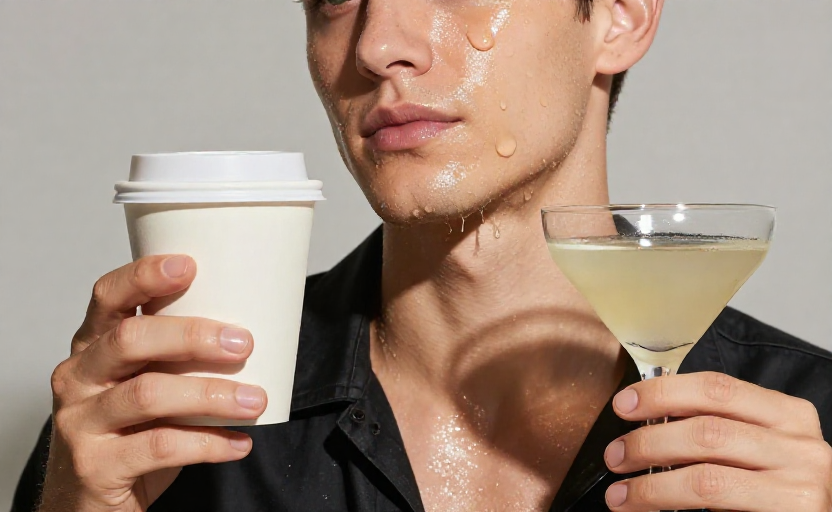
If you’ve got oily skin, you’re probably no stranger to breakouts. You might have already swapped your moisturizer, upgraded your cleanser, and cut back on junk food. But what about what you’re drinking? Two popular beverages—coffee and sugary cocktails—could be quietly making your skin oilier and clogging your pores.
Here’s a closer look at why these drinks can be problematic for oily skin and what you can do about it without giving up your morning ritual entirely.
How coffee can make oily skin oilier
For many of us, coffee is non-negotiable. But if you have oily or acne-prone skin, that morning cup might be working against you. Caffeine, the active stimulant in coffee, can raise cortisol levels in the body. When cortisol spikes, your sebaceous glands get the signal to produce more sebum—the oily substance that can clog pores and fuel acne.
It’s not just the caffeine. Cream, milk, or sugary syrups added to your coffee can also contribute to inflammation and breakouts in some people. Dairy contains hormones and growth factors that may trigger acne in susceptible individuals, while sugar spikes your insulin level, which can set off a chain reaction of oil production and inflammation.
Tip: If you can’t skip the coffee, try drinking it black (or with a splash of oat or almond milk) and avoid loading it with sugar. Also, limit yourself to one cup per day to keep cortisol levels in check.
The surprising effect of sweet cocktails on your skin
That mojito, margarita, or fruity cocktail might taste delicious, but it’s a triple threat for oily skin. Alcohol itself dehydrates the body—including your skin. When your skin gets dehydrated, it often tries to compensate by producing even more oil, which can lead to shine and breakouts.
Then there’s the sugar. Most cocktails are packed with simple sugars from juice, soda, syrups, or liqueurs. High sugar intake can spike blood glucose and insulin, leading to increased sebum production and inflammation—two major contributors to acne. One study even found that frequent consumption of sugary drinks was associated with a higher risk of moderate-to-severe acne in young adults.
Finally, alcohol can weaken your immune system, making it harder for your body to fight off Cutibacterium acnes, the bacteria that colonizes clogged pores and causes inflamed breakouts.
Tip: If you do drink alcohol, opt for drinks with less sugar (like a glass of wine or a spirit with soda water and lime) and always hydrate with a glass of water in between.
What about coffee and cocktails together?
Some nightlife drinks—think espresso martinis or Irish coffee—combine both caffeine and sugar, which can hit your skin with a double whammy. If you have oily skin, you might notice more shine or breakouts after a night when you’ve had both coffee and cocktails. It’s worth experimenting with cutting back on these drinks (or skipping them) for a few weeks to see if your skin calms down.
Other drinks that can affect oily skin
While coffee and cocktails are two of the biggest culprits, some people also react to energy drinks (high in caffeine and sugar), milky lattes, or even certain fruit juices. If you’re struggling with breakouts, try swapping your usual drinks for more skin-friendly options like:
- Water (aim for 6–8 cups a day)
- Herbal teas (ginger, chamomile, and green tea have anti-inflammatory properties)
- Infused water with lemon, cucumber, or mint
- Fresh vegetable juices (low sugar, high antioxidants)
Your skin is often a reflection of what's happening inside your body. While diet is just one piece of the puzzle, paying attention to your drink choices can make a real difference—especially if you have oily skin that’s prone to breakouts.