
When estrogen levels begin to decline during menopause, the skin often pays the price. Collagen production drops, sebum changes, and the skin barrier becomes more vulnerable to dryness, thinning, and sagging. While no food can stop hormonal shifts, research suggests that specific nutrients can support the skin’s structure and comfort from the inside out.
We spoke with registered dietitians who specialize in women’s health to understand which foods offer the most meaningful support for menopausal skin. Their advice focuses on three core areas: supporting collagen, protecting against oxidative stress, and maintaining hydration.
Why does menopause change the skin?
The primary driver is estrogen. This hormone plays a direct role in collagen production, skin thickness, and moisture retention. As estrogen declines, the skin can lose roughly 30 percent of its collagen in the first five years of menopause. The result is often increased wrinkling, dryness, and a loss of firmness. Additionally, changes in sebum composition can make the skin feel less supple and more irritated.
Diet cannot replace estrogen, but it can supply the raw materials the skin needs to function better during this transition.
Prioritize protein and amino acids for collagen
Collagen is a protein, and its synthesis requires an adequate supply of amino acids—particularly glycine, proline, and lysine. Dietitian Lisa Andrews, MEd, RD, LD, suggests focusing on whole food sources of protein that also provide these building blocks. “Bone broth, chicken skin, and fish skin are naturally rich in collagen,” she notes. “But you don’t need to eat only those cuts—adequate total protein from eggs, poultry, fish, and legumes gives your body the substrate it needs to produce its own collagen.”
Vitamin C is another essential cofactor. Without it, collagen cross-linking is impaired. Andrews recommends pairing protein-rich foods with a source of vitamin C—like squeezing lemon over grilled fish or adding bell peppers to an egg scramble.
Top collagen-supportive foods
- Fish and poultry (especially skin-on cuts)
- Eggs (the yolk contains proline and glycine)
- Bone broth or homemade stock
- Citrus fruits, strawberries, kiwi, bell peppers, and broccoli for vitamin C
Tip from dietitians: A single high-dose vitamin C supplement is not better than getting it consistently from food. Spread your intake throughout the day for steady collagen support.
Healthy fats to strengthen the skin barrier
The skin barrier relies on lipids—especially ceramides, essential fatty acids, and cholesterol—to retain moisture and keep irritants out. Menopause can disrupt this lipid balance, leading to transepidermal water loss and increased sensitivity. Dietitian Cheryl Mussatto, MS, RD, LD, points to omega-3 fatty acids as particularly helpful. “Omega-3s, found in fatty fish like salmon, mackerel, and sardines, have anti-inflammatory effects that can calm redness and support the lipid barrier,” she says. “Plant sources like walnuts, flaxseeds, and chia seeds offer a different type of omega-3 that also helps.”
Evening primrose oil, which contains gamma-linolenic acid (GLA), is sometimes recommended by dietitians for skin dryness during menopause, but Mussatto advises caution. “Some people notice improvement, but it can interact with certain medications. It’s best to discuss with your healthcare provider before adding a concentrated oil.”
Monounsaturated fats from olive oil and avocados also provide antioxidant protection and help the body absorb fat-soluble vitamins like A, D, and E—all important for skin repair.
Antioxidant-rich produce for protection
Oxidative stress increases with age and hormonal change. Free radicals can degrade collagen and elastin faster than the body can repair them. A diet rich in colorful fruits and vegetables supplies a broad spectrum of antioxidants that help neutralize this damage.
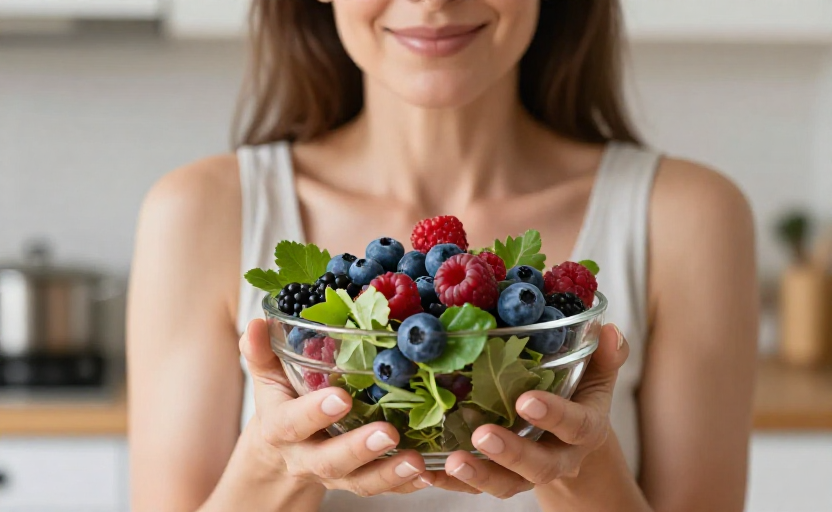
“Dark leafy greens like spinach and kale are excellent because they deliver vitamin C, vitamin E, and beta-carotene in one package,” says dietitian Jennifer Maeng, MS, RD, CDN. “Berries, especially blueberries, blackberries, and raspberries, are high in anthocyanins, which have been shown to protect skin cells from UV-related damage when eaten regularly.”
Maeng also highlights tomatoes, which are rich in lycopene—a carotenoid that may help protect against collagen breakdown. “Cooked tomatoes have more bioavailable lycopene, so tomato sauce or stewed tomatoes are actually better than raw,” she notes.
Hydration from food counts, too
Thirst sensation can diminish with age, and menopausal women often report chronic dehydration that shows up as dull, crepey skin. While drinking water is essential, dietitians remind us that food contributes significantly to total water intake.
“Cucumbers, celery, zucchini, watermelon, and citrus fruits have high water content plus electrolytes and trace minerals,” Andrews explains. “Electrolytes help the water you drink actually move into cells, including skin cells.”
Soups, broths, and herbal teas are another way to support hydration. Mint or chamomile tea can also provide a gentle calming effect for skin that feels reactive or overheated during hot flashes.
What about soy and phytoestrogens?
Phytoestrogens are plant compounds that weakly mimic estrogen in the body. The most studied are isoflavones found in soy. Some research suggests that a diet containing moderate amounts of whole soy foods—like edamame, tofu, and tempeh—may help support skin elasticity in postmenopausal women.
Mussatto recommends a food-first approach. “Rather than relying on isoflavone supplements, which vary widely in potency and quality, include a serving of a traditional soy food a few times per week,” she says. “Fermented soy like miso or tempeh may also support gut health, and the gut-skin axis is an emerging area of interest for menopausal skin.”
Flaxseeds and sesame seeds are other sources of lignans, a different class of phytoestrogens. Grinding flaxseeds helps your body absorb them more effectively.
Easy meal ideas for menopausal skin health
Putting it all together doesn’t require elaborate recipes. Here are a few simple, dietitian-approved combinations:
- Breakfast: Scrambled eggs (with yolk) plus sautéed spinach and a side of mixed berries.
- Lunch: Salmon salad made with canned salmon, olive oil, lemon juice, and chopped celery, served over dark leafy greens.
- Snack: Apple slices with almond butter (almonds provide vitamin E, which supports skin barrier function).
- Dinner: Baked chicken thighs with roasted tomatoes and a side of steamed broccoli.
- Evening drink: A cup of chamomile tea or a small bowl of bone broth.
Reminder: Consistency matters more than perfection. One nutrient-rich meal won’t change skin overnight, but a pattern of balanced eating over weeks and months can make a noticeable difference in texture, hydration, and resilience.
What to limit
Dietitians also point out that certain foods can work against skin health during menopause. High-glycemic carbohydrates—like sugary drinks, white bread, and pastries—can trigger inflammation and accelerate glycation, a process where sugar molecules bind to collagen and make it stiff and brittle. Alcohol is another common culprit; it dehydrates the skin and can dilate blood vessels, worsening redness and flushing. Caffeine in excess may also contribute to dehydration, though moderate consumption (one to two cups of coffee) is usually fine.
The takeaway is not to eliminate these foods entirely but to be mindful of their frequency, especially if you are already dealing with dry, irritated, or sagging skin.
The bottom line from dietitians
“Menopause skin is not a problem to be fixed with one miracle food,” says Maeng. “It’s a sign that your body needs consistent nourishment—adequate protein, healthy fats, diverse antioxidants, and plenty of fluids. A dietary pattern that prioritizes whole, minimally processed foods will always outperform any single ingredient or supplement.”
Before making significant changes to your diet, especially if you are managing other health conditions or taking medications, consult a healthcare provider or a registered dietitian who understands menopause.