If you have been told you have prediabetes, you are not alone—and you are not locked into a future of strict deprivation. The diagnosis is often a wake-up call, but it is also an opportunity to shift how you think about your meals. Dietitians emphasize that the goal is not a bland, restrictive diet. Instead, it is about building a plate that keeps your blood sugar steady while still feeling satisfying and delicious.
The concept is simple: balance your macronutrients, prioritize fiber, and pay attention to portion sizes. Here is how registered dietitians actually guide their clients to structure meals that support healthy blood sugar levels without making eating feel like a chore.
Why the Plate Method Works for Prediabetes
Rather than counting every gram of carbohydrate, many dietitians recommend the plate method because it is visual and easy to stick with. You do not need a scale or a food diary. You just need a standard dinner plate and a mental picture of how to divide it.
Fill half your plate with non-starchy vegetables, a quarter with lean protein, and a quarter with carbohydrates—ideally the high-fiber, complex kind.
This layout automatically limits the portion of carbs that raise blood sugar while ensuring you get enough protein and vegetables to promote fullness and slow down digestion. It turns a vague concept like "eat better" into a concrete action you can take at every meal.
Non-Starchy Vegetables: The Foundation of the Plate
Dietitians point to non-starchy vegetables as the single most impactful addition to a prediabetes-friendly plate. These vegetables are low in calories and carbohydrates but high in fiber, water, and volume. They help fill you up without spiking glucose.
Think leafy greens like spinach and kale, cruciferous vegetables like broccoli and cauliflower, bell peppers, zucchini, asparagus, and tomatoes. Aim for a mix of colors to get a variety of nutrients. If you are used to a plate where meat or starch takes up most of the space, this can feel like a big shift—but it does not have to be boring. Roast them with olive oil and herbs, or sauté them with garlic for flavor that makes them the star of the meal.
Lean Protein for Blood Sugar Stability
Protein plays a key role in managing prediabetes because it slows the absorption of carbohydrates and helps maintain muscle mass, which is important for metabolic health. On a prediabetes-friendly plate, a quarter of the space should go to a lean protein source.
Dietitians suggest options like skinless chicken or turkey breast, fish (especially fatty fish like salmon for omega-3s), eggs, tofu, tempeh, lentils, or beans. Note that beans and lentils do contain some carbohydrates, but they are also rich in fiber and protein, making them an excellent choice for the protein quarter in many cases. The goal is to have a source of protein that keeps you full and prevents blood sugar spikes after the meal.
Complex Carbohydrates: Yes, You Can Still Eat Carbs
A common fear is that prediabetes means cutting out all carbs. That is not what dietitians recommend. The key is swapping refined carbohydrates for complex, high-fiber ones. The remaining quarter of your plate is where these carbs belong.
Good options include whole grains like quinoa, brown rice, farro, or barley; starchy vegetables like sweet potatoes or winter squash; or legumes such as chickpeas and black beans. The fiber in these foods drams up the digestive process, which means glucose enters the bloodstream more gradually, avoiding sharp spikes.
A useful tip from dietitians is to pair your carbohydrates with a source of protein or fat. For example, if you want a small serving of roasted potatoes, add a piece of fish and a generous portion of green beans. The protein and fat help buffer the impact of the carbs.
Healthy Fats: The Small but Mighty Addition
Fats are not the enemy in a prediabetes diet. In fact, they are essential for satiety and nutrient absorption. Dietitians encourage using small amounts of healthy fats, either as a cooking medium or as a finishing touch.
Think olive oil, avocado, nuts, seeds, and nut butters. A drizzle of olive oil over roasted vegetables, a few slices of avocado on a salad, or a handful of almonds as part of a snack can make meals more satisfying and help stabilize blood sugar when combined with other foods.
Putting It All Together: A Sample Meal
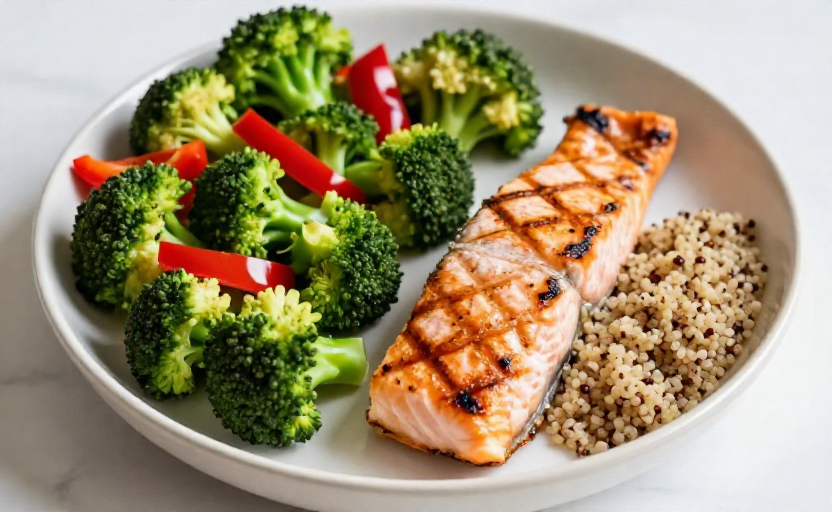
Here is what a dietitian-designed prediabetes-friendly plate might look like at dinner:
- Half the plate: A generous serving of roasted broccoli and bell peppers with garlic and olive oil.
- One quarter: A grilled salmon fillet seasoned with lemon and dill.
- One quarter: A small scoop of quinoa cooked in vegetable broth.
That meal hits all the right notes—fiber, protein, complex carbs, and healthy fats. It is colorful, flavorful, and keeps blood sugar in mind without feeling like a diet meal.
Beyond the Plate: Habits That Matter
Building the right plate is important, but dietitians also point to other habits that support blood sugar management. Eating at regular intervals throughout the day helps prevent extreme hunger that can lead to overeating. Starting a meal with vegetables or a small salad, then protein and carbs, can improve glucose responses compared to eating carbs first. And staying hydrated is always part of the picture—water is the best choice.
Physical activity, even a 10–15 minute walk after a meal, can significantly improve how your body handles glucose. It does not have to be intense; consistency matters more than intensity.
The takeaway is that a prediabetes diagnosis is a signal to build a better relationship with food, not a punishment. By focusing on the plate method—vegetables, protein, and complex carbs in the right proportions—you can create meals that nourish your body, satisfy your palate, and support stable blood sugar. Small, consistent changes truly add up.
Always consult a registered dietitian or healthcare provider for personalized advice tailored to your health needs.