When your scalp feels reactive—tight, itchy, or easily irritated—it often shows up in your strands first as increased breakage, frizz, or thinning. Many people instinctively reach for heat styling or chemical treatments to manage the texture, but that approach usually backfires. According to celebrity dermatologist Dr. Ajay Rana, repeated straightening with hot tools or chemical relaxers weakens the hair shaft over time, making breakage worse. The sun's UV rays compound the issue, reacting with leftover chemicals on the hair and leaving it more brittle.
If you have a sensitive scalp, the goal should be to strengthen the hair without inflaming the skin underneath. That often means stepping away from the flat iron and looking toward gentler, nourishing ingredients. Dr. Rana recommends a handful of kitchen-based remedies that support hair resilience and help calm the scalp at the same time. Below are his top picks for addressing breakage linked to scalp sensitivity—each one chosen for its ability to condition, protect, or strengthen without harsh side effects.
Why scalp sensitivity leads to hair breakage
A sensitive scalp is not just a comfort issue—it can directly affect hair health. When the scalp is inflamed or dry, the hair follicles may not produce strong, resilient strands. The cuticle layer becomes raised, making hair more porous and prone to snapping under minimal tension. Heat styling and chemical treatments strip the scalp's natural barrier, which is especially problematic for someone already dealing with reactivity. The result is a cycle: sensitive scalp leads to fragile hair, fragile hair leads to more styling attempts, and more styling leads to further breakage.
Milk and honey: a protein-moisture duo
Hair is composed mainly of keratin, a structural protein. Dr. Rana notes that the protein in milk can help reinforce the hair shaft, adding body and reducing the likelihood of breakage. The fats in milk also soften the hair, which is helpful if your strands feel dry or rough from scalp sensitivity. Honey acts as a natural humectant, locking in moisture and giving the hair a smoother appearance.
How to use it: Mix one tablespoon of honey with enough milk to create a light solution, then pour it into a spray bottle. After shampooing, spritz the mixture onto your hair, leave it on for two minutes, and rinse with plain water. This makes a gentle post-wash rinse that doesn't require any scrubbing or heat.
Banana mask for dry, reactive hair
Bananas are rich in potassium and natural oils that soften the hair without adding chemical load. Dr. Rana recommends them specifically for dry, frizzy hair that has been chemically treated, as they can help restore some elasticity without irritating the scalp.
How to use it: Mash two overripe bananas until smooth. Combine with two tablespoons each of honey, yogurt, and olive oil. Blend the mixture into a fine paste, apply it evenly to your hair, and cover with a shower cap. Leave it on for 30 minutes before rinsing. The yogurt adds probiotics that can support a balanced scalp environment, while the olive oil provides fatty acids that soothe dryness.
Olive oil and eggs for strength and shine
Olive oil contains hydroxytyrosol and vitamin E, both of which nourish the scalp and help seal the hair cuticle. The chemical structure of olive oil is similar to the scalp's natural sebum, so it tends to absorb well without leaving a greasy residue. Eggs provide additional protein and fatty acids, which can help fill in gaps along the hair shaft caused by breakage.
How to use it: Whisk two eggs with two tablespoons of olive oil. Apply the mixture to your hair, focusing on the mid-lengths and ends. Leave it on for 20 minutes, then wash thoroughly with cool to lukewarm water (hot water can cook the egg). This masks helps reinforce weak spots without overwhelming a sensitive scalp.
Multani mitti (fuller's earth) pack for volume and control
Fuller's earth, or multani mitti, has absorbent properties that can help remove excess oil and product buildup from the scalp without stripping it. Dr. Rana recommends this pack for people whose hair feels weighed down or frizzy—cleaner hair often acts less frizzy, which reduces the temptation to apply heat.
How to use it: Combine one egg white, two tablespoons of rice flour, and one cup of fuller's earth. Add just enough water to create a spreadable paste. Apply to your hair, gently comb through, and leave it on for 30 minutes. Reapply a thin layer, comb again, and repeat once more before rinsing. This repeated combing helps distribute the pack evenly and encourages straighter alignment without heat.
Aloe vera and oil blend for scalp soothing
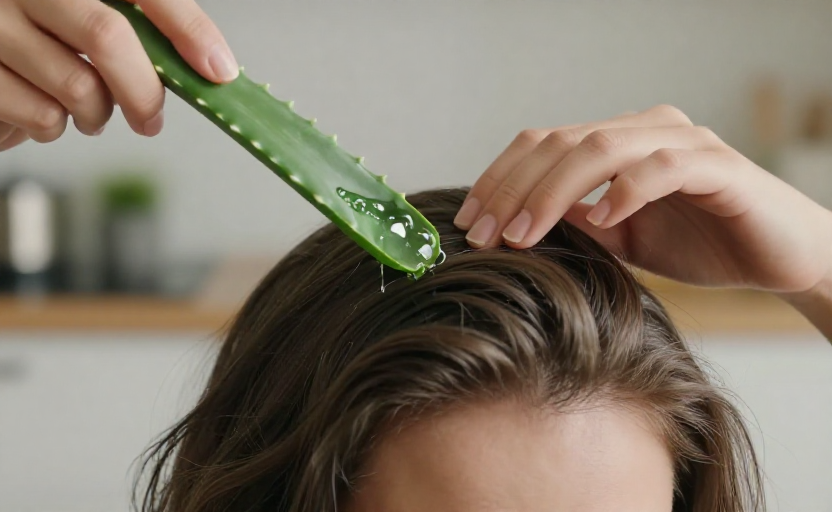
Aloe vera is well known for its anti-inflammatory and moisturizing effects, making it a go-to for sensitive scalps. Dr. Rana emphasizes that aloe vera gel easily penetrates the hair strands and maintains moisture balance, which reduces brittleness.
How to use it: Blend half a cup of fresh aloe vera gel with half a cup of warm olive oil. Add six drops each of rosemary and sandalwood essential oils—both have calming properties. Massage the mixture into your scalp and through your hair, then cover with a shower cap for one to two hours. Wash with a mild shampoo and follow with conditioner. This treatment combines scalp care with strand strengthening.
Coconut milk and lemon for shine and pH balance
Coconut milk provides saturated fats that act as emollients, softening the hair and helping to restore the scalp's natural acid-alkaline balance. Lemon juice adds a gentle clarifying effect, which can help remove mineral deposits or product residue that contribute to scalp irritation.
How to use it: Mix one cup of fresh coconut milk with two tablespoons of lemon juice. Chill the mixture in the refrigerator for about 30 minutes until it thickens slightly. Blend well, apply from roots to ends, then wrap your hair in a warm towel for five minutes. Rinse with mild shampoo. Dr. Rana suggests repeating this treatment three times per week for about four weeks to see cumulative improvement in texture and strength.
Soybean and castor oil for root-to-tip bonding
Soybean oil is a lightweight option that can help align the hair cuticle, reducing friction that leads to breakage. Dr. Rana notes it is one of the more effective natural oils for promoting a smoother appearance over time. Castor oil, when added, provides ricinoleic acid, which may help support healthy hair growth and reduce scalp inflammation.
How to use it: Combine one tablespoon of soybean oil with two tablespoons of castor oil. Warm the mixture slightly, then apply it to the scalp and hair from root to tip. Leave it on for at least 30 minutes, then wash with a mild shampoo. This combination acts as a bonding agent, helping to seal the cuticle without causing buildup on a sensitive scalp.
“Different types of ingredients take different amounts of time to absorb on the scalp. It totally depends on the quality and volume of the hair,” concludes Dr. Rana.