Dandruff on curly hair brings its own set of challenges. The scalp is drier, the hair is more prone to breakage, and many standard dandruff shampoos can leave curls feeling straw-like or stripped. The key is to treat the flaking without sacrificing moisture or curl definition. Dermatologists recommend a targeted approach that respects the unique needs of textured hair.
Why curly hair needs a different dandruff routine
Curly and coily hair types produce less sebum along the hair shaft than straight hair does. This natural dryness means the scalp can be both flaky and sensitive. At the same time, the twists and turns of each curl make it harder for shampoo to reach the scalp. Many conventional anti-dandruff formulas use strong detergents that remove oil quickly — but for curly hair, that often leads to brittleness, frizz, and even more flaking as the scalp tries to compensate.
Dermatologists emphasize that the goal is not to strip the scalp but to gently manage the yeast — usually Malassezia — that can overgrow and trigger dandruff. The trick is choosing ingredients that target that yeast while keeping the hair’s natural moisture barrier intact.
Ingredients dermatologists actually look for
Not all dandruff treatments are created equal for curly hair. Here are the active ingredients that specialists recommend most often for textured hair:
- Pyrithione zinc — This is one of the gentler options. It reduces fungus and bacteria without being overly harsh. Many sulfate-free dandruff shampoos use it, making it a solid first choice for curls.
- Selenium sulfide — Very effective at slowing yeast growth, but it can be drying. Best used as a short-term treatment or only on the scalp, not the lengths.
- Salicylic acid — Excellent for removing built-up scale, especially if you have thicker flakes. It can be drying, so pair it with a rich conditioner.
- Ketoconazole — An antifungal that works well for stubborn dandruff. It is available over the counter in lower strengths. Use it sparingly, as it can be strong on dry curls.
- Coconut oil (as a pre-wash or carrier) — While not an active antifungal in the same way, coconut oil has natural antimicrobial properties and helps protect the hair shaft before shampooing.
A quick tip: Look for a dandruff shampoo that lists one of these actives in the first few ingredients, and always follow with a moisturizing conditioner or deep treatment.
How to wash curly hair when you have dandruff
Technique matters as much as product choice. Here is a step-by-step approach that dermatologists often suggest for curly hair:
- Pre-treat with oil. Before shampooing, apply a lightweight oil (like jojoba or grapeseed) to your scalp and let it sit for 15–20 minutes. This helps loosen flakes and protects the hair from losing too much moisture during cleansing.
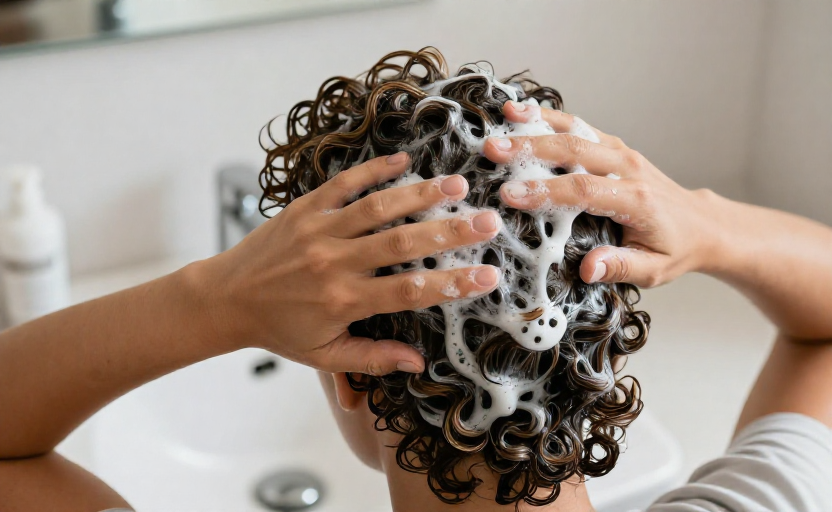
- Shampoo only the scalp. Focus the medicated shampoo on your roots. Use your fingertips — not nails — to gently massage in circular motions for about two minutes. Let the suds run through the lengths as you rinse; you usually do not need to scrub the ends directly.
- Rinse thoroughly. Residue from medicated shampoos can irritate the scalp further. Make sure you rinse until the water runs clear.
- Follow with a deep conditioner. Use a moisturizing, sulfate-free conditioner or a hair mask from mid-length to ends. If your scalp is not sensitive to it, you can even apply a small amount to the scalp for extra hydration.
The importance of a consistent but gentle schedule
One of the biggest mistakes people with curly hair make is washing too infrequently when they have dandruff. While over-washing can dry out the hair, under-washing allows oil and flakes to build up and feed the yeast. Dermatologists generally recommend washing twice a week with a medicated shampoo for active dandruff. On non-wash days, you can refresh your curls with a water-based spray or a lightweight leave-in conditioner that does not weigh down your hair.
Once the flaking is under control, you can reduce the medicated shampoo to once a week or every other week, depending on your scalp’s needs. This prevents the scalp from becoming dependent on treatment while keeping curls healthy.
Do not skip the conditioner — or the scalp care
It is a myth that dandruff treatment has to leave your hair feeling rough. The key is to separate the treatment step (on the scalp) from the moisturizing step (on the hair shaft). A good silicone-free conditioner can restore softness without coating the scalp in heavy ingredients that might aggravate dandruff. If your scalp is still dry after washing, a few drops of squalane oil or aloe vera gel can soothe it between washes.
When to see a dermatologist
If you have tried over-the-counter dandruff products consistently for four to six weeks and still see heavy flaking, redness, or itching, it may be time to see a dermatologist. Conditions like seborrheic dermatitis, scalp psoriasis, or even contact dermatitis can look like dandruff but require different treatment. A specialist can prescribe a stronger medicated shampoo, a topical steroid, or a custom anti-inflammatory plan that works with your hair type.