You probably don’t think twice about the ingredients you toss into your morning smoothie. But a growing body of research suggests that one common additive could be quietly influencing your mood, your relationships, and your sense of security. It’s not the fruit, the yogurt, or the leafy greens. It’s the source of caffeine some people use for energy — and according to recent studies, it might be linked to warning signs of attachment anxiety.
Attachment anxiety is a pattern of thinking where someone worries excessively about their relationships, often fearing rejection or abandonment. While it can be influenced by life experiences and personality, researchers have started looking at biological factors, including how stimulants affect the nervous system. The ingredient in question? Caffeine — and in particular, caffeine from coffee or concentrated green tea powder commonly added to smoothies.
How Caffeine Triggers Anxiety-Like Responses
Caffeine is a central nervous system stimulant. It blocks adenosine, a neurotransmitter that promotes relaxation and sleep, and instead triggers the release of adrenaline. For most people, this creates a sense of alertness. But for those who are sensitive to its effects, or who consume it in high doses, it can mimic the physiological symptoms of anxiety: racing heart, jitteriness, and hyper-vigilance.
When the body is in this heightened state of arousal, it can be easy to misinterpret those sensations as emotional distress — especially in the context of a relationship.
This is where attachment anxiety comes in. If you already have a tendency to worry about your partner's feelings or commitment, a caffeine-fueled adrenaline surge can amplify that inner loop. Your heart races. You feel on edge. Your mind searches for a reason — and it often lands on relationship fears.
What the Science Says About Caffeine and Attachment
Recent studies have explored the link between caffeine consumption and attachment styles. One study published in the journal Psychopharmacology found that high doses of caffeine increased feelings of anxiety and insecurity in participants who were already prone to attachment anxiety. Another study from 2023 noted that participants who consumed energy drinks or high-caffeine smoothies reported more negative social interactions and heightened sensitivity to rejection later in the day.
While the research is still emerging, the pattern is clear: caffeine does not cause attachment anxiety directly, but it can worsen the physical symptoms that feed into it. For someone who is already struggling with relationship insecurity, a high-caffeine smoothie might be the last thing their nervous system needs.
Common Smoothie Ingredients That Pack a Caffeine Punch
You might not realize how much caffeine sneaks into a smoothie that tastes healthy and refreshing. Here are the most common culprits:
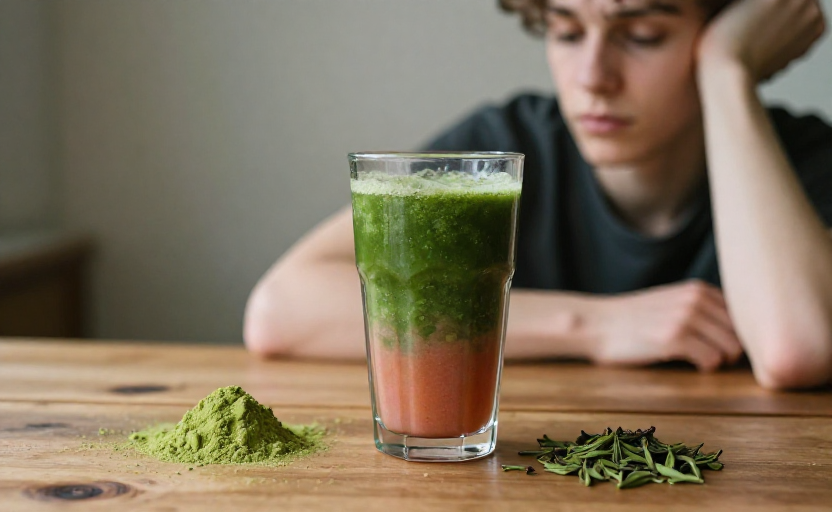
- Matcha powder — especially concentrated culinary-grade or ceremonial matcha; one teaspoon can contain 60–70 mg of caffeine.
- Green tea extract — often marketed as a metabolism booster; it can deliver 100–200 mg per serving.
- Cold-brew coffee concentrate — a splash might contain 100–150 mg of caffeine, especially if it's store-bought.
- Guarana powder — used in many “energy” smoothie mixes; it carries significant caffeine levels similar to coffee.
Even smaller additions, like cacao nibs or dark chocolate, add trace amounts that can accumulate if you drink multiple cups or smoothies throughout the day.
Who Might Be More Sensitive to These Effects?
Not everyone who drinks caffeine experiences attachment anxiety. But certain factors make people more vulnerable:
- Genetics: Variations in the CYP1A2 gene affect how slowly or quickly your body metabolizes caffeine. Slow metabolizers can feel its effects for hours longer.
- Anxiety history: Those with generalized anxiety or panic disorder may be especially susceptible to caffeine's anxiogenic effects.
- Sleep debt: When you're already tired, caffeine’s impact on the nervous system can be more pronounced, leading to greater emotional reactivity.
- Attachment style: If you have an anxious attachment pattern, your brain is already scanning for signs of relationship threat. Caffeine lowers the threshold for that scanning system.
Signs That Your Smoothie Might Be Affecting Your Mood
It’s not always obvious that a drink is fueling your anxiety. But there are warning signs you can watch for within 30–60 minutes after drinking a high-caffeine smoothie:
- A sudden spike in worry about your partner’s text tone or response time
- Physical jitters or a racing heart that you attribute to something they said or didn’t say
- Feeling irritable or easily overwhelmed in conversations
- Difficulty sleeping, which then feeds more daytime anxiety
- Obsessive thoughts about the stability of your relationship
If any of these patterns feel familiar, and they tend to occur within an hour of consuming a smoothie with caffeine, the ingredient could be setting the stage for attachment anxiety to surface.
How to Adjust Without Losing Your Morning Routine
You don’t have to give up smoothies entirely. The key is awareness and small, deliberate swaps:
- Replace matcha or green tea extract with a smoothie base of cucumber, mint, and lime — they are naturally energizing without the caffeine.
- Use herbal teas like rooibos or chamomile as the liquid base instead of cold-brew coffee.
- Add bananas, oats, or nut butter for steady energy without stimulants.
- If you want a small amount of coffee flavor, use a decaf cold brew or a teaspoon of cacao powder for a milder, lower-caffeine option.
You might also try a simple experiment: skip the caffeine in your smoothie for a week and track your mood, sleep, and interactions with loved ones. For many people, removing this one ingredient makes a noticeable difference in how secure and settled they feel.
Does Caffeine Affect Everyone the Same Way?
No. Many people drink coffee or green tea daily without experiencing relationship anxiety. The effect depends on your individual biology, your baseline stress levels, and your attachment history. But for those who are already navigating attachment anxiety, even a moderate amount of caffeine can tip the scales. The research simply highlights that the ingredient is far from neutral when it comes to emotional regulation.
If you notice that your worrying intensifies after a smoothie, it is worth considering the caffeine content. It might not be your relationship that needs fixing — it could be your morning drink.