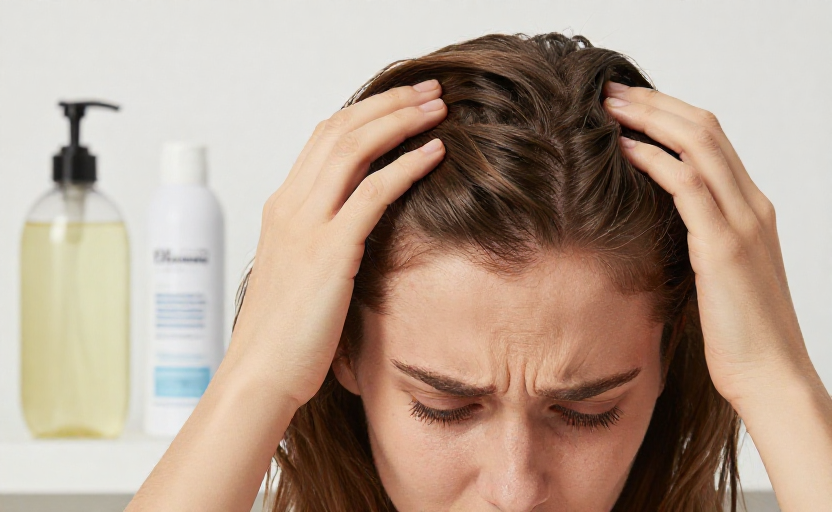
You wash your hair, and for a few blissful hours, it feels light, clean, and perfectly balanced. But by afternoon, your roots are already looking slick again. It’s a frustrating cycle that can feel impossible to break, often leading to the very habit that perpetuates it: washing even more frequently.
This pattern has a name—rebound oiliness, or reactive seborrhea—and it’s a common consequence of a well-intentioned but overly aggressive daily styling routine. When we strip our scalp of its natural oils too often, the body’s response can be to produce even more, creating a greasy feedback loop.
Understanding Your Scalp’s Natural Balance
Your scalp is an ecosystem. Sebaceous glands produce sebum, a natural oil that moisturizes your scalp, protects your hair follicles, and helps maintain a healthy skin barrier. This oil production is regulated by a complex interplay of hormones, genetics, and environmental factors.
The goal isn’t to eliminate oil entirely, but to manage it in a way that supports your scalp’s health. When you wash with harsh, sulfate-heavy shampoos every single day, you’re essentially giving your scalp’s natural regulatory system mixed signals.
Think of it like over-moisturizing dry skin. If you constantly remove all oil, your scalp may overcompensate to re-establish what it perceives as a critical baseline.
How Daily Washing Triggers the Rebound Effect
The mechanism is straightforward, if counterintuitive. Each time you cleanse, you remove the existing layer of sebum. For a scalp already prone to oiliness, frequent, deep cleansing can signal the sebaceous glands that the protective barrier is being constantly depleted. In response, they may go into overdrive, ramping up production to defend the scalp and hair.
This is especially true with shampoos designed for “deep cleansing” or “oil control,” which often contain stronger surfactants. They can be incredibly effective for occasional use, but as a daily habit, they may disrupt the scalp’s pH and microbiome, further contributing to the imbalance.
Breaking the Cycle: A Gentler Approach
Resetting your scalp doesn’t require drastic measures, just a shift in strategy. The key is to transition away from aggressive daily stripping and toward gentle, supportive cleansing.
Extend Time Between Washes Gradually
If you wash daily, try stretching to every other day. On “off” days, a simple rinse with water or a targeted use of dry shampoo at the roots can help you adjust. The goal is to slowly train your scalp to a new normal, not to shock it.
Re-evaluate Your Cleansing Products
Look for shampoos labeled “gentle,” “balancing,” or “scalp-friendly.” Formulas with milder surfactants, like coco-glucoside or decyl glucoside, can cleanse effectively without being as stripping. Incorporating a weekly clarifying wash is fine, but it shouldn’t be your daily driver.
Supportive Habits Beyond the Shower
Your haircare routine extends beyond shampoo. How you treat your hair while styling can either exacerbate or alleviate oiliness.
- Be Mindful of Brushing: Over-brushing, especially with natural bristle brushes, can distribute oil from your roots down the hair shaft more quickly. Focus brushing on the mid-lengths and ends.
- Rethink Your Styling Products: Heavy pomades, waxes, and some leave-in conditioners can build up at the roots, creating a greasy feel and prompting more washing. Opt for lighter, water-based formulas and apply them away from the scalp.
- Consider Water Temperature: Very hot water can stimulate the scalp. A lukewarm rinse is gentler and just as effective for cleansing.
When to Look Deeper
While rebound oiliness from overwashing is common, persistent issues may have other contributors. Hormonal fluctuations, diet, stress, and certain medical conditions like seborrheic dermatitis can influence oil production. If adjusting your washing routine doesn’t lead to improvement after several weeks, or if you experience significant itching, flaking, or redness, consulting a dermatologist can help identify any underlying causes.
Patience is essential. It can take a month or more for your scalp to recalibrate after years of a particular routine. By moving away from the daily habit of stripping your scalp, you’re giving it the space to find its own, healthier equilibrium.