
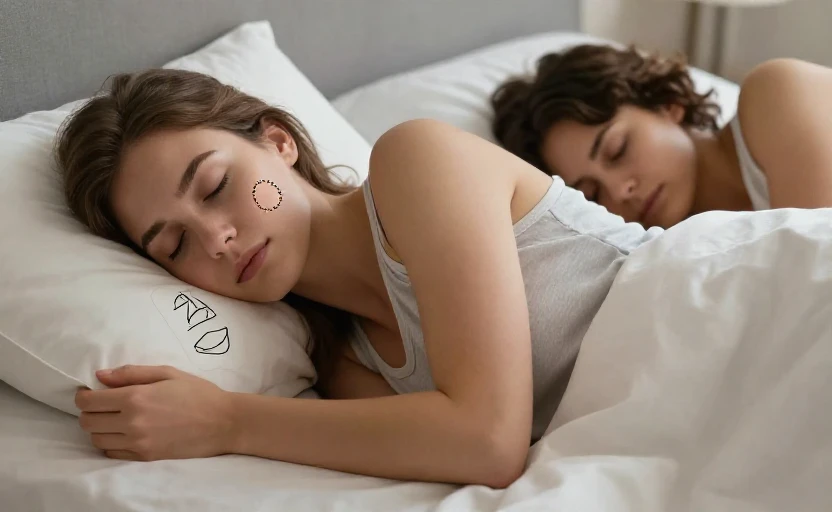
You’ve perfected your evening skincare ritual. You’ve invested in the serums and the moisturizers. Yet, you wake up to find those fine lines looking a bit more… permanent. Sometimes, the culprit isn’t what you put on your skin, but what you do with it for seven or eight hours straight.
One of the most common, yet overlooked, factors in skin aging happens while you’re fast asleep. It’s not a mysterious chemical or a missed step in your routine. It’s the simple, unconscious act of how your face meets your pillow.
Sleeping on Your Side or Stomach: The Wrinkle Connection
For most of us, finding a comfortable sleeping position is about rest, not skincare. Side sleeping and stomach sleeping are incredibly common, often favored for reducing snoring or easing back pain. But from a dermatological perspective, this habit places your face under sustained, repetitive pressure against your pillowcase for hours.
Think of it this way: if you crumple a piece of paper in the same spot every day, the crease becomes permanent. While skin is far more resilient and alive, it follows a similar principle of mechanical stress. This nightly compression and shear force can, over time, break down collagen and elastin—the very fibers that keep skin plump and springy—and etch temporary sleep lines into more permanent features.
The lines you see pressed into your cheek when you wake up are a preview. With enough repetition, they may decide to stay.
Why Does This Pressure Cause Damage?
Your skin’s support system is a dynamic matrix of collagen and elastin. Collagen provides structure and firmness, while elastin allows skin to snap back after being stretched. This system is constantly being remodeled, but it can be degraded by several factors, including ultraviolet radiation (photoaging) and, as research suggests, mechanical forces (mechanobiology).
Sleeping with your face pressed into a pillow creates a few specific issues:
- Collagen Breakdown: Chronic pressure and friction may stimulate inflammatory pathways and enzymes called matrix metalloproteinases (MMPs) that break down collagen.
- Impaired Circulation: The pressure can temporarily reduce blood flow to the compressed area, limiting the delivery of oxygen and nutrients essential for overnight repair.
- Creasing and Folding: The skin is literally folded for extended periods. Younger skin bounces back, but as natural collagen production declines with age, these folds have a easier path to becoming settled lines.
The result is often seen as vertical wrinkles along the cheek and chin, pronounced nasolabial folds (the lines from your nose to mouth), and horizontal lines on the forehead for side sleepers, or between the brows for stomach sleepers.
What You Can Do About It
The goal isn’t to sacrifice a good night’s sleep, which is itself critical for skin health and cellular repair. Instead, it’s about making small, sustainable shifts to minimize the mechanical stress on your skin.
Train Yourself to Sleep on Your Back
Back sleeping is the gold standard for preventing sleep wrinkles, as your face has no contact with a pillow. If you’re a committed side sleeper, this can feel daunting. Start gradually: use extra pillows to prop yourself in a semi-reclined position, which can discourage rolling over. A pillow under your knees can make back sleeping more comfortable. It takes patience, but even reducing side-sleeping by a few hours a night can help.
Invest in a Silk or Satin Pillowcase
If changing your position feels impossible, change your pillowcase. Unlike cotton, which can have a slight abrasive texture and create more friction and “drag” on the skin, silk and satin have a smoother surface. This allows your skin to glide more easily as you move, reducing the tugging and creasing. The benefit extends to your hair, helping to prevent breakage and frizz.
Consider a Specialty Pillow
For those dedicated to side sleeping, contoured pillows or pillows designed for “beauty sleep” can help. Some have cutouts or specific shapes that aim to keep pressure off the cheek and eye area, cradling the head while allowing the face to remain relatively untouched. It’s a more targeted approach that acknowledges your preferred sleep style.
Remember, sleep wrinkles are just one piece of the aging puzzle. They work in concert with sun exposure, genetics, lifestyle, and expressions. But addressing this nightly habit is a proactive, within-your-control step that supports everything else you do for your skin. It’s not about achieving perfection, but about giving your skin the peaceful, pressure-free environment it needs to repair and rejuvenate itself—all night long.