If you’re dealing with a tight, flaky, or itchy scalp but your hair ends feel parched, your conditioner might be the surprising culprit. It’s a common frustration: you use a product designed to hydrate, only to feel more dryness at the roots. The mistake often isn't about conditioning itself, but about where and how you apply it.
Conditioner is formulated to smooth the hair cuticle and add moisture, primarily to the mid-lengths and ends—the oldest, most weathered parts of your hair. Your scalp, however, is living skin, producing its own natural oils (sebum) for protection and balance. Smothering it with rich, creamy formulas can disrupt this delicate ecosystem, leading to the very dryness and irritation you're trying to avoid.
Why applying conditioner to your scalp backfires
Think of your scalp and your hair ends as having completely different needs. Your ends are like the frayed edge of a rope, needing sealants and emollients to prevent further splitting. Your scalp is more like the skin on your face—it needs to breathe and maintain its own oil-and-moisture equilibrium.
When you apply conditioner directly to the roots and scalp, you risk:
- Clogging hair follicles: Heavy residues can build up around the follicle opening, potentially hindering healthy hair growth and causing irritation.
- Stripping natural oils: It sounds counterintuitive, but over-conditioning can signal to your scalp that it doesn't need to produce as much sebum. When you wash this coating away, your scalp can feel stripped and dry, potentially leading to a rebound overproduction of oil later.
- Creating a flaky, itchy environment: Product buildup mixed with dead skin cells can create a perfect storm for dandruff-like symptoms and itchiness.
Conditioner is for your hair, not your scalp. Start applying it from your ears down, and let the water runoff handle any minimal residue near the roots.
How to condition correctly for a balanced scalp
Correcting this mistake is simple and can make a noticeable difference in scalp comfort within a few washes.
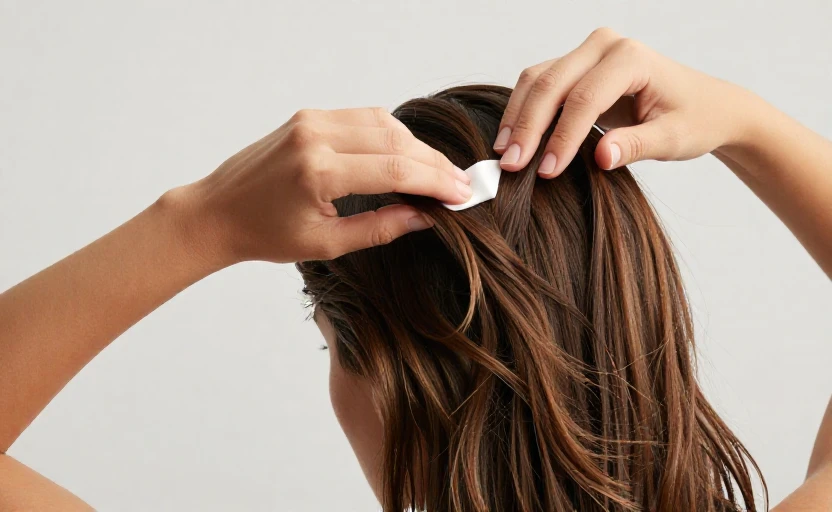
After shampooing, gently squeeze excess water from your hair. Take a quarter-sized amount of conditioner (adjusting for your hair length and thickness) and emulsify it between your palms. Then, apply it deliberately to the mid-lengths and ends of your hair. Use a wide-tooth comb to distribute it evenly from that midpoint down to the tips.
Let it sit for the recommended time—usually just a minute or two—while you finish your shower. When you rinse, tilt your head back and let the water flow downward, from roots to ends. This will cleanse your scalp of any shampoo remnants while allowing the conditioner to rinse through the lengths without being scrubbed directly into the roots.
Choosing the right product for your scalp type
If you have a naturally dry or sensitive scalp, your product choice matters just as much as the application method.
- For dry, itchy scalps: Look for lightweight, hydrating conditioners with ingredients like aloe vera, panthenol (pro-vitamin B5), or glycerin. Avoid heavy butters or waxes high on the ingredient list.
- For fine hair or oily roots: A volumizing or balancing conditioner is ideal. These are typically lighter and designed to add body without weighing hair down or adding excess moisture to the root area.
- A clarifying reset: If you suspect buildup is contributing to dryness, use a gentle clarifying shampoo once every week or two to remove residues from both hair and scalp, followed by your standard conditioning routine on the ends.
When scalp dryness signals something else
While misapplied conditioner is a frequent offender, persistent scalp dryness can have other causes. If adjusting your technique doesn’t bring relief, consider these factors:
Water temperature: Scalding hot water can strip the scalp of its natural oils, much like it does to the skin on your body. Try finishing your rinse with a blast of cool water to help soothe the scalp and seal the hair cuticle.
Over-washing: Washing too frequently, especially with harsh sulfates, can prevent your scalp's natural oil production from finding its rhythm. Experiment with extending the time between washes.
Underlying conditions: Conditions like seborrheic dermatitis, psoriasis, or simply a very sensitive skin barrier can cause chronic dryness. If symptoms are severe, painful, or include significant redness or scaling, consulting a dermatologist is the best step.
Healthy hair truly begins at the scalp. By redirecting your conditioner's focus to where your hair actually needs it—the mid-lengths and ends—you give your scalp the space it needs to find its natural balance. The result is often less itch, less flaking, and hair that feels clean at the roots and soft through the lengths.