For those with curly or coily hair, the quest for healthy, defined curls often feels like a delicate balancing act. We learn about deep conditioning, protective styles, and avoiding heat. Yet, one of the most damaging habits can be a simple, everyday act performed with the best intentions: brushing.
While brushing is often touted as a way to distribute oils and detangle, for curly hair textures, the timing and technique are everything. The most common mistake? Brushing your curls when they are completely wet. This single error can be the primary culprit behind frizz, breakage, and those frustrating, frayed split ends that travel up the hair shaft, robbing your curls of their vitality.
Why Wet Brushing is So Damaging for Curls
To understand why, picture a single strand of curly hair under a microscope. Its structure isn't smooth; the cuticle, or outer layer, has natural lifts and variations that create the curl pattern. This structure is also more fragile than straight hair. When hair is saturated with water, it swells and stretches, becoming significantly weaker and more elastic.
Running a brush through this vulnerable state is like stretching a wet rubber band repeatedly. You're applying intense mechanical stress to the most fragile version of your hair. This force can:
- Rupture the cuticle: Instead of gently smoothing the cuticle layer, brushing wet can tear and lift it, creating permanent openings.
- Cause mid-shaft splits: Unlike split ends that start at the tip, the stress of wet brushing can cause breaks along the length of the strand, leading to frizz and weakness.
- Destroy curl definition: It forcibly separates natural curl clumps, disrupting your pattern and encouraging a frizzy, undefined appearance.
Your hair is at its most vulnerable when it's wet. Treating it with force during this state is a direct path to breakage.
The Right Way to Detangle Curly Hair
Abandoning the brush on sopping wet hair doesn't mean resigning yourself to knots. It means adopting a gentler, more strategic approach that works with your hair's natural state.
The golden rule is to detangle on damp, conditioned hair. Here’s how to make it work:
Start in the shower with a generous amount of a slippery, moisturizing conditioner or a dedicated detangling product. The slip is non-negotiable—it reduces friction dramatically. Using your fingers, gently work through any large knots or tangles first. This initial finger-detangling step is crucial for minimizing later stress.
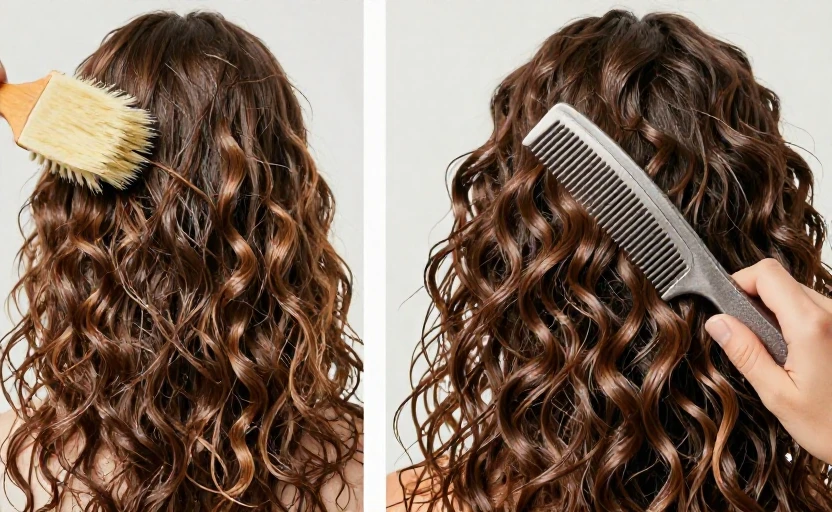
Only after this should you introduce a tool. A wide-tooth comb is the superior choice for most curl types. Begin at the very ends of your hair, gently working out small sections. Slowly and patiently work your way up toward the roots, holding the hair above the section you're combing to prevent tugging on the scalp. This methodical, bottom-up approach places the least amount of tension on each strand.
What About Denman Brushes or Detangling Brushes?
Specialized brushes can be used for styling and defining curls, but timing is still key. They should be used on very wet hair only after all major tangles have been removed with a wide-tooth comb or fingers. They are a styling tool for defining clumps, not a primary detangling tool for major knots on saturated hair.
Beyond Brushing: Other Habits That Worsen Split Ends
While wet brushing is a major offender, other common practices compound the damage. Sleeping on cotton pillowcases creates friction that roughs up the cuticle night after night. Opting for a satin or silk pillowcase, or a satin bonnet, allows your hair to glide as you sleep.
Rough drying with a regular bath towel can also roughen the cuticle. Instead, gently squeeze out excess water with a soft microfiber towel or an old cotton t-shirt. Finally, be mindful of how you handle your hair throughout the day. Constant touching, twisting, or pulling can lead to mechanical damage over time.
Caring for curly hair is a practice in patience and gentleness. By shifting just one habit—saving the detangling for damp, conditioned hair and using the right tools—you protect the integrity of each curl. This simple change reduces the stress that leads to split ends and breakage, allowing your natural texture to thrive with stronger, more resilient definition. Your curls will thank you for the extra care with improved health, less frizz, and a noticeable reduction in those pesky, frayed ends.