Waking up to a high morning glucose reading can feel like a frustrating puzzle. You ate a balanced dinner, you didn't indulge late at night, yet your fasting number is stubbornly elevated. For many managing their blood sugar, the hours between dinner and breakfast are a long, silent challenge. The right small snack before bed can be a simple, powerful tool to help navigate that overnight fast and promote steadier morning numbers.
It’s not about eating more, but about choosing strategically. The goal is to provide a slow, sustained release of energy that supports your body through the night, preventing the liver from overproducing glucose in response to perceived starvation. Think of it as a gentle buffer, not a second meal.
Why a Bedtime Snack Can Help
During sleep, your body is still hard at work. For some, especially those with insulin resistance or diabetes, the liver may release more glucose than needed in the early morning hours, a phenomenon known as the “dawn phenomenon.” This can lead to high fasting blood sugar. A well-chosen snack about 30-60 minutes before bed can help counter this.
The mechanism is straightforward: a small amount of the right nutrients signals to your body that it’s not entering a prolonged fast, which can temper the liver’s glucose output. More importantly, it provides a steady trickle of fuel to help maintain balance. It’s a gentle nudge to your metabolism, asking it to stay on an even keel.
The ideal bedtime snack is a modest pairing of a complex carbohydrate with a source of protein or healthy fat.
This combination is key. The carbohydrate provides the initial energy, while the protein or fat slows down the digestion and absorption of that carbohydrate, preventing a rapid spike and ensuring a longer, flatter curve of glucose release. It’s the difference between a flash of light and a slow-burning candle.
Building Your Balanced Snack
Forget the idea of a large snack or a sugary treat. The portion should be small—think 150-250 calories, depending on your individual needs and daily intake. The focus is on quality and balance.
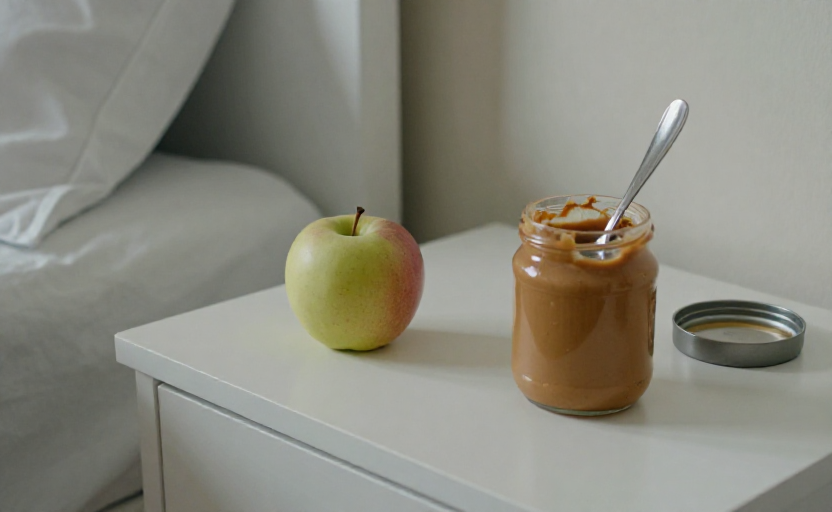
Look for a complex carb: This is your fiber-rich foundation. Fiber is not digested by the body, so it adds bulk and slows everything down. Good sources include a small apple, a few whole-grain crackers, a quarter cup of oats, or even some berries.
Add a protein or healthy fat: This is your stabilizing partner. Protein and fat take longer to digest, extending the satiating and glucose-modulating effect of the snack. Think a tablespoon of nut butter, a small handful of nuts, a slice of cheese, a hard-boiled egg, or a few ounces of plain Greek yogurt.
Simple Combinations to Try
- A small apple with a tablespoon of almond butter.
- Half a slice of whole-grain toast with a thin spread of avocado.
- A quarter cup of cottage cheese with a few raspberries.
- A hard-boiled egg with three whole-grain crackers.
- A small container of plain Greek yogurt with a sprinkle of chia seeds.
- A handful of almonds (about 15-20) with two squares of dark chocolate (70%+ cocoa).
Snacks to Approach with Caution
Not all snacks are created equal for overnight stability. The ones that tend to cause trouble are those high in refined carbohydrates and added sugars, which can lead to a quick rise and then a sharp fall in blood sugar during the night, potentially triggering a rebound high by morning.
It’s generally wise to avoid sugary cereals, cookies, ice cream, candy, or large portions of fruit juice or dried fruit alone. Even a plain piece of fruit, while healthy, might be better paired with a protein or fat to blunt its natural sugar impact right before bed. Listen to your body and your meter—what works for one person may need adjustment for another.
Making It a Sustainable Habit
Consistency is more valuable than perfection. The goal is to find one or two simple options you enjoy and can prepare without fuss. Keep these ingredients on hand. Portion them out in advance if it helps.
Timing matters, too. Eating your snack too close to lying down can interfere with sleep for some, while eating it too early might not provide coverage for the full night. The 30-60 minute window is a good starting point. Pay attention to how you feel in the morning and what your glucose readings tell you. This is your best feedback loop.
Remember, a bedtime snack is just one piece of a larger picture that includes balanced meals, regular activity, stress management, and good sleep hygiene. It’s a supportive tool, not a magic solution. If you’re unsure where to start or how to tailor this to your specific health profile, a conversation with a registered dietitian or your healthcare provider can provide personalized guidance.
Ultimately, it’s about fostering a peaceful relationship with food and your body’s rhythms. A thoughtful, small snack can be a act of care—a way to nourish yourself gently and set the stage for a more stable, restful night.