That mid-afternoon energy slump is a familiar feeling for many. It often arrives with a craving for something sweet or crunchy, a signal that your body is looking for a quick fuel source. For anyone focused on maintaining stable blood sugar, this moment can feel like a dietary minefield. The good news is that a well-chosen snack can be a powerful tool—not a setback. It can satisfy hunger, provide sustained energy, and prevent the sharp spikes and subsequent crashes that leave you feeling drained.
The key lies in understanding the simple synergy of macronutrients. By combining a source of fiber or healthy fat with a modest amount of quality carbohydrates, you create a slow-release energy package. This approach helps moderate how quickly glucose enters your bloodstream, supporting steadier levels and longer-lasting satiety. Let’s explore some of the most effective, science-backed options to navigate the afternoon with confidence.
What makes a snack blood-sugar friendly?
Before diving into specific foods, it helps to know what you’re looking for. The goal is to avoid snacks that are primarily refined carbohydrates—think pretzels, plain crackers, or a candy bar—which digest rapidly and can cause a sharp glucose spike. Instead, aim for combinations that include one or more of these elements:
- Fiber: Slows digestion and the absorption of sugar. Found in vegetables, fruits, nuts, seeds, and whole grains.
- Protein: Helps promote fullness and has a minimal direct impact on blood glucose. Think Greek yogurt, cottage cheese, eggs, or lean meats.
- Healthy Fats: Also slow gastric emptying and add satiety. Sources include avocado, nuts, seeds, and olive oil.
A balanced snack acts as a buffer, smoothing out the body’s energy intake and preventing dramatic swings.
Smart and satisfying snack combinations
These pairings are more than just tasty; they’re built on the principle of macronutrient balance to support metabolic steadiness.
The Crunchy & Creamy Duo
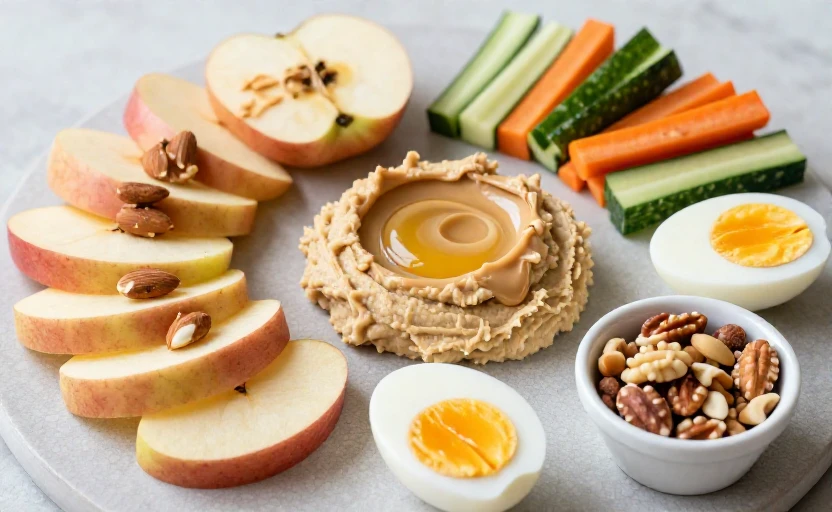
Fresh vegetable sticks are a classic for a reason. They provide volume, crunch, and fiber with very few digestible carbs. Pairing them with a protein- or fat-rich dip transforms them into a sustaining snack.
- Bell peppers, cucumber, or celery with hummus: The chickpeas in hummus offer both protein and fiber.
- Broccoli or cauliflower with a Greek yogurt-based dip: Mix plain Greek yogurt with herbs like dill or a dash of garlic powder for a high-protein, tangy companion.
- Apple slices with a tablespoon of almond butter: The apple provides fiber, while the nut butter adds healthy fat and protein to balance the natural sugars.
The Protein-Packed Pick
Sometimes you need something straightforward and substantial. A focus on lean protein can be incredibly effective at curbing hunger without a significant glycemic impact.
A hard-boiled egg is a perfect portable option. For a more prepared choice, consider a small cup of plain cottage cheese topped with a handful of berries. The berries add fiber and antioxidants, while the cottage cheese delivers slow-digesting casein protein. A small can of tuna or salmon (packed in water) on a few whole-grain crackers is another excellent savory choice that provides omega-3 fatty acids.
The Thoughtful Trail Mix
Store-bought trail mixes are often laden with candy, chocolate chips, and sweetened dried fruit, making them more of a dessert. You can easily create a better version at home.
Combine a small handful of raw nuts (like almonds or walnuts) with a tablespoon or two of seeds (pumpkin or sunflower). For a touch of sweetness, add one or two tablespoons of unsweetened dried coconut flakes or a few dried goji berries. The key is to keep the sugary elements minimal and let the nuts and seeds be the stars. Pre-portion this mix into small containers to avoid mindless eating.
Snacks to approach with mindfulness
Not all snacks marketed as “healthy” support stable blood sugar. Dried fruit, for instance, is concentrated in sugar and easy to overeat, lacking the water content of fresh fruit that helps with fullness. Fruit juices and smoothies (unless carefully crafted with protein and fiber) can deliver a large dose of sugar very quickly. Similarly, many flavored yogurts, granola bars, and rice cakes are high in added sugars or refined carbs.
This doesn’t mean you can never enjoy these foods. It simply means viewing them as occasional treats rather than everyday, blood-sugar-friendly staples. When you do choose them, try pairing them with a protein source—like having a few rice cakes with peanut butter, or a small serving of dried fruit with a handful of nuts.
Building your snack routine
Consistency can be as important as the snack itself. Listening to your body’s true hunger signals, rather than eating out of habit or boredom, is the first step. Try to have your snack when you first notice gentle hunger, not when you’re ravenous, as this makes balanced choices easier.
Portion size matters, too. Even with healthy foods, eating large quantities can affect blood glucose. Using a small plate or bowl can help provide visual guidance. Finally, stay hydrated. Sometimes thirst masquerades as hunger. Having a glass of water before your snack is a simple, effective habit.
Finding your best afternoon snack may take a little experimentation. Notice how different combinations make you feel an hour later—energized and satisfied, or sluggish and hungry again? That feedback is invaluable. By choosing snacks that thoughtfully combine fiber, protein, and healthy fats, you’re not just quelling afternoon hunger. You’re supporting your body’s energy metabolism throughout the day.