Walking down the skincare aisle can feel overwhelming. Rows of products promise clearer skin, each touting a different active ingredient as the solution. For anyone dealing with acne, it’s not just about picking a cleanser or cream; it’s about understanding what these ingredients actually do and how they can work for you.
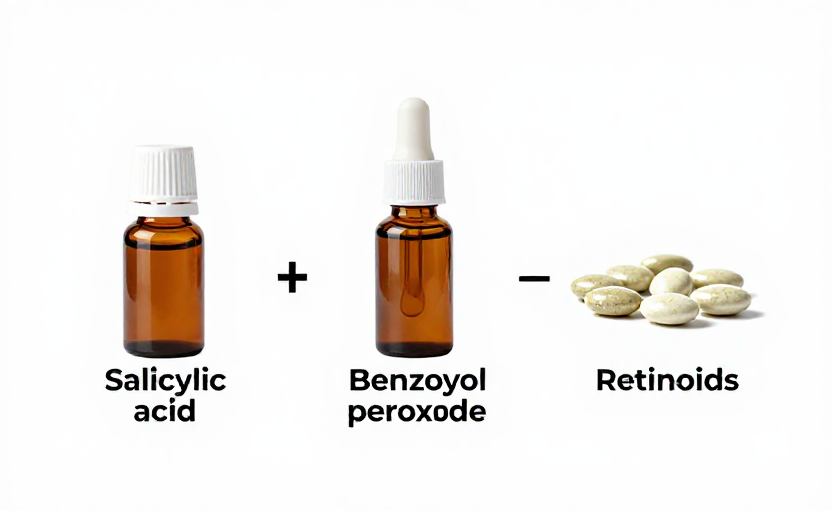
Three names consistently stand out in the world of acne treatment: salicylic acid, benzoyl peroxide, and retinoids. They are the cornerstones of many effective over-the-counter and prescription regimens. But they work in distinct ways, suit different types of breakouts, and come with their own considerations. Knowing the basics can help you make sense of the labels and start a more informed conversation about your skin.
How Salicylic Acid Works on Acne
Think of salicylic acid as a deep-cleaning agent for your pores. It’s a beta-hydroxy acid (BHA) that’s oil-soluble, which means it can dissolve into and through the oily sebum that clogs pores. Its primary job is exfoliation—but from the inside out.
Instead of just scrubbing the surface, it penetrates into the pore lining, helping to break apart the sticky mix of dead skin cells and oil that forms a comedone, the precursor to a pimple. By keeping pores clear, it prevents new blackheads and whiteheads from forming. This makes it a fantastic choice for treating and preventing mild, non-inflammatory acne, especially the kind that appears as small bumps or blackheads across the forehead, nose, and chin.
Salicylic acid is often the go-to for persistent blackheads and for maintaining clear pores once active breakouts are under control.
You’ll commonly find it in cleansers, toners, spot treatments, and leave-on gels or creams at concentrations typically between 0.5% and 2%. Because it’s a gentle exfoliant, it can be used daily by many people, though it’s wise to start slowly to see how your skin responds.
The Role of Benzoyl Peroxide
If salicylic acid is the pore cleaner, benzoyl peroxide is the bacteria fighter. Cutibacterium acnes (C. acnes) is a bacteria that lives on everyone’s skin but can overgrow within clogged pores, feeding on sebum and triggering the red, inflamed, tender pimples we associate with moderate acne.
Benzoyl peroxide works by introducing oxygen into the pore environment. This oxygen creates an inhospitable space for the acne-causing bacteria, effectively reducing their population and the inflammation they cause. It also has a mild comedolytic effect, meaning it helps to peel away dead skin cells and clear pores.
Its strength lies in tackling red, angry, pus-filled pimples. You’ll find it in washes, leave-on creams, and gels, with over-the-counter strengths ranging from 2.5% to 10%. A key point to remember is that higher percentages aren’t necessarily more effective at killing bacteria but are more likely to cause dryness and irritation.
Many dermatologists note that a 2.5% or 5% benzoyl peroxide product can be just as effective as a 10% formula with less risk of side effects.
A common side effect is bleaching, so take care around colored towels, pillowcases, and hair.
Understanding Retinoids for Acne
Retinoids are a family of vitamin A derivatives that work on a cellular level to normalize skin cell behavior. They are considered one of the most powerful tools for treating acne and addressing the post-acne marks and texture that often linger.
They accelerate cell turnover, which helps to prevent dead skin cells from sticking together and clogging pores. This unclogging action makes them excellent for comedonal acne. Furthermore, they have anti-inflammatory properties, which can help calm the redness associated with pimples. Over time, by promoting healthier skin regeneration, they can also improve the appearance of acne scars and hyperpigmentation.
Over-the-Counter vs. Prescription
This is a crucial distinction. Over-the-counter retinol is a milder form that your skin must convert into retinoic acid to use. It’s effective but works more slowly and gently. Prescription retinoids like tretinoin, adapalene (now also available OTC in some regions), and tazarotene are more potent and work directly on the skin’s receptors.
Starting a retinoid requires patience. An initial period of adjustment, sometimes called “retinization,” can involve dryness, peeling, and purging (where existing micro-comedones come to the surface). Using a pea-sized amount for the entire face, starting 2-3 nights a week, and always pairing it with a good moisturizer and daily sunscreen is the standard advice for a smoother transition.
How to Choose and Use These Ingredients
Choosing between them often depends on your primary type of acne. For blackheads and clogged pores, salicylic acid or a retinoid might be your first stop. For inflamed, red pimples, benzoyl peroxide is often recommended. Many people find they need to use a combination, but introducing one new product at a time is essential.
A classic and effective combination is using a benzoyl peroxide wash in the morning to target bacteria, followed by a retinoid at night to normalize cell turnover. Never apply benzoyl peroxide and a retinoid at the exact same time, as it can deactivate the retinoid and be overly irritating.
Salicylic acid can be layered more carefully, but caution is still needed to avoid compromising your skin barrier. The golden rule is to listen to your skin. Signs of excessive dryness, stinging, or redness mean you should scale back frequency or potency.
Building an effective acne-fighting routine is less about finding a single miracle product and more about understanding the roles of these key players. Salicylic acid keeps pores clear, benzoyl peroxide tackles bacterial inflammation, and retinoids work at the root cause of cell turnover. With consistent, careful use and plenty of sunscreen, they can form the foundation of a strategy that brings your skin toward clarity and health.