Our skin tells a story, one that changes with every passing year. Fine lines appear, texture softens, and sunspots may emerge like gentle punctuation marks on a life well-lived. But sometimes, the story takes an unexpected turn. A new patch feels different, a mark doesn't fade, or a sensation lingers. In these moments, a quiet question often arises: is this just a normal part of aging, or is my skin trying to tell me something more?
Distinguishing between the two can feel confusing. We're encouraged to embrace the natural aging process, yet we're also told to be vigilant about our skin's health. The line isn't always clear. Knowing when to simply observe and when to seek a professional opinion is a key part of caring for your skin with both grace and wisdom.
When a Change Warrants a Closer Look
Our skin is a dynamic organ, and some degree of change is expected. Gradual thinning, increased dryness, and the development of benign growths like seborrheic keratoses (often called "wisdom spots") are common hallmarks of mature skin. However, certain changes deviate from this predictable pattern. They act less like gentle aging and more like a distinct reaction or signal. These are the signs that merit a conversation with a dermatologist.
Your skin's baseline is unique to you. The most important sign is often a change from your own personal normal.
1. A New or Evolving Growth That Doesn't Resemble Your Other Spots
We all accumulate spots and marks over time. The concerning change is one that stands out from the crowd on your skin. Dermatologists often refer to the ABCDEs of melanoma as a public guide, but the concept applies broadly to any new growth.
Pay particular attention to a spot that is asymmetric in shape, has an irregular or blurred border, shows varied color (tans, browns, blacks, reds, or whites within one lesion), has a diameter larger than a pencil eraser (6mm), or, most crucially, is evolving in size, shape, color, or sensation. A growth that itches, bleeds, or crusts without healing within a few weeks is also a clear prompt for evaluation.
This isn't about causing alarm over every freckle. It's about noticing the outlier—the one spot that looks and behaves differently from all the others you've had for years.
2. Persistent Redness, Scaling, or Texture Change That Doesn't Resolve
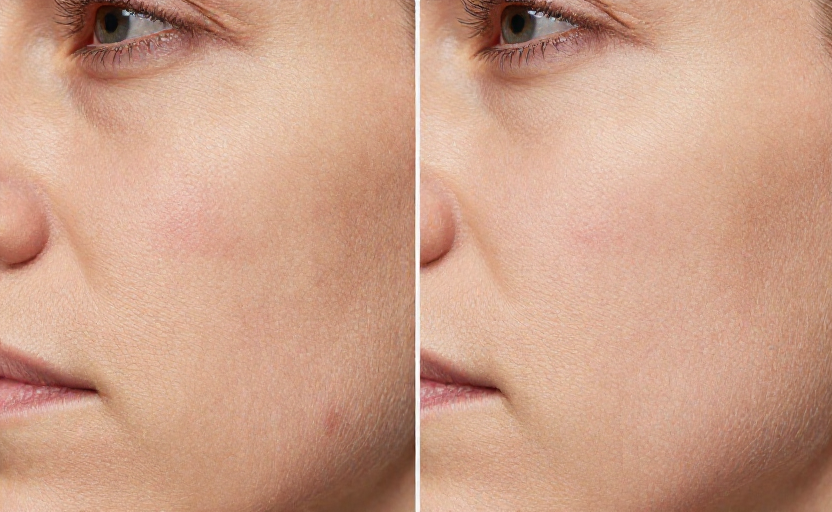
Skin can get temporarily irritated by a new product, the weather, or friction. Normal aging includes some dryness. But a patch of redness, rough scaling, or a persistent change in texture that lingers for more than a few weeks, despite gentle care and moisturizing, deserves attention.
This might manifest as:
- A rough, scaly patch that feels like sandpaper and won't smooth out with lotion (a potential actinic keratosis, a sun-induced precancer).
- A persistent red, sometimes itchy plaque, especially on the face, scalp, or ears.
- A sudden, unexplained change in skin texture over a specific area that isn't linked to a product you can identify.
These changes can be subtle. The key is persistence. If your usual skincare routine fails to improve it within a month, it's time to have it assessed.
3. A Sore That Doesn't Heal, or Heals and Returns
The skin has a remarkable ability to repair itself. A minor cut or scrape from daily life typically follows a predictable healing timeline. A wound that defies this process is one of the most significant signs to bring to a dermatologist's attention.
Be mindful of any spot that:
- Looks like a pimple or sore but doesn't clear up in 3-4 weeks.
- Heals over but then reopens or re-ulcerates in the same exact spot.
- Forms a crust that repeatedly falls off and reforms without the skin beneath healing.
This sign is less about appearance and more about behavior—a failure of the skin's fundamental repair mechanism in one localized area.
How to Prepare for Your Dermatologist Visit
Walking into an appointment feeling prepared can make the conversation more productive. Before you go, take a moment to note a few details about the change you've observed. When did you first notice it? Has it changed in size, color, or feel? Does it itch, burn, or bleed? Also, note any new medications, supplements, or skincare products you've introduced in the last six months, as these can sometimes trigger reactions.
Your dermatologist will examine the area, possibly with a dermatoscope—a specialized magnifying tool. They may determine it's a benign part of aging, a treatable condition, or something that requires a biopsy for definitive diagnosis. A biopsy is a simple, quick procedure to remove a small sample of skin for analysis under a microscope. It's the gold standard for answering the question definitively.
Remember, seeking an evaluation is an act of proactive care, not worry. It provides either peace of mind or a clear, early path forward. In skin health, clarity is the ultimate goal.