
You sit down to work, you settle in, and at some point you notice that familiar ache across your lower back or a tightness in your shoulders. The chair you spend hours in every day could be the culprit. Many people assume that any office chair is a good chair, but the reality is that some seats actively encourage slouching, forward head position, and poor spinal alignment.
The good news is you don’t need a degree in ergonomics to spot the warning signs. This practical guide will walk you through the telltale clues that your chair is working against your posture — and what you can do about it without spending a fortune on a new setup.
Do your feet rest flat on the floor?
One of the quickest checks is how your feet make contact with the ground. If the chair is too high and your feet dangle, or if it is too low and your knees rise above your hips, your pelvis tilts out of neutral. This tilt forces your lower spine into a curve that strains the lumbar discs and the surrounding muscles.
When your feet are not stable, your thighs may press against the front edge of the seat, cutting off circulation and causing discomfort. A properly adjusted chair allows your hips to sit slightly higher than your knees, with your feet flat and your thighs parallel to the floor. If you cannot achieve this position even after adjusting the seat height, the chair is not suited to your body.
Does your lower back feel supported — or neglected?
Lumbar support is not a luxury feature; it is a fundamental component of a posture-friendly chair. A good chair has a curve in the backrest that fits into the natural inward curve of your lower spine. If the backrest is too flat, too curved, or positioned too high or too low, your lower back muscles have to work overtime to keep you upright.
Try this: Sit in your chair with your usual posture. Place your hand behind your lower back. If you feel a large gap between your spine and the backrest, you lack support. Over time, this gap encourages you to slump forward. If the chair has an adjustable lumbar mechanism, experiment with its height and depth. If it does not, consider adding a small rolled towel or a lumbar cushion. A chair that leaves your lower back unsupported is almost certainly making your posture worse.
Are your shoulders and arms relaxed?
A chair that forces you to raise your shoulders to reach your keyboard or desk is a major red flag. Armrests that are too high can shrug your shoulders up toward your ears, creating tension in the trapezius muscles and neck. Armrests that are too low or absent entirely can make you lean forward to use your arms, pulling your head and shoulders out of alignment.
Ideal armrests sit at a height where your elbows rest at a comfortable 90-degree angle while your shoulders stay relaxed. If the armrests are fixed in a position that does not match your body, or if they are too wide apart, they can force your shoulders into a rounded posture. A chair with adjustable armrests gives you the best chance of finding a neutral position, but if the range of adjustment is limited, the chair may be a poor fit for your frame.
How deep is the seat cushion?
Seat depth matters more than most people realize. When you sit back against the chair, there should be about two to three inches of space between the back of your knees and the front edge of the seat cushion. If the seat is too deep, you have to scoot forward to avoid pressure behind the knees, which leaves your lower back unsupported against the backrest. If the seat is too shallow, your thighs do not rest fully on the cushion, which can cause pressure points and instability.
A chair with a sliding seat pan can solve this, but many budget chairs have a fixed depth. Measure your own thigh length and compare it to the depth of the seat. If they do not match, the chair will encourage you to sit in a compromised position.
Does the chair keep you still — or allow movement?
A common misconception is that the best ergonomic chair locks you into one rigid posture. In reality, your body needs micro-movements throughout the day. A chair that tilts too easily or has a backrest that is too loose can make you feel unstable, leading you to brace your core and leg muscles constantly. On the other hand, a chair that is completely stiff prevents the natural sway of your pelvis and spine.
Look for a chair with a tilt tension adjustment that lets you lean back slightly without feeling like you are falling. A small amount of rocking motion helps you shift your weight and keeps blood flowing to your muscles. If your chair either creaks under small movements or locks you into a fixed upright position, it may be contributing to stiffness and poor posture by discouraging natural movement.
What about the headrest?
Headrests are common on many modern office chairs, but they can actually worsen posture if they are not positioned correctly. A headrest that pushes your head forward or forces your chin to tuck too far down can create strain in the upper neck. Conversely, a headrest that is too far back offers no support and encourages you to jut your head forward over the keyboard.
The ideal headrest supports the base of your skull while keeping your ears aligned over your shoulders. If your chair’s headrest is non-adjustable and does not fit your height, it may be better to remove it or reposition it out of the way rather than accept a poor alignment.
Some quick fixes before you replace the chair
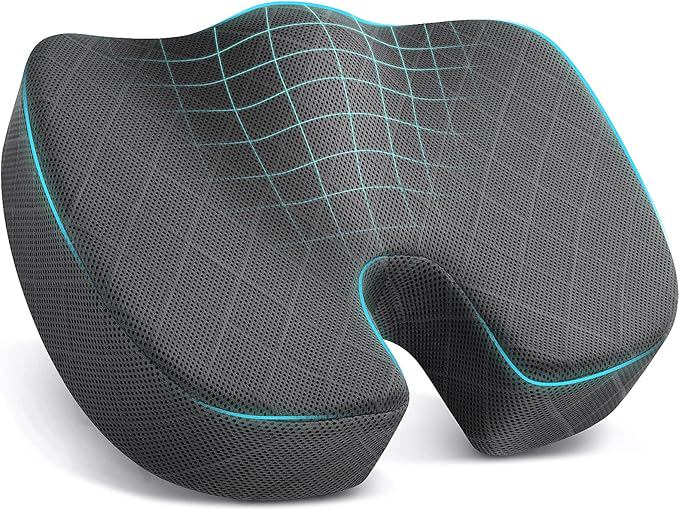
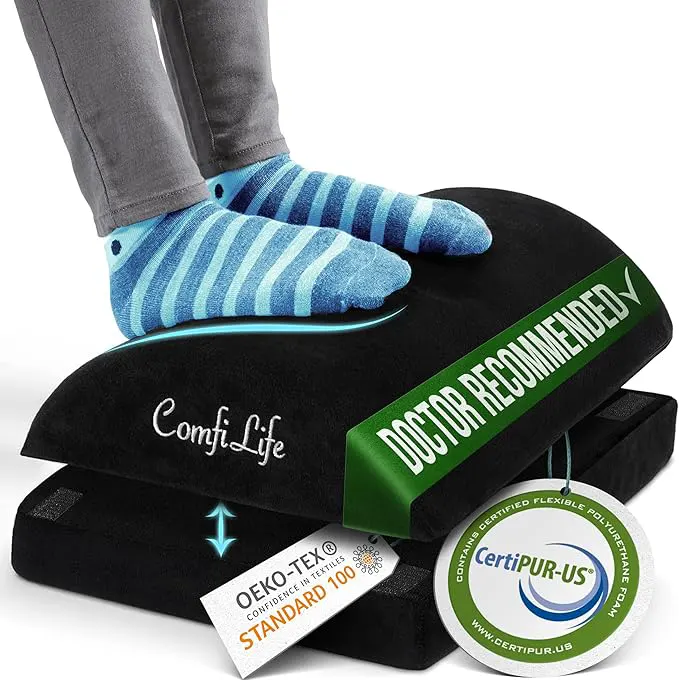
If your chair fails a few of these checks, you do not necessarily need to buy a new one. Start with simple adjustments: raise or lower the seat height, adjust the tilt tension, and reposition the armrests. If the lumbar support is weak, add a small cushion. If the seat depth is too long, consider a footrest that allows your knees to bend properly while keeping your lower back against the chair.
Watch for physical cues that your chair is the problem: frequent lower back pain that improves when you stand, numbness or tingling in your legs, shoulder stiffness that gets worse late in the day, or a tendency to sit on one leg or cross your ankles under the chair. These habits often develop as compensations for an unsupportive seat.
The right chair allows you to sit comfortably for long periods without locking you into one position. If your chair works against your body, your posture will suffer. By running through these checks, you can identify exactly what is going wrong and take practical steps to fix it.