
You've been loyal to your cleanser for years. It foams up nicely, leaves your face feeling squeaky clean, and has never caused a problem—until now. Lately, your skin feels tight after washing. There is a persistent itchiness around your cheekbones, and the fine lines you thought were under control seem deeper an hour after your morning routine. This is not a random skincare crisis; it is a signal from maturing skin that the rules of cleansing have changed.
As we age, the stratum corneum thins and natural lipid production slows. The robust, forgiving barrier of your twenties becomes a delicate, reactive membrane by your forties and fifties. A cleanser that once maintained balance can now strip away essential moisture, accelerating the very dehydration that worsens the look of wrinkles and dullness. The good news is that the fix is rarely an expensive serum—it is usually a smarter, gentler way to wash your face.
The twenty-minute tightness test
The most reliable indicator of a too-aggressive cleanser is what happens after you pat your face dry. Wait twenty minutes and do not apply moisturizer. If your skin feels taut, shiny in a parched way, or shows exaggerated expression lines when you frown, the cleanser is likely too alkaline or contains surfactants that are dissolving your barrier. Dry aging skin should feel comfortable and calm even before moisturizer—never stretched like a drum.
Six signs your current cleanser is the problem
Persistent flaking around the nose and mouth is often misread as a need for exfoliation when it is actually a sign that the cleanser is removing the intercellular lipids that hold dead cells in place. Redness that lasts longer than ten minutes after washing points to irritation from fragrance or essential oils. Stinging upon application of your moisturizer after cleansing indicates a compromised barrier that is now porous to ingredients that should sit on top of the skin. Sudden breakouts along the jawline and neck can occur when the barrier is weak and bacteria penetrate more easily. Visible dehydration lines that were not there six months ago—especially across the forehead and around the eyes—often appear when a cleanser is stripping natural humectants. An increase in sensitivity to weather, wind, or central heating is the final sign: if your skin reacts to environmental shifts after washing, the cleanser likely damaged its protective mantle.
What to look for instead
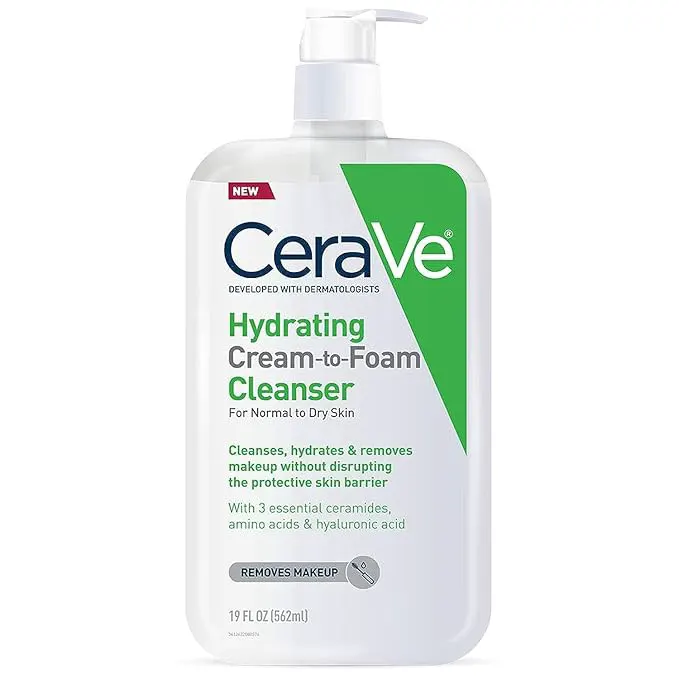
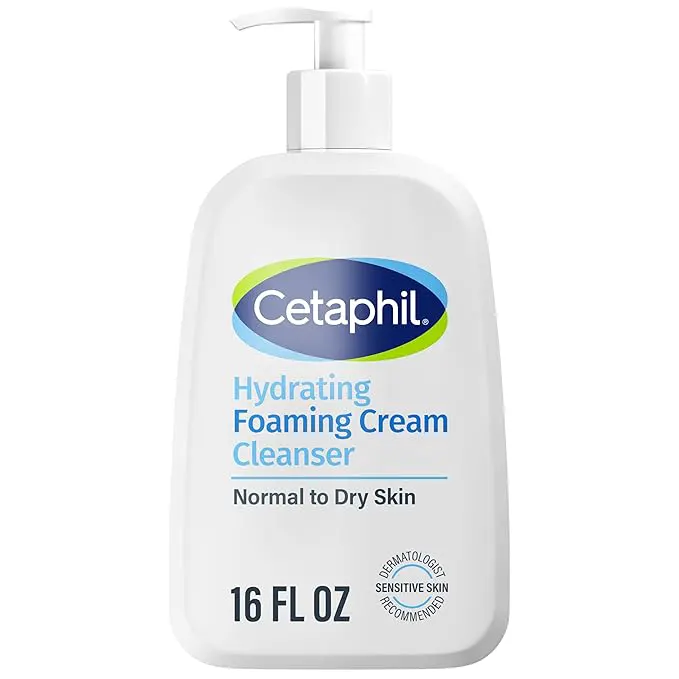
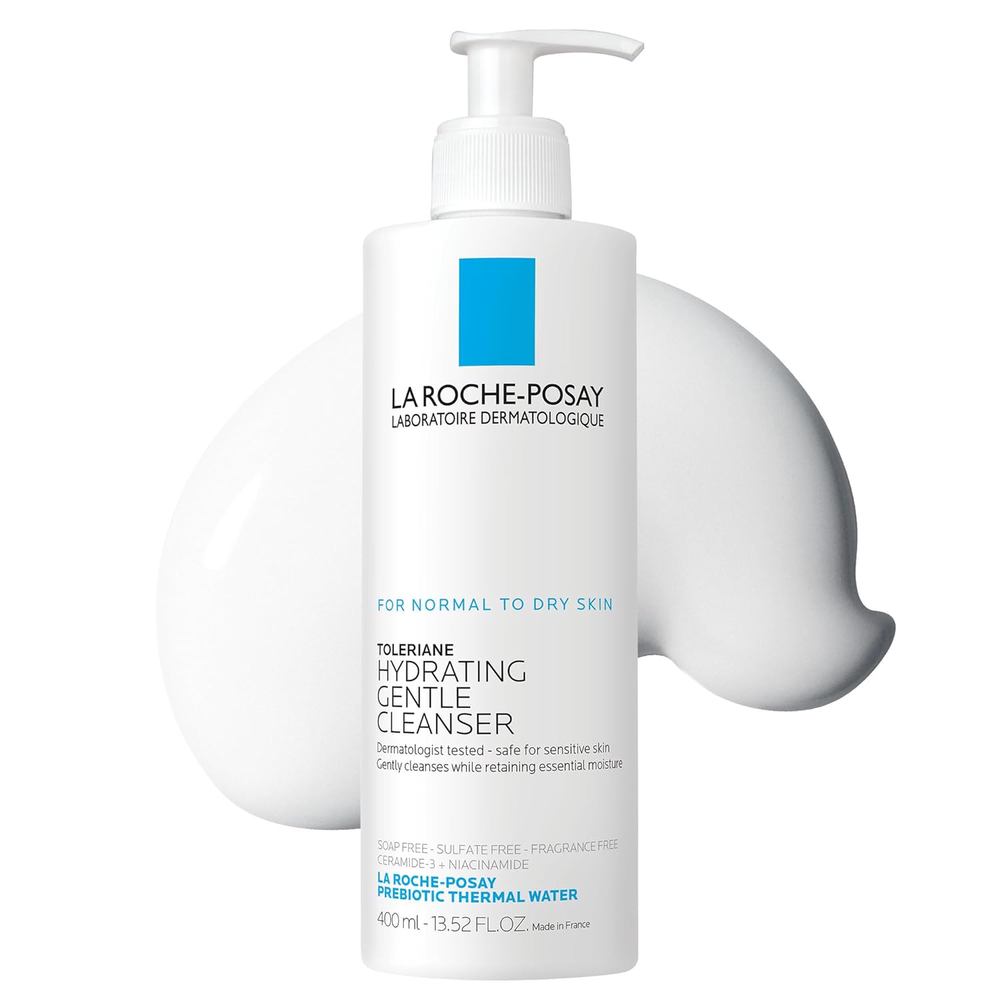
The ideal cleanser for dry aging skin is a non-foaming, lipid-rich formula. Foam requires surfactants that lift oil; aging skin needs to keep that oil. Cream, milk, oil-based balms, and cleansing lotions are the correct categories. The pH should be between 4.5 and 5.5—near the skin's natural acid mantle. Ingredients like ceramides, glycerin, squalane, and oat lipid help replenish what water alone can wash away. It is also worth switching to a micellar water designed for sensitive skin for mornings, reserving full cleansing for evening only.
If your cleanser leaves your face feeling “squeaky,” it is stripping your barrier. Squeak belongs on a windshield, not on mature skin.
Can you ever use foaming cleansers again?
Occasionally, yes. A gentle low-foam cleanser with sodium cocoyl isethionate or cocamidopropyl betaine can work for oily zones like the T-zone if used only there and rinsed off quickly. But for the majority of the face, foam remains risky. If you are not willing to give it up completely, use it only in the evening and follow with a lipid-rich toner or essence within sixty seconds of drying your face. The longer the delay, the more transepidermal water loss occurs.
The two-cleanser rhythm for aging skin
Many women over forty find that one cleanser cannot handle both morning and night without causing problems. A practical routine uses a gentle milky cleanser or micellar water in the morning—just enough to remove overnight sweat and leftover products—and a cream or oil-based cleanser at night to dissolve sunscreen, sebum, and environmental grime without double-requiring harsh detergents. If you wear heavy sunscreen or makeup, a first step with a fragrance-free cleansing oil followed by a cream cleanser is more protective than any foaming double-cleansing regimen.
What about water temperature?
This is an often overlooked variable. Hot water strips lipids aggressively. Cold water does not dissolve residues. Lukewarm water—barely warm to the wrist—is the only temperature that cleans effectively without leaching the barrier. And no washcloth scrubbing. Press with fingertips, rinse, and blot dry with a soft cotton towel. Friction is an enemy of thinning skin.
When to consult a professional
If adjusting your cleanser and temperature does not resolve tightness, flaking, or stinging within two weeks, it may be time to see a board-certified dermatologist. Dry aging skin can mimic conditions like seborrheic dermatitis, perioral dermatitis, or early rosacea. A professional can differentiate between a cleanser issue and a dermatological condition that requires prescription care. Be cautious about chasing new symptoms with more products—sometimes the simplest change, a gentler wash, is the complete solution.