Opening your blood sugar log for the first time can feel like staring at a foreign language. The columns of numbers, the notes you scribbled down, the time stamps—it’s a lot to take in. But this log is more than just data; it’s a conversation between you and your body, a powerful tool for understanding your unique patterns. Learning to read it is the first step toward feeling more in control of your health.
Think of your log as a personal detective story. Each number is a clue, revealing how food, activity, stress, and medication interact in your daily life. There’s no judgment here, only information. By learning what these numbers mean and how they connect, you move from simply recording data to actively managing your well-being.
What Your Blood Sugar Numbers Are Telling You
Before you can spot patterns, you need to understand the basic story each number tells. Your target range is your personal safe zone, typically set by your healthcare team. Numbers within this range mean your management plan is working well for that moment.
When a reading is above your target, it’s a signal—not a failure. It asks a simple question: “What happened?” Perhaps a meal was larger or more carbohydrate-heavy than usual, maybe you were less active, or perhaps stress played a role. A reading below your target range is an equally important signal, often pointing to things like timing of medication, increased physical activity, or not eating enough.
Your log isn't a report card; it's a roadmap. A high or low reading isn't a mark against you—it's a signpost showing where to look next.
A Guided Walk-Through of Your Log
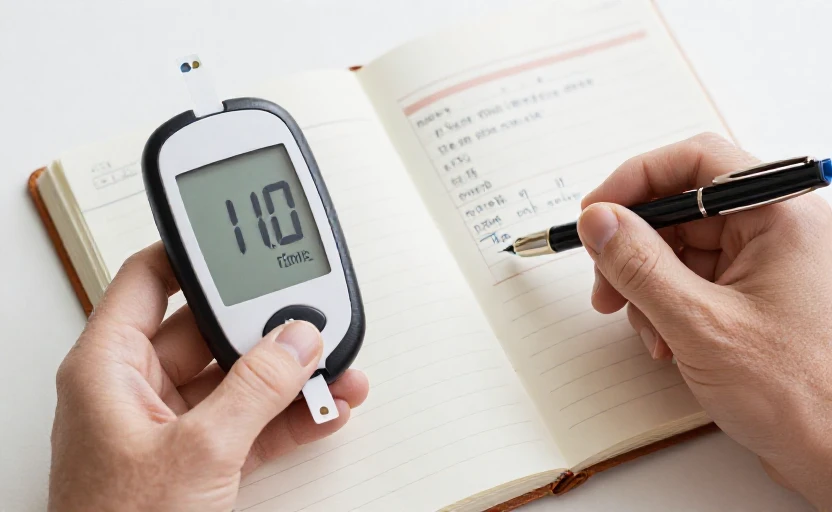
Let’s break down a typical log entry. Most logs will have columns for the date, time, blood glucose reading, and notes. The magic happens when you connect these pieces.
First, look at the time. Is it a fasting reading first thing in the morning? A check two hours after a meal? Context is everything. A 180 mg/dL reading means something very different at 8 AM (fasting) versus 2 PM (after lunch).
Next, turn to your notes column. This is where you become the author of your own story. What did you eat for the preceding meal? Were you active—like taking a walk after dinner? Were you feeling stressed, under the weather, or unusually tired? Even notes like “busy workday” or “poor sleep” are valuable. Without these details, the number is just a number. With them, it becomes an explanation.
Spotting the Patterns: Time of Day
Our bodies have natural rhythms that affect blood sugar. Many people see higher fasting numbers in the morning due to the “dawn phenomenon,” a natural release of hormones. You might notice a pattern of afternoon dips if your lunch is light or your morning medication peaks at that time. By grouping your readings by time—all your pre-breakfast numbers, all your pre-dinner numbers—you can see these daily tides emerge.
Spotting the Patterns: Food and Activity
This is where your notes are essential. Try highlighting readings from days you had similar meals. Do pasta dinners consistently lead to a higher two-hour post-meal check than grilled chicken and vegetables? Similarly, look at days with more physical activity. Did a 30-minute walk after breakfast lead to a better lunchtime reading? These cause-and-effect relationships are the golden insights your log provides.
How to Talk About Your Log with Your Doctor
Your healthcare provider wants to see the patterns, not just the perfect numbers. Come to your appointment prepared. Instead of saying, “My numbers are all over the place,” you can say, “I’ve noticed my fasting readings are consistently above target, but my after-dinner numbers are usually in range.” That’s actionable information.
Bring three specific observations or questions. For example:
- “I see a spike every afternoon after I eat fruit with lunch. Should I try a different snack or adjust the portion?”
- “My numbers are often low before dinner on days I work out. What’s a good pre-workout snack?”
- “I logged a lot of stress at work this week and my readings were higher overall. How big of a factor can stress be?”
This shifts the conversation from guesswork to collaborative problem-solving. Your doctor can then help you tweak your plan—whether it’s meal timing, medication timing, or activity suggestions—based on the evidence you’ve gathered together.
Common Tracking Pitfalls (And How to Avoid Them)
It’s easy to fall into habits that make your log less useful. The most common is forgetting to log the “why.” A number without context is a missed opportunity. Another is only testing at the same “easy” times. While consistency is good, occasionally checking at different times—like one hour after a meal or right before bed—gives a more complete picture.
Finally, avoid the urge to “clean up” your log before an appointment. Your doctor needs to see the real picture, highs and lows included, to give you the best guidance. Your honesty with the log is your honesty with your health.
Reading your blood sugar log is a skill that deepens with practice. Start by just committing to consistent logging with good notes. Then, once a week, sit down and look for one pattern. Celebrate the insights as they come. This log is your tool, your story, and your path to greater confidence in managing your day-to-day health.