When you move, your body sends signals. Some are obvious—a racing heart, a catch in your breath, a twinge in your low back. Others are quieter: a subtle shift in how your shoulders sit, a slight forward tilt of the pelvis that you barely notice until the ache sets in hours later. Learning to read those signals is the core of monitoring your body's response to movement, and it starts with one simple skill: the posture check.
This guide is not about perfect alignment or rigid rules. It’s about building awareness so you can adjust how you sit, stand, and walk before discomfort becomes a problem. Whether you are at a desk, on a walk, or lifting something heavy, these practical posture checks will help you stay connected to what your body is telling you.
Why posture checks matter for your health
Your body is designed to move, but modern life keeps many of us in fixed positions for hours. Over time, that habit masks the small warning signs of strain. A simple posture check refocuses your attention. It helps you notice if your shoulders have crept up toward your ears, if your lower back is arched too much, or if your head is jutting forward.
Research from Harvard has shown that fat stored in the belly—visceral fat—is closely linked to metabolic disruptions and cardiovascular risk. While that finding is often discussed in the context of diet and weight, movement quality also matters. Poor posture during exercise or daily activity can limit how effectively your body uses energy and responds to physical stress. By monitoring your movement patterns, you can reduce unnecessary strain and support your heart health at the same time.
Dr. Santosh Kumar Dora, senior cardiologist at the Asian Heart Institute in Mumbai, emphasizes that lifestyle modification—including controlled diet and exercise—is key to reducing abdominal obesity and its associated risks. But lifestyle changes are only effective if you can recognize when your body is under stress. That is where the posture check becomes a daily tool.
How to do a basic posture check
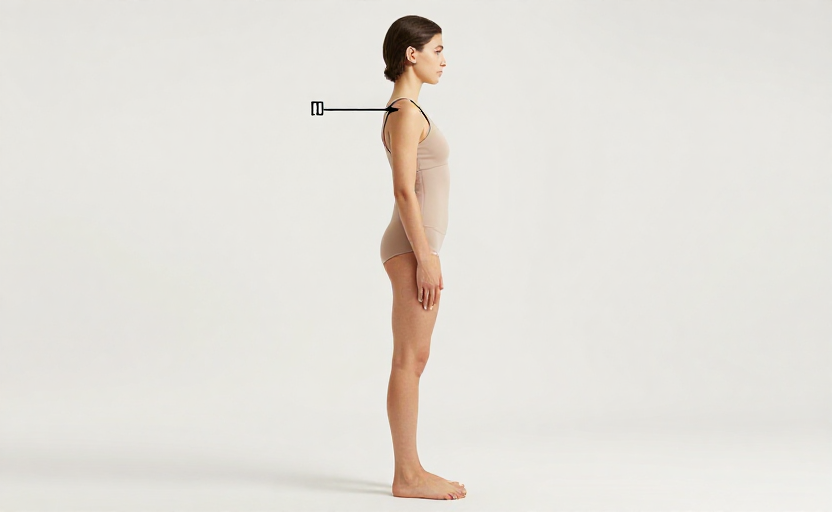
You can do this in less than 30 seconds, anywhere. Stand in your natural position—don’t try to “fix” yourself beforehand. Close your eyes briefly, then open them and scan from the ground up.
- Feet and ankles: Are your feet pointing straight ahead or turned out? Is your weight evenly distributed, or are you leaning more on one leg?
- Knees: Are they soft (slightly bent) or locked straight? Locked knees can put pressure on your joints.
- Pelvis: Place your hands on your hip bones. Is your pelvis tilted forward (arching your lower back), tucked under (flattening your back), or neutral?
- Rib cage: Are your ribs flared upward or stacked over your hips? Flared ribs often mean your core isn’t engaged.
- Shoulders: Notice if your shoulders are rolled forward, pulled back, or lifted toward your ears. Let them drop and settle.
- Head and neck: Is your chin jutting forward or is your ear aligned over your shoulder? A forward head position strains the neck and upper back.
This quick scan gives you a baseline. Use it before starting any movement—whether that is a walk, a workout, or a long stretch at your desk. Over time, you will start to notice patterns: your shoulders lift when you are stressed, or your pelvis tilts when you sit for too long.
Movement-specific posture checks
While sitting
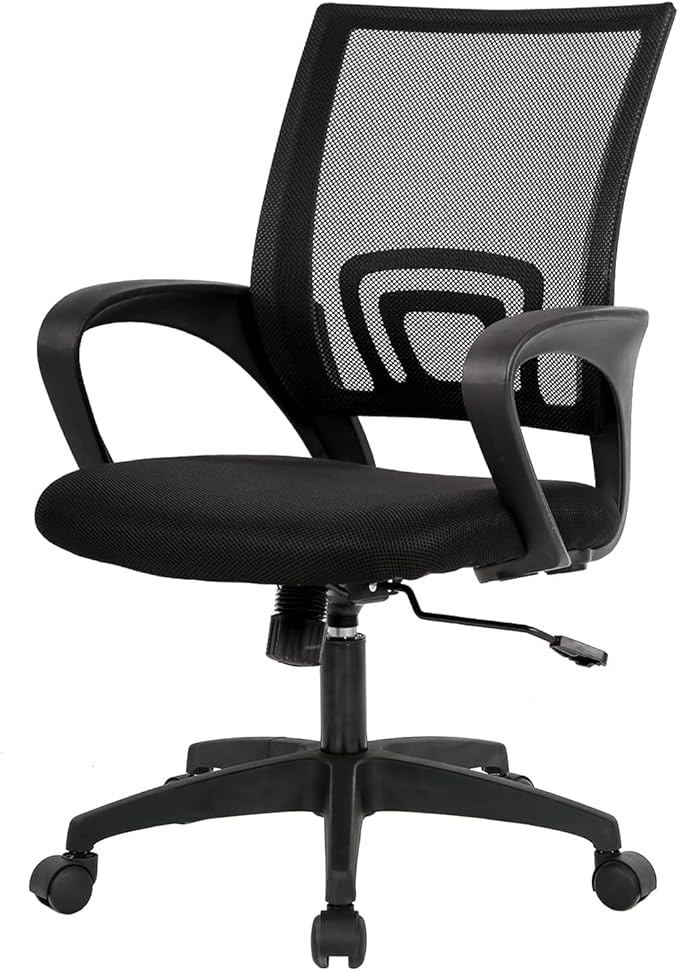
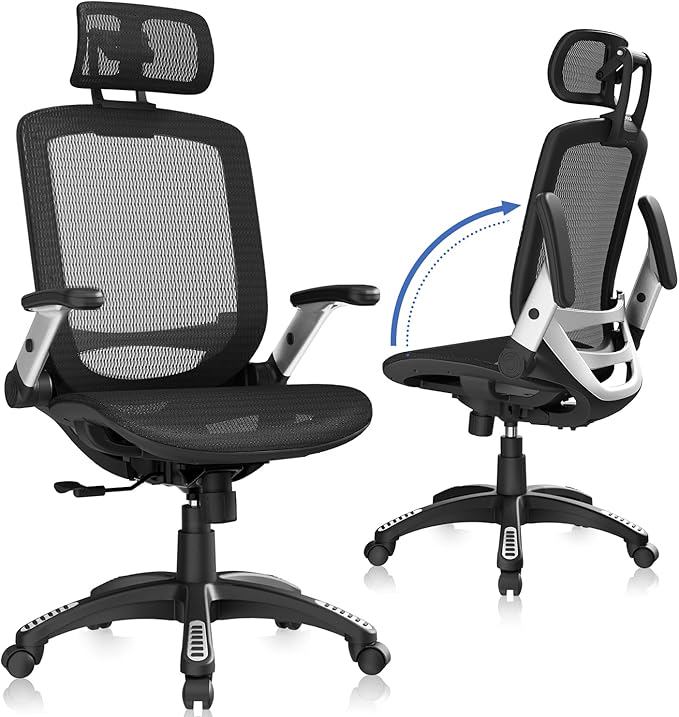
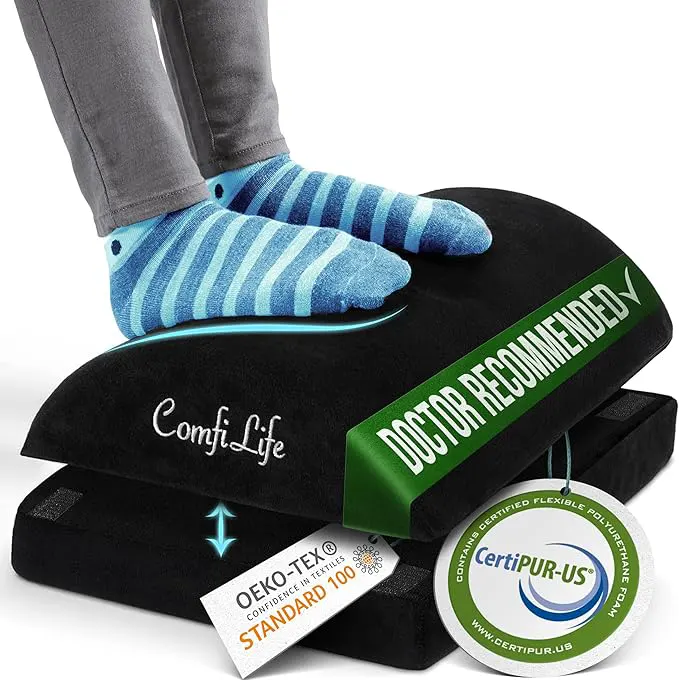
Sitting is where most of us accumulate posture stress. Check in after 20 minutes of desk work. Are your feet flat on the floor? Are your knees at roughly a 90-degree angle? If your chair forces your hips lower than your knees, try a small footrest. Notice if your lower back has collapsed into a C-curve—that puts pressure on the discs. A small lumbar roll or rolled towel can help maintain the natural inward curve.
While walking
Walking is a full-body movement. Mid-stride, check your arm swing. Are your arms crossing your midline? That can indicate tightness in your chest or a lack of core rotation. Also, notice your gaze. If you look down at your phone while walking, your head tilts forward, and your shoulders round. Keep your eyes on the horizon, not the ground directly in front of you.
While lifting or carrying
Whether you are picking up a grocery bag or a dumbbell, the setup matters. Before you lift, do a quick posture check: hips back, chest open, spine long. If you feel your lower back arching or your shoulders gripping up, adjust. Dr. Dora notes that obese adults are often prescribed a calorie-reduced diet paired with moderate aerobic activity. When that activity includes strength work, proper form is non-negotiable. A small misalignment during a lift can amplify strain over time.
Using breath as a posture barometer
Your breathing pattern is a powerful indicator of how your body is responding to movement. During a posture check, take a few slow breaths. Notice if your chest rises more than your belly. A chest-dominant breath often means you are holding tension in the neck and shoulders. A full belly breath, where your ribs expand sideways and your belly rises, suggests that your diaphragm is free and your spine is more aligned.
If you cannot take a deep, easy breath in a standing position, your posture is probably compressing your rib cage. Adjust your pelvis and shoulders, then breathe again. This is one of the most sensitive checks you can do for your overall movement quality.
How often to check in
A single posture check is useful. A routine is transformative. Begin with two or three times a day: once in the morning, once mid-afternoon, and once while cooling down from physical activity. As awareness grows, you will naturally default to better positions without thinking about it.
The European Heart Journal study cited earlier found that women with the highest level of belly fat had 91% greater risk of heart disease compared to those with the least belly fat. While that research focuses on fat distribution, it underscores a larger point: how you carry your body matters for your internal health. Monitoring your posture is one practical way to keep that connection active in your daily life.
Common obstacles to good posture and how to overcome them
- Weak core muscles: If your low back hurts within minutes of standing, your core may not be supporting your spine. Try gentle core activation exercises, like drawing your belly button toward your spine while breathing normally.
- Tight hip flexors: Sitting shortens the hip flexors. That can pull your pelvis into a forward tilt. Stand up and gently stretch your hip flexors every hour.
- Poor ergonomics: A chair that is too low or a screen that is too low forces your head and shoulders forward. Adjust your workspace so your monitor is at eye level and your forearms are parallel to the floor.
- Fatigue: When you are tired, your posture collapses. If you notice your shoulders rounding and your head dropping during the afternoon slump, that is a signal to move, not to slump further. Stand up, shake out your arms, and walk for two minutes.
Putting it all together
Monitoring your body’s response to movement is not about perfection. It is about awareness. A posture check is a small, consistent practice that keeps you in tune with your body. Over weeks and months, that awareness becomes habit. You will catch the forward tilt before your back protests. You will notice when your jaw is clenched and your shoulders are up around your ears during a stressful meeting. And you will learn to adjust—not because a doctor told you to, but because you feel the difference.
As Dr. Dora advises, lifestyle modification is essential for reducing abdominal obesity and cardiovascular risk. The posture check is a free, zero-equipment way to start modifying your movement habits today. Use it on World Heart Day, and every day after.