
Meal prepping low-carb lunches that actually stay fresh through a five-day work week takes a bit more strategy than tossing a salad in a container on Sunday night. Without the preservative effects of bread, pasta, or grains, vegetables can wilt, proteins can dry out, and dressings can turn everything soggy. But with the right ingredients and a few storage habits, you can build a lineup of lunches that taste just as good on Friday as they did on Monday.
This guide covers the core principles of low-carb meal prep for the long haul: which vegetables hold their texture, how to cook proteins so they reheat without turning rubbery, and the simplest container system to keep everything separate until you're ready to eat. No complicated recipes — just a framework you can adapt to what you like.
Why low-carb lunches go bad faster
Carbohydrates act like natural sponges in many dishes. Rice, quinoa, and bread absorb excess moisture, keeping other ingredients from getting waterlogged. When you remove those starches, the moisture from vegetables and sauces has nowhere to go, which leads to soggy greens, limp peppers, and watery casseroles. The goal is to either remove that extra moisture before packing or create a barrier between wet and dry components until serving.
Choose vegetables that last
Not all low-carb vegetables wilt at the same speed. For five-day freshness, lean toward sturdier options.
- Cruciferous vegetables — Broccoli, cauliflower, Brussels sprouts, and cabbage hold up remarkably well when roasted or raw. Roast them with oil and salt, let them cool completely, and they retain their bite all week.
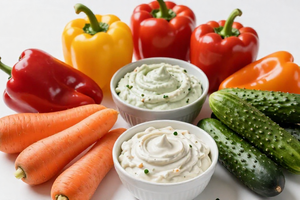
- Root vegetables in moderation — Carrots, radishes, and celery stay crisp even after a few days in the fridge. Thinly sliced radishes add crunch to any bowl without extra carbs.
- Leafy greens — Spinach, arugula, and lettuce are best added fresh each morning. If you must prep them ahead, store them in a separate container lined with a paper towel to absorb condensation.
Avoid pre-chopping avocado, cucumber, or bell peppers more than a day in advance — they turn brown or weep moisture quickly. Instead, prep the rest of the meal and add these fresh.
Cook proteins for reheating
The biggest complaint people have with meal-prepped low-carb lunches is dry, overcooked meat. The fix is twofold: cook proteins to just below your target doneness, and include a little fat in the storage container.
Chicken breast — Poach or bake until 155°F (68°C) internal temperature, then let carryover heat finish it. Slice against the grain before storing so reheating takes less time. Add a tablespoon of broth or olive oil to the container before sealing.
Ground meat — Beef, turkey, or lamb stays moist when cooked in a sauce or with enough fat. Taco-seasoned meat, bolognese, or meatballs in broth reheat beautifully.
Eggs — Hard-boiled eggs keep for five days in the shell. Frittatas and egg muffins also freeze well if you want a breakfast-for-lunch option halfway through the week.
A simple rule: always let proteins cool completely before sealing the container. Hot food trapped in a closed lid creates condensation that makes everything soggy.
The three-container system
You do not need a dozen special containers for low-carb meal prep. Three basic setups cover almost every lunch:
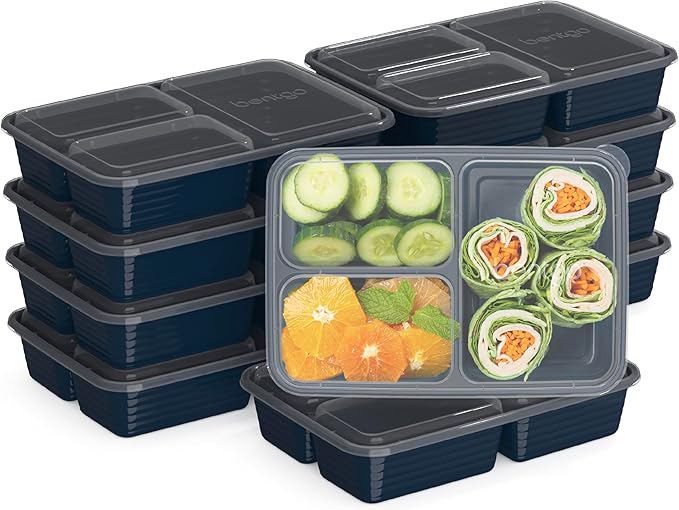
- Separated compartments — A bento-style box with individual trays keeps wet ingredients (dressing, salsa, yogurt) away from dry components until you mix them at mealtime.
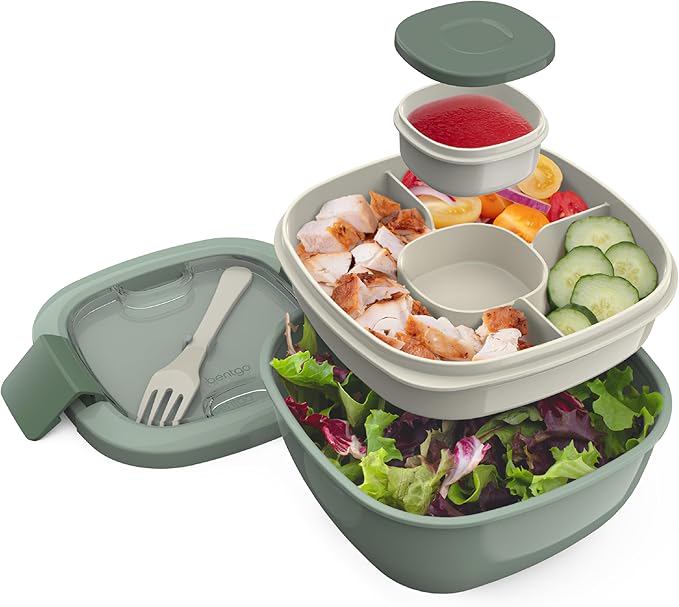
- Jar salads — Layer dressing at the bottom, then sturdy vegetables, then protein, then greens on top. Shake to combine when ready. The key is never letting the greens touch the dressing until you eat.
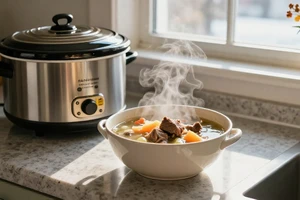
- Soup or stew container — Low-carb soups (chicken and vegetable, cauliflower chowder, chili without beans) are the easiest meal prep because they were meant to be made ahead. Freeze individual portions if you're prepping for two weeks at once.
Low-carb lunch ideas that last the week
Try building each lunch around one protein, one sturdy vegetable, and one healthy fat. Here are five combinations that hold well:
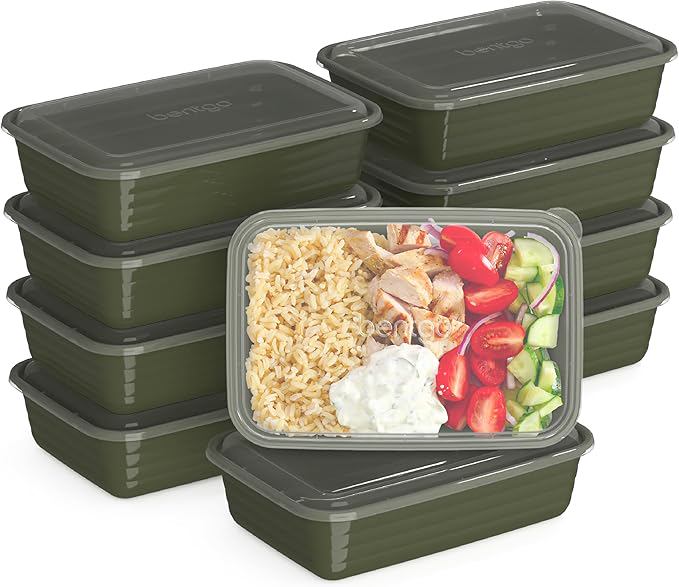
- Greek chicken bowl — Roasted chicken thigh pieces with chopped cucumber (added fresh), cherry tomatoes, olives, and a dollop of tzatziki on the side.
- Broccoli and cheddar frittata — Bake a frittata on Sunday, slice into squares, and reheat for 30 seconds in the microwave. Add a side of raw snap peas for crunch.
- Cauliflower fried rice — Sauté riced cauliflower with scrambled egg, peas (low-carb in small amounts), and diced chicken or shrimp. Portion into containers without sauce; add soy sauce or tamari at serving time.
- Ground turkey lettuce cups — Cook seasoned ground turkey and store in a container. Pack separate leaves of butter lettuce or romaine hearts. Fill and wrap at lunchtime.
- Chicken salad with celery and walnuts — Use mayonnaise or full-fat Greek yogurt as the base. Store without lettuce; spoon onto a bed of greens or into endive leaves when ready to eat.
Storage tricks that make a difference
Small habits separate a successful week of low-carb lunches from a soggy disappointment.
- Paper towels are your best friend — Line the bottom of any container that holds washed vegetables or cooked meat with a dry paper towel. It catches condensation and keeps the food from sitting in moisture.
- Dressings and sauces on the side — Even low-carb vinaigrettes contain vinegar or lemon juice, which breaks down vegetable cell walls over time. Keep them in a small separate container until you're about to eat.
- Freeze what you won't eat by Thursday — If you know you have leftovers on day three, freeze Monday's portion on Sunday night. It will be just as good thawed and reheated later.
- Reheat gently — Low-carb lunches dry out faster than grain-heavy meals. Add a splash of water or broth before microwaving, and reheat at 50% power in 30-second bursts.
What to avoid in a five-day plan
- Raw mushrooms — They release a lot of liquid and turn slimy after two days. Roast them first or add them fresh.
- Soft cheeses — Fresh mozzarella and ricotta weep liquid. Stick with aged cheeses like cheddar, gouda, or Parmesan for weekday meals.
- Seafood — Cooked fish and shrimp turn unpleasantly rubbery or smell strongly after three days. Prep seafood for the first half of the week only.
Low-carb meal prep does not have to be boring or wasteful. With a little planning around water content, container strategy, and reheating habits, you can open your lunch bag every single day and find something that looks and tastes fresh. The principles are simple enough to mix and match with whatever protein and vegetables you have on hand, so you can rotate variety without losing the convenience of cooking once and eating well all week.