
That mid-afternoon slump is a familiar feeling for many. You make it through the morning, eat lunch, and then find yourself fighting to keep your eyes open by 3 PM. The problem is often not that you ate too much — it’s that your meal lacked the right balance to keep your blood sugar steady and your energy levels stable for the rest of the day. Building a better afternoon meal doesn't require a complicated recipe; it requires a simple shift in how you think about your plate.
A balanced afternoon meal for sustained energy needs three core components: high-quality protein, fiber-rich carbohydrates, and healthy fats. Together, these nutrients slow down digestion, prevent sharp spikes and crashes in blood sugar, and provide a slow, steady release of fuel. Let's break down how to put this into practice.
Start with protein for staying power
Protein is the most satiating macronutrient. When you include enough protein in your lunch, you signal to your body that it has the building blocks it needs to maintain muscle and keep your brain chemistry balanced. Without enough protein, your meal gets digested quickly, and you're left hungry and tired an hour later. Think of protein as the anchor of your afternoon plate.
Good sources for lunch include grilled chicken or turkey, canned tuna or salmon, hard-boiled eggs, lentils, chickpeas, tofu, or Greek yogurt. Aim for a serving that feels substantial — about the size of your palm. If you are vegetarian or vegan, pairing legumes with a whole grain (like beans with brown rice) creates a complete protein profile that works just as well.
Choose carbohydrates that work with you, not against you
Not all carbs are enemies of afternoon energy. In fact, your brain runs on glucose, so you need carbohydrates to think clearly and avoid brain fog. The key is choosing complex carbohydrates that come packaged with fiber. Fiber slows down how fast sugar enters your bloodstream, preventing that sudden crash.
Replace white bread, white rice, and refined pasta with whole grain options like quinoa, farro, whole-wheat bread, oats, or brown rice. Vegetables also count. A large salad with leafy greens, roasted sweet potatoes, or a side of steamed broccoli delivers carbs along with vitamins and fiber. You want carbs that keep your blood sugar on an even keel.
Don't skip the healthy fats
Healthy fats are often the missing piece in an afternoon meal. Fats help you absorb fat-soluble vitamins (A, D, E, and K) and slow stomach emptying, which extends the feeling of fullness. A meal without fat digests rapidly, leaving you hungry and searching for a sugary snack by mid-afternoon.
Easy additions include a drizzle of olive oil on your salad, half an avocado sliced onto a sandwich, a handful of walnuts or almonds, or a sprinkle of flaxseeds or chia seeds. Even a small amount — like a tablespoon of nut butter in a grain bowl — makes a meaningful difference in how long your energy lasts.
Putting it together: a sample afternoon plate
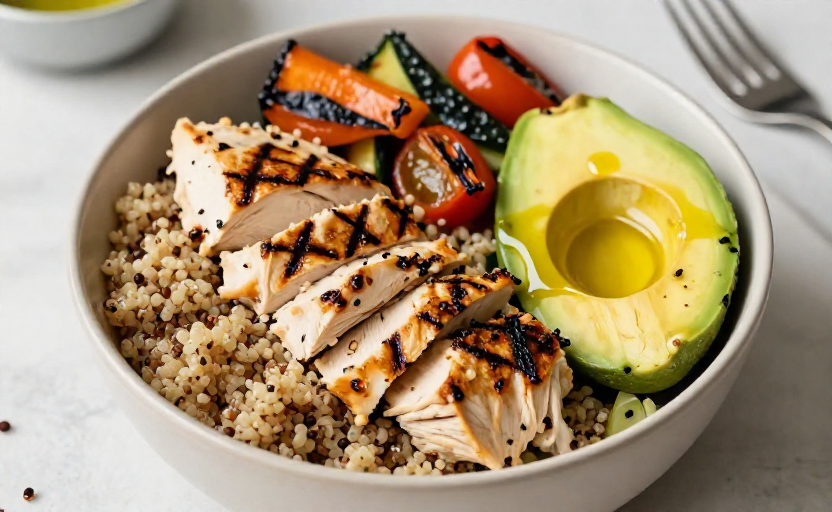
To make this practical, here is what a balanced lunch looks like in real life:
- Base: A generous bed of mixed greens or a serving of cooked quinoa
- Protein: 4-5 ounces of grilled salmon or chickpeas
- Fiber-rich carbs: Roasted vegetables (broccoli, bell peppers, and carrots) plus a small portion of sweet potato
- Healthy fat: A quarter of an avocado and a sprinkle of pumpkin seeds
- Flavor without sugar: A simple vinaigrette made with olive oil, lemon juice, and herbs
This combination delivers a steady stream of energy for four to five hours. You won't crash because the fiber and fat slow down the digestion of the carbohydrates, and the protein keeps your blood sugar stable.
Watch out for hidden energy zappers
Even a well-built meal can be sabotaged by what you drink or add to it. Sugary sodas, sweetened iced teas, or even a large coffee with flavored syrups and cream can spike your blood sugar and lead to a rapid energy drop. Stick with water, unsweetened sparkling water, or herbal tea. If you want caffeine, keep it moderate — one cup of coffee or tea is fine, but avoid the heavy sugar load.
Salt can also be a hidden culprit. A lunch that is very high in sodium can leave you feeling sluggish and dehydrated. Pay attention to how much processed food is in your meal — deli meats, canned soups, and fast food are often loaded with sodium.
Building a balanced afternoon meal is really about intention. You don't need to follow a strict diet or eat the same thing every day. Just remember the three anchors: protein, fiber-rich carbs, and healthy fat. When your plate has all three, your energy stays steady, your mood stays even, and you can get through the rest of your day without the 3 PM crash.