Making pizza dough from scratch can feel like a weekend project, but when you need to avoid gluten, that feeling can turn into genuine hesitation. Traditional wheat flour has a unique elasticity that’s hard to replicate. Yet, a delicious, chewy, and crispy gluten-free pizza crust is absolutely within reach—and it doesn’t have to be a complicated ordeal. With a few smart ingredient choices and simple technique adjustments, you can create a dough that’s quick to prepare and satisfying to eat.
The key lies in understanding how gluten-free flours behave differently. Without gluten to provide structure, we rely on other binders and a thoughtful blend of flours to mimic that desirable texture. The process is less about kneading and more about mixing and patience. Let’s walk through the foundational tips that make the process quick, easy, and reliably successful.
Start with the Right Flour Blend
Single gluten-free flours, like almond or rice flour alone, often result in a dense or crumbly crust. The secret to a well-rounded texture is using a pre-mixed gluten-free all-purpose flour blend or creating your own. Look for blends that include a mix of starchy and protein-rich flours—common components are brown rice flour, tapioca starch, and potato starch. Many also contain a binder like xanthan gum or psyllium husk powder, which is crucial for replacing the elasticity of gluten.
For the most consistent results, especially when you're starting out, a trusted store-bought gluten-free flour blend designed for bread or pizza is your best friend.
Don’t Skip the Binder
This is the non-negotiable element. Xanthan gum or psyllium husk powder acts as the glue in your dough. It traps gases from the yeast, allowing the dough to rise, and provides the stretch and structure that prevents a cracker-like crust. If your flour blend doesn’t already include it, you’ll need to add it. Typically, 1 to 1.5 teaspoons of xanthan gum per cup of flour blend does the trick. Psyllium husk powder also adds a wholesome fiber boost and can help achieve a more "wheat-like" chew.
Embrace a Wet Dough
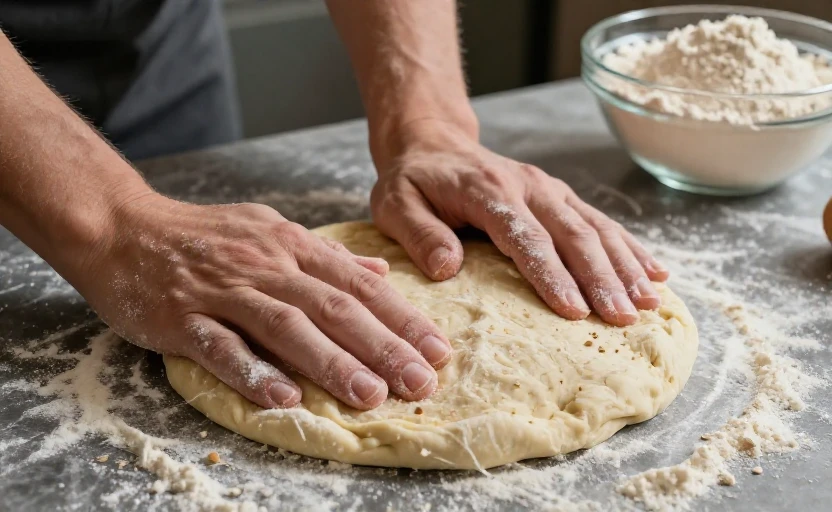
Gluten-free doughs are significantly wetter and stickier than traditional wheat dough. Resist the urge to add more flour. This higher hydration is what leads to a lighter, less dense final crust. You’ll mix it with a spoon or spatula—it’s a batter-like consistency rather than a kneadable ball. Trying to handle it like wheat dough will only lead to frustration. Instead, scrape it directly onto your prepared pan and use wet hands or a spatula to press and shape it.
Shaping Your Crust
Place a piece of parchment paper on your pizza pan or baking sheet. Pour the dough into the center. Lightly wet your fingertips to prevent sticking, then gently press and pat the dough out into your desired shape and thickness. A small offset spatula or a rubber spatula dipped in water can also help smooth the edges. Don’t worry about perfection; rustic is part of the charm.
Let the Dough Rest
This short rest period is a simple step with a big impact. After mixing, cover the bowl and let the dough sit for 20-30 minutes. This allows the flours to fully hydrate and the binders to start their work, creating a better texture and making the dough easier to handle. You can often skip the traditional long rise associated with yeast doughs, especially if using baking powder for a quicker "thin and crispy" style crust.
Par-Bake for a Crispy Base
To avoid a soggy crust, especially with wet toppings, par-baking is your best technique. Pre-bake the shaped dough on its own for 7-10 minutes in a hot oven (around 425°F / 220°C) until the top looks dry and set. This creates a firm foundation. Then, add your sauce, cheese, and toppings, and return it to the oven to finish baking. This ensures the bottom crisps up beautifully while the toppings melt and bubble.
Remember, gluten-free baking is a different journey. Your first attempt might not be perfect, but each batch teaches you more about how your chosen flours behave. The goal is a delicious pizza you can enjoy without compromise—crispy on the outside, tender on the inside, and full of flavor. With these tips in hand, you’re well on your way to making pizza night a regular, stress-free joy again.