
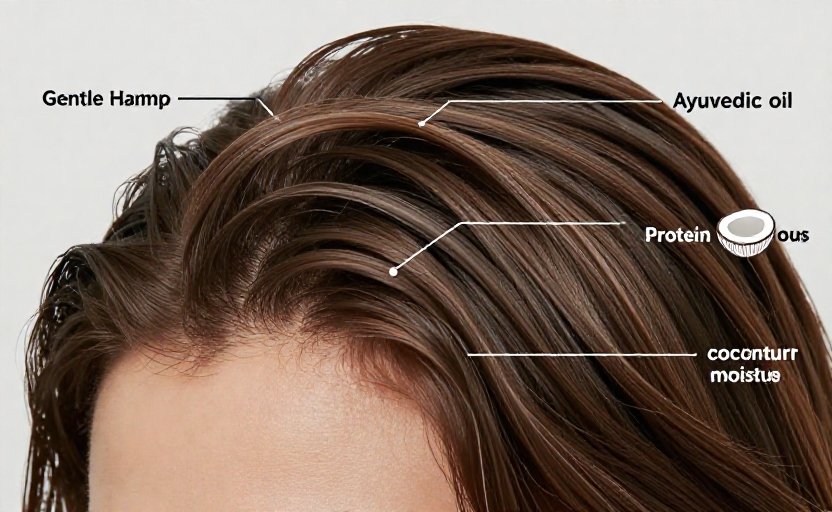
When your scalp feels irritated, tight, or just generally unhappy, your hair often pays the price. A reactive scalp—one that’s sensitive, inflamed, or prone to flaking—can weaken hair at the root and make strands more likely to snap. Instead of layering on more products that might make things worse, the smarter move is to swap out a few key steps in your routine. Below are expert-backed swaps that target the root cause of breakage (your scalp) without adding more irritation.
Why Your Scalp’s Reaction Matters for Hair Strength
Think of your scalp as the soil your hair grows from. When the scalp is healthy—balanced in oil production, not inflamed, and properly hydrated—hair follicles can produce strong, resilient strands. But when the scalp is reactive, it’s usually a sign of a compromised barrier. That can mean excess shedding, slower growth, and hair that breaks off easily because the follicle isn’t getting the support it needs. The goal isn’t just to stop breakage after it happens—it’s to give your scalp what it needs to grow stronger hair in the first place.
Swap 1: Switch From Harsh Shampoos to a Gentle, Protein-Rich Cleanser
Many standard shampoos use sulfates and strong detergents that strip away natural oils and further irritate a sensitive scalp. When your scalp barrier is already fragile, that stripping action can lead to dryness, itching, and more breakage. Swap to a coconut-based protein shampoo that cleanses without stripping. Ingredients like coconut extract help maintain moisture while proteins (such as wheat or silk proteins) reinforce the hair shaft itself. This dual action calms the scalp while giving strands the structural support they need to resist snapping.
Swap 2: Add a Nourishing Hair Oil With Amla, Bhringraj, and Coffee
A reactive scalp often benefits from targeted oiling—but only if the oils are anti-inflammatory and non-comedogenic. Standard mineral oils can sit on the scalp and clog pores, which makes reactivity worse. Instead, reach for a natural hair oil made with Ayurvedic herbs like amla, bhringraj, and coffee extract.
- Amla (Indian gooseberry) is packed with antioxidants that support cell regeneration on the scalp. It helps calm inflammation while also protecting against premature graying. Think of it as a soothing tonic for irritated follicles.
- Bhringraj has been studied for its ability to reduce hair loss and promote regrowth. Research published in journals like Archives of Dermatological Research and BioMed Research International supports its use as a natural treatment for thinning hair. It works by improving circulation to the scalp and reducing inflammatory signals.
- Coffee oil stimulates blood flow to hair follicles, which encourages active growth. More blood flow means more oxygen and nutrients reaching the root, which can help hair grow in thicker and less prone to breakage.
When used consistently (about 1–2 times per week as a pre-wash treatment), this oil combination addresses both scalp reactivity and the resulting breakage at the same time.
Swap 3: Never Skip Conditioner—But Choose One That Repairs, Not Just Coats
Skipping conditioner is one of the fastest ways to invite breakage, especially if you have a reactive scalp. Without conditioner, the hair cuticle stays rough and unprotected, which makes it easy for strands to catch and snap. But not all conditioners are created equal for a sensitive scalp. Look for a protein conditioner that contains argan oil and murumuru seed butter.
- Argan oil is rich in vitamin E, a nutrient that helps the scalp absorb other beneficial ingredients. It also seals moisture into the hair shaft without leaving a greasy residue, which is crucial for reactive scalps that don’t tolerate heavy silicones.
- Murumuru seed butter provides deep hydration without clogging pores. It helps restore elasticity to brittle strands, reducing the likelihood of mid-shaft snaps.
- Proteins from wheat or silk fill in gaps along the hair cuticle, strengthening the strand from the outside in. This makes hair more resilient to everyday manipulation like brushing and styling.
Short tip: Apply conditioner mainly from the mid-lengths to ends. If your scalp is very reactive, rinse conditioner off quickly at the roots to avoid buildup.
Swap 4: Limit Heat Styling and Use Coconut Extracts to Replace Lost Moisture
Heat styling tools—blow dryers, straighteners, curling irons—suck moisture out of the hair shaft. For someone with a reactive scalp, dry hair is brittle hair. Brittle hair breaks. Swap frequent heat styling for air drying when possible, and incorporate coconut-based products into your routine.
Coconut extract and coconut oil have a unique ability to penetrate the hair shaft and reduce protein loss. They are one of the few natural oils that can actually fill moisture gaps from within. If you do use heat, always apply a heat protectant and follow up with a coconut-infused leave-in product to restore what the heat removed.
Key Takeaways
A reactive scalp and hair breakage are connected—fixing one helps the other. Gentle swaps in your shampoo, oil, conditioner, and heat habits can make a real difference without adding more irritation. Focus on anti-inflammatory ingredients like amla, bhringraj, and argan oil, and support hair structure with proteins and coconut extracts.