A resilient skin barrier doesn't just happen because of what you put on your face—it starts with what you put on your plate. Your skin is your largest organ, and like every other part of your body, it relies on a steady supply of nutrients to repair, protect, and renew itself. A dietitian will tell you: the best skincare routine in the world can't compensate for a diet that's short on the building blocks your skin barrier needs to stay strong and supple.
Below, we break down the key nutrients and the foods that deliver them, so you can eat your way to a healthier, more resilient complexion from the inside out.
Why your skin barrier needs specific nutrients
Think of your skin barrier as a brick wall. The skin cells are the bricks, and the lipids (fats) between them are the mortar. When that mortar is weak or depleted, moisture escapes and irritants get in—leading to dryness, sensitivity, redness, and inflammation. A diet rich in certain vitamins, healthy fats, and antioxidants helps your body produce and maintain that protective lipid layer.
You'll find these nutrients in everyday whole foods, which is good news—no need for exotic ingredients or complicated meal plans.
Healthy fats: the foundation of a strong barrier
The single most important nutrient group for your skin barrier is essential fatty acids, particularly omega-3s and omega-6s. Your body cannot make these on its own; you have to get them from food.
Omega-3 fatty acids help calm inflammation in the skin, which supports a more balanced barrier. They also help regulate oil production and keep skin hydrated.
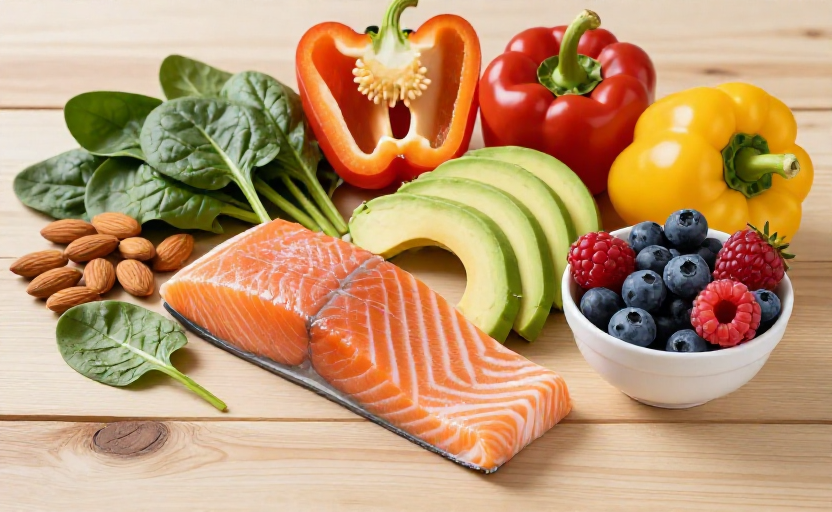
- Fatty fish like salmon, mackerel, sardines, and herring are among the best sources. Aim for two servings per week.
- Walnuts and flaxseeds are excellent plant-based options. Sprinkle ground flaxseed on oatmeal or yogurt, or grab a handful of walnuts for a snack.
- Chia seeds are another versatile source—they work well in smoothies, puddings, or stirred into overnight oats.
Omega-6 fatty acids, especially linoleic acid, are crucial for maintaining the skin's lipid barrier. A deficiency can show up as dry, scaly skin.
- Safflower, sunflower, and grapeseed oils are concentrated sources. Use them in salad dressings or for light sautéing.
- Pumpkin seeds and hemp seeds also provide a good dose of linoleic acid along with zinc, another skin-supportive mineral.
Vitamin C: the collagen connector
Vitamin C is essential for collagen synthesis, and collagen is a key structural protein in your skin. Without enough vitamin C, your skin can't repair itself as efficiently, and the barrier becomes weaker over time.
- Citrus fruits like oranges, grapefruits, lemons, and limes are well-known sources.
- Bell peppers, especially red ones, actually contain more vitamin C per gram than oranges. Eat them raw in salads or with hummus.
- Strawberries, kiwi, broccoli, and Brussels sprouts are also excellent contributors to your daily intake.
Because vitamin C is water-soluble and not stored in the body, you need a steady supply from food each day.
Vitamin E: the antioxidant protector
Vitamin E is a fat-soluble antioxidant that works from within the skin cell membranes to protect them from oxidative damage caused by UV rays and pollution. It also works synergistically with vitamin C to enhance protection.
- Sunflower seeds and almonds are among the richest food sources. A small handful of almonds makes an easy snack.
- Avocados deliver vitamin E along with healthy monounsaturated fats, which also support skin hydration and barrier function.
- Spinach and Swiss chard offer a modest amount of vitamin E, plus other antioxidants and minerals.
Zinc: the repair mineral
Zinc plays a role in cell growth, wound healing, and controlling inflammation in the skin. It's also involved in the production of new skin cells and the maintenance of the barrier structure.
- Oysters are the highest food source, but if they are not for you, pumpkin seeds, chickpeas, and cashews are good plant-based alternatives.
- Meat and poultry provide zinc in a highly absorbable form.
- Fortified breakfast cereals can also help, but choose options without added sugar.
A note on supplementation: Whole foods provide a matrix of nutrients that work together, and they are generally safer and more effective than isolated supplements for routine skin health. If you suspect a deficiency, talk to a healthcare provider before starting any supplement.
B vitamins: energy for skin renewal
Biotin (B7) and the other B vitamins help your body metabolize the fats and proteins needed for healthy skin cell turnover. A biotin deficiency, though rare, can cause skin rashes, dryness, and even hair thinning.
- Eggs are a major source of biotin, but be sure to cook them—raw egg whites contain a protein that blocks biotin absorption.
- Salmon provides B vitamins along with omega-3s—a double benefit for skin.
- Leafy greens, legumes, and whole grains round out your B vitamin intake. Think lentils, brown rice, and spinach.
Hydration beyond water
Of course, drinking enough water is essential—it helps maintain skin moisture and supports nutrient delivery to skin cells. But hydration also comes from what you eat.
- Cucumbers, watermelon, celery, and zucchini have high water content and provide small amounts of vitamins and minerals.
- Broths and soups can help you stay hydrated, especially in colder months when you might not feel as thirsty.
If you struggle to drink enough plain water, herbal teas and water-rich fruits can help you meet your needs without forcing down glass after glass.
Practical takeaway for your weekly menu
You do not need to overhaul your entire kitchen. Start by adding one or two of the following to your usual routine:
- Add a handful of spinach to your morning smoothie or eggs.
- Eat salmon or mackerel once or twice a week.
- Snack on almonds or pumpkin seeds instead of chips.
- Include a colorful salad with bell peppers, tomatoes, and avocado a few times a week.
Consistency matters more than perfection. The goal is to give your skin barrier the raw materials it needs every day, not just when you notice a dry patch. Over time, these small choices add up to visibly calmer, better-hydrated skin that is more able to withstand environmental stressors.