You apply sunscreen, maybe even wear a hat, and yet those small, flat, darkened patches of skin—age spots—seem to appear anyway. While sun exposure is the primary culprit, your daily hydration habits might be playing a supporting role in their development. The connection isn't about the drinks themselves directly staining your skin, but about how certain beverages can make your skin more vulnerable to the sun's effects, a process known as photosensitivity.
Understanding this link requires a shift in perspective. It’s less about a single “bad” drink and more about patterns of consumption that, when combined with UV exposure, can tip the scales toward hyperpigmentation. Let’s explore the common, often overlooked, mistakes in our daily routines that might be quietly contributing to the problem.
What’s the real connection between drinks and age spots?
Age spots, medically termed solar lentigines, are a result of localized overproduction of melanin, your skin’s pigment. Ultraviolet (UV) light triggers this overproduction. However, certain compounds found in common foods and drinks can act as photosensitizers. This means they can make your skin more reactive to UV light, potentially amplifying its pigment-producing effects.
Think of it like this: sun exposure is the spark. Photosensitizing compounds can, in some cases, act like a bit of extra fuel, making the skin’s pigment response burn a little brighter or longer in that specific spot. It’s a nuanced interaction, not a guaranteed cause-and-effect, but one worth understanding for anyone focused on proactive skin care.
Three common drinking habits that may increase photosensitivity
These habits aren't about demonizing your favorite beverages, but about fostering awareness of timing and quantity.
1. Sipping citrus juices or cocktails in the sun
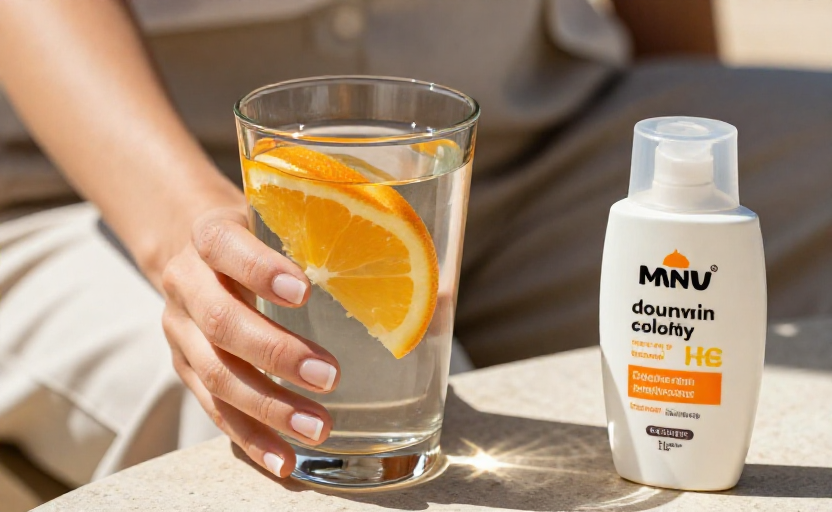
Fresh lemon water, a grapefruit juice at brunch, or a gin and tonic with lime by the pool—these are classic sunny-day staples. The issue lies in a group of compounds called furanocoumarins, particularly found in lime, lemon, bergamot, celery, and parsley. When these juices come into contact with your skin (say, from a splash or residue on your fingers and lips) and are then exposed to UV light, they can cause a reaction called phytophotodermatitis.
This reaction can lead to a red, blistering rash that, as it heals, often leaves behind a stark, dark hyperpigmentation that can last for months. It’s sometimes called “margarita burn” or “club soda dermatitis.” The key takeaway isn’t to avoid citrus, but to be meticulous about rinsing or washing your skin after handling it if you’re heading outdoors.
If you’re squeezing limes at a backyard BBQ, wash your hands thoroughly before settling into your sun chair.
2. Consuming very large quantities of certain herbal teas
Herbal teas are widely celebrated for their wellness benefits, but moderation and variety are key. Some herbs, like St. John’s Wort, contain hypericin, a well-documented photosensitizer. While drinking typical amounts of commercially prepared tea is generally safe, consuming exceptionally large, medicinal quantities of certain herbs could theoretically increase sun sensitivity.
A more common, though less potent, concern involves herbs like angelica or even very high, concentrated intakes of celery seed. The mistake here is assuming “all-natural” equals “no sun risk.” It’s a reminder that more is not always better, and rotating your herbal tea choices is a sensible practice.
3. The dehydrating double-whammy: alcohol and caffeine
This mistake is less about direct photosensitivity and more about compromising your skin’s first line of defense: its moisture barrier. Both alcohol and caffeine (in high amounts) have diuretic effects, which can contribute to systemic dehydration. When your body is dehydrated, your skin can become dry, flaky, and less resilient.
Dehydrated skin doesn’t function optimally. Its barrier is weakened, potentially making it more susceptible to all forms of environmental stress, including UV damage. This doesn’t mean your morning coffee or evening glass of wine is causing spots. It means that consistently replacing water with diuretic beverages, especially in hot, sunny weather, leaves your skin more vulnerable overall. The mistake is failing to balance these drinks with ample pure water.
How to enjoy your drinks while protecting your skin
Protection is about smart habits, not deprivation. You can absolutely enjoy your daily rituals while supporting your skin’s health.
- Prioritize water as your baseline. Aim to drink water consistently throughout the day. Well-hydrated skin is healthier and more resilient.
- Practice sun-smart timing. If you’re enjoying a citrus-heavy drink, do it indoors or in deep shade. Be extra vigilant about applying (and reapplying) a broad-spectrum sunscreen to your hands, lips, and around your mouth.
- Embrace variety in your tea cupboard. Rotate between different herbal blends—peppermint, rooibos, ginger, chamomile—to avoid excessive consumption of any single herb.
- Follow the “rinse rule” with citrus. After handling limes, lemons, or celery for drinks or cooking, wash your hands and any skin that may have come into contact with the juice before going into the sun.
Your most powerful tool remains sun protection. No dietary tweak can replace the necessity of daily sunscreen use, seeking shade during peak hours, and wearing protective clothing. Think of managing your beverage habits as a supportive layer in your overall anti-aging strategy, working in concert with your topical skincare to help your skin face the day with strength.