You’ve invested in the right products, you’re gentle with the heat, and you’re trying to do everything right for your hair. Yet, those frustrating, wispy split ends keep appearing, making your hair look dry and unkempt. Often, the culprit isn’t the product on your shelf, but a simple, repeated mistake made during one of the most fundamental routines: detangling.
Detangling is meant to smooth and separate, not stress and snap. When done incorrectly, it creates tiny fractures in the hair cuticle that travel up the shaft, leading to the splits and breakage that sabotage your length and health goals. Let’s look at the most common detangling misstep and how to correct your technique for stronger, smoother hair.
What is the most common detangling mistake?
The single biggest mistake people make is starting at the roots. It feels intuitive—you grab your brush or comb and begin raking from the scalp down through the lengths. This approach, however, forces every single knot and tangle from the mid-lengths and ends to be pulled through the entire length of the hair shaft. The brush meets resistance almost immediately, yanking and stretching the hair from the root, which can lead to breakage and even traction on the follicle itself.
Imagine trying to comb a knotted necklace by pulling from the clasp. You’d only tighten the knots and risk breaking the chain. Hair follows the same principle. Starting at the roots turns your strands into a battleground where tangles are dragged against each other, creating friction, weakening the cuticle, and directly causing those split ends you’re trying to avoid.
How to detangle correctly to prevent damage
The golden rule for damage-free detangling is simple: always start at the ends and work your way up, slowly and section by section. This methodical approach gently teases apart tangles where they live—usually at the ends—before moving upward, so you’re never forcing a large knot through a long section of hair.
Here’s how to put it into practice:
- Apply a detangling aid. On damp, towel-dried hair, apply a leave-in conditioner or detangling spray. This provides crucial slip, reducing friction and making the process smoother.
- Divide your hair. Split your hair into two or four manageable sections, securing each with a clip. This prevents you from tackling too much hair at once.
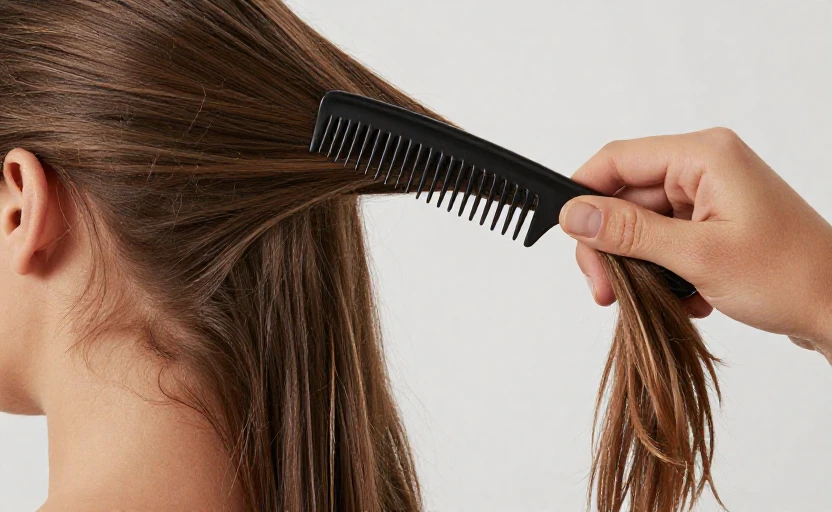
- Start at the very bottom. Take one section. Using a wide-tooth comb or a brush designed for wet hair (like a flexible plastic one with widely spaced bristles), gently comb through the last inch or two of the ends. Clear all the tangles there first.
- Move up incrementally. Once the ends are smooth, move up an inch or two and comb through that section, which now includes the already-detangled ends. Continue this “inchworm” technique, working your way up to the roots. The brush should glide through with minimal resistance.
- Be patient. If you hit a stubborn snag, don’t yank. Hold the hair above the tangle to take tension off the root, and use your fingers or the tip of the comb to carefully pick it apart.
The goal of detangling is to remove knots, not to style. Use slow, deliberate strokes, and let the tool do the work.
Choosing the right tools for the job
Your technique is paramount, but the right tool makes it infinitely easier. Stiff brushes, fine-tooth combs, or brushes with ball-tipped bristles that catch are not your friends on wet, vulnerable hair.
Opt for a wide-tooth comb made from seamless, polished material (like sandalwood or high-quality plastic) to prevent snagging. For those who prefer a brush, a flexible detangling brush with long, widely spaced bristles that bend is ideal. These are designed to flex with resistance rather than rip through it. Always detangle on damp, conditioned hair, never on sopping wet or completely dry, brittle hair if it’s prone to breakage.
Supporting your hair’s strength from within
While external technique prevents mechanical damage, the inherent strength of your hair—its ability to resist splitting—is deeply influenced by internal health. A diet lacking key nutrients can leave hair more fragile and prone to damage, making even perfect technique less effective.
Think of your hair as a structure. Protein (like keratin) is its building block, while vitamins and minerals support the processes that create strong, resilient strands. For instance, B vitamins like biotin aid in keratin production, vitamin C is essential for collagen formation (which supports hair follicles), and minerals like iron and zinc help carry oxygen and nutrients to the scalp for healthy growth. Hydration, from drinking enough water, is also fundamental for maintaining hair’s elasticity and preventing dryness that leads to brittleness.
Gentle detangling protects the hair you have, while good nutrition helps build stronger hair from the root up. It’s a holistic approach where care in the shower and choices in the kitchen work together.
Beyond detangling: other habits that cause split ends
Correcting your detangling routine is a major step, but other common habits can also be culprits:
- Over-washing or using harsh shampoos can strip natural oils, leaving hair dry and prone to splitting.
- Skipping regular trims allows small splits to travel up the hair shaft, necessitating a much larger cut later.
- Excessive heat styling without a protective product dehydrates and weakens the hair cuticle.
- Sleeping on cotton pillowcases creates friction that can rough up the cuticle; a silk or satin case reduces this drag.
- Using hair elastics with metal parts or no coating can literally saw through the hair cuticle.
By starting at the ends, being patient, and supporting your hair’s overall health, you can transform detangling from a damaging chore into a nurturing ritual. Your hair will thank you with fewer splits, less breakage, and a smoother, healthier appearance over time.