You’ve heard it a thousand times: breakfast is the most important meal of the day. But when you’re managing your blood sugar, that importance takes on a whole new meaning. The choices you make first thing in the morning can set the tone for your energy, cravings, and glucose levels for hours to come. And while the intention is often good, two specific missteps are incredibly common, quietly undermining stability before the day even gets going.
These aren’t about blatantly unhealthy choices. They’re subtler, often disguised as “healthy” or “convenient.” Recognizing them is the first step toward a morning routine that truly supports you.
The First Mistake: The Carb-Only Start
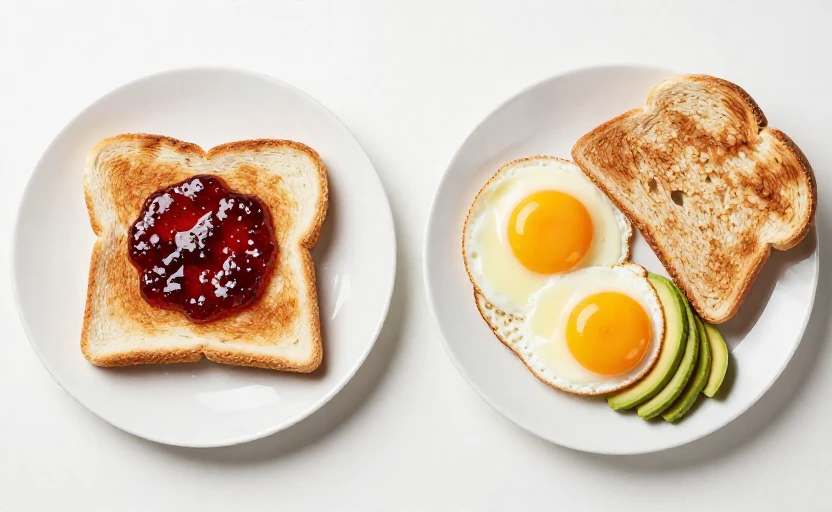
Picture a typical quick breakfast: a slice of toast with jam, a bowl of sugary cereal with low-fat milk, a granola bar, or even a seemingly innocent fruit smoothie. These are primarily carbohydrate-based, often with a high glycemic index. They digest quickly, causing a rapid spike in blood glucose. Your pancreas responds by releasing a large amount of insulin to shuttle that sugar into your cells.
The result is a familiar rollercoaster. You get a quick burst of energy, followed by a sharp drop as insulin does its job—sometimes too well. This crash leads to mid-morning fatigue, brain fog, irritability, and intense cravings for more carbs or sugar to pick you back up. It’s a cycle that’s hard to break once it starts.
A breakfast built only on carbs is like lighting a piece of paper on fire: a fast, hot flame that burns out quickly.
What to do instead
The goal isn’t to eliminate carbs, but to balance them. Pairing carbohydrates with protein, healthy fats, and fiber dramatically changes how your body processes them. These companions slow down digestion, leading to a gentler, more sustained release of glucose into your bloodstream.
- Instead of plain oatmeal, try oatmeal made with milk or a milk alternative, stirred with a spoonful of nut butter and topped with a handful of nuts or seeds.
- Instead of toast with jam, opt for whole-grain toast with avocado and an egg, or with almond butter and sliced strawberries.
- Instead of a fruit smoothie alone, blend your fruit with Greek yogurt, a scoop of protein powder, or a tablespoon of chia seeds.
The Second Mistake: Skipping Protein (or Not Having Enough)
This mistake is a close cousin of the first, but it deserves its own spotlight. Many breakfasts, even balanced-looking ones, are critically low in protein. You might have that whole-grain toast with a thin spread of peanut butter, or a small yogurt with fruit. While better than a carb-only start, the protein portion is often an afterthought—too small to make a meaningful impact.
Protein is a powerhouse for blood sugar management. It stimulates the release of glucagon-like peptide-1 (GLP-1), a hormone that promotes feelings of fullness and slows gastric emptying. This means food leaves your stomach more slowly, providing a steady drip of energy. Adequate protein at breakfast helps curb appetite and reduces the likelihood of overeating or reaching for sugary snacks later.
How much is enough?
Aim for at least 20-30 grams of protein at breakfast. This isn’t a prescription, but a helpful target that shifts the meal’s composition. For perspective, two eggs provide about 12 grams, a cup of Greek yogurt has about 20 grams, and a scoop of protein powder typically offers 20-25 grams.
Look at your plate and ask: Where is my substantial protein source? Make it a central component, not just a garnish.
Building Your Better Breakfast
So, what does a blood-sugar-friendly breakfast actually look like? It’s one that consciously avoids both mistakes. Think of it as a formula: Fiber + Protein + Healthy Fat + Mindful Carbs.
Here are a few frameworks to inspire you:
- The Savory Plate: A couple of eggs (any style) with sautéed spinach and mushrooms, plus a slice of whole-grain rye or sourdough.
- The Power Bowl: Full-fat plain Greek yogurt or skyr, topped with berries, a sprinkle of cinnamon, a handful of walnuts or pecans, and a drizzle of flaxseed oil.
- The Hearty Mix: A veggie and tofu scramble with black beans and half an avocado on the side.
- The Prepared Option: A chia seed pudding made the night before with unsweetened almond milk and protein powder, topped with almond slices in the morning.
Beverages matter, too. Starting your day with a large glass of water is a simple, supportive habit. Be mindful of coffee additives; a latte loaded with flavored syrup is essentially a sweet dessert drink. If you take your coffee with milk and sugar, try gradually reducing the sugar or experimenting with a sprinkle of cinnamon for flavor.
Listening to Your Body’s Signals
Nutrition is personal. While these principles are widely supportive, your individual response is the ultimate guide. Notice how you feel two to three hours after your new breakfast. Do you feel satisfied and energized? Or are you hungry and distracted? Adjust portions and ingredients based on your own hunger cues and energy levels.
Making these shifts requires a bit of planning, especially if mornings are rushed. Spending ten minutes on a Sunday to hard-boil eggs, chop vegetables, or portion out yogurt and nuts can make all the difference during a busy weekday.
Steering clear of these two common breakfast mistakes—the carb-only start and the protein shortfall—isn’t about restriction or a perfect diet. It’s about building a foundation of stable energy that allows you to feel your best and focus on what matters to you, without the distraction of blood sugar swings. It’s one of the most impactful, caring things you can do for yourself each morning.