Finding the right exfoliant for combination skin can feel like a balancing act. You have oily zones that need unclogging, yet dry patches that react to anything harsh. The goal isn't to strip or to over-moisturize—it's to find an exfoliant that gently resurfaces without triggering irritation. Here is a practical guide to understanding your options and choosing what actually works.
What makes combination skin tricky to exfoliate?
Combination skin typically features an oily T-zone (forehead, nose, and chin) alongside normal to dry cheeks. This dual nature means that a single exfoliation method rarely fits both areas. Scrubs that are gentle enough for dry skin may not clear pores on the nose; strong acids that control oil can inflame the cheeks. The key is to use different approaches on different zones, or to choose a product with a balanced formula that respects both extremes.
Chemical exfoliants: The smart starting point
Chemical exfoliants use acids or enzymes to dissolve dead skin cells rather than scrubbing them off. For combination skin, two types stand out:
Beta hydroxy acid (salicylic acid)
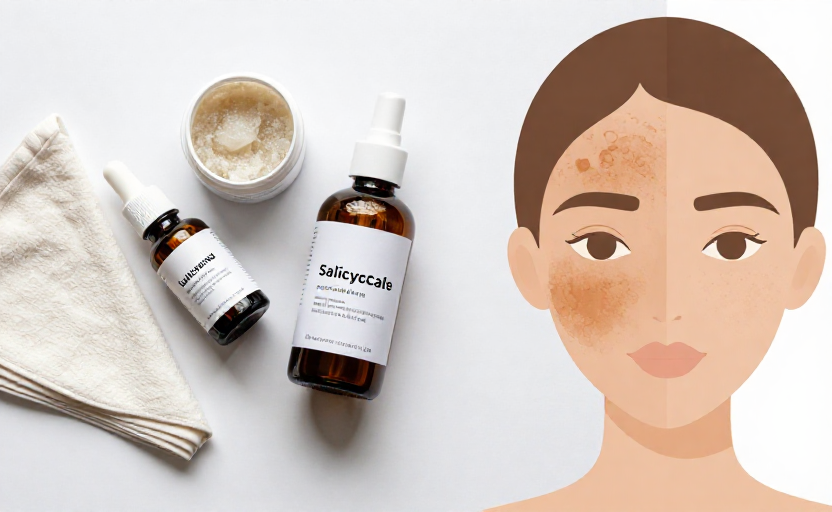
Salicylic acid is oil-soluble, meaning it can penetrate deep into pores to clear sebum and prevent breakouts. It is ideal for the T-zone and areas prone to congestion. Start with a low concentration—around 0.5% to 1%—and use it only on oilier regions if your skin is sensitive.
Alpha hydroxy acids (glycolic and lactic acid)
Glycolic acid has small molecules that exfoliate the skin's surface quickly, which can brighten dull patches but may be irritating on sensitive cheeks. Lactic acid is larger and gentler, making it a better choice for overall exfoliation, especially if you have reactive skin. Many people with combination skin benefit from alternating a BHA on the T-zone and an AHA on the cheeks, or using a product that blends low percentages of both.
Enzyme exfoliants—such as papain from papaya or bromelain from pineapple—provide a milder alternative. They are less likely to cause stinging and work well for dry, sensitive areas.
Physical exfoliants: Handle with care
Scrubs and brushes offer immediate tactile satisfaction, but they can easily over-scrub combination skin, especially on the cheeks. If you choose a physical exfoliant:
- Look for smooth, spherical granules (like jojoba beads) rather than irregular particles such as crushed nutshells or salt.
- Limit use to once or twice per week, concentrating on the nose and chin.
- Avoid dry brushing on the face, as it can strip the moisture barrier on already tight cheeks.
In general, physical exfoliation is best reserved for body areas like elbows and knees, where the skin is thicker.
How often should you exfoliate combination skin?
Frequency depends on the product's strength and your skin's tolerance. A reasonable starting point:
- Mild chemical exfoliant (low % AHA or BHA): 2–4 times per week.
- Gentle enzyme mask: 1–2 times per week.
- Soft scrub: No more than once a week, only on oily zones.
Pay attention to how your skin responds. If the cheeks feel tight or red, reduce frequency. If the nose stays congested, you may need a slightly stronger BHA or a clay mask beforehand.
Practical tips for a balanced routine
Exfoliation is only one step. For combination skin, the surrounding routine matters just as much:
- Use a gentle, pH-balanced cleanser. Avoid sulfates or foaming cleansers that can make dry patches worse.
- Apply a non-comedogenic moisturizer after exfoliating. Gel-creams work well for the T-zone, while dry cheeks may need a slightly richer lotion.
- Always wear sunscreen during the day. Exfoliation increases photosensitivity, and sun damage can worsen both oiliness and dryness.
- Do not exfoliate on the same day you use retinol, benzoyl peroxide, or other active treatments. Keep it separate to prevent irritation.
Listen to your skin. A slight glow is good; a burning sensation is not. If you feel stinging, wash your face immediately and skip exfoliation for a few days.
When to see a professional
If over-the-counter products consistently cause irritation or breakouts, a dermatologist can assess your unique skin type and recommend prescription-strength options or in-office treatments like chemical peels. Professional peels often combine AHAs and BHAs in controlled concentrations that are difficult to replicate at home. A dermatologist can also help rule out conditions like rosacea or seborrheic dermatitis, which require a different approach to exfoliation.
Choosing the right exfoliant for combination skin comes down to matching the exfoliation type with each facial zone. BHA for the oily areas, a gentler AHA or enzyme for the rest, and a cautious hand with physical scrubs. Start low, go slow, and let your skin guide you.