Many of us dream of thicker, fuller hair, but achieving it often feels like a mystery. While genetics and hair care routines play significant roles, the foundation for healthy hair growth is built from within, starting with what you eat. Your hair follicles are among the most metabolically active structures in your body, and they require a steady stream of specific nutrients to produce strong, resilient strands. This guide focuses on the practical, everyday dietary choices that can support your hair’s natural growth cycle and vitality.
Think of your diet as the soil from which your hair grows. Just as a plant needs the right balance of nutrients to thrive, your hair follicles depend on vitamins, minerals, and proteins from your food. A diet lacking in key components can lead to hair that is weak, brittle, or slow to grow. The good news is that by understanding which nutrients matter most and where to find them in whole foods, you can create a sustainable eating pattern that nourishes your hair from the inside out.
What nutrients does your hair need most?
Hair is primarily made of a protein called keratin. This simple fact underscores the importance of adequate protein intake. Without enough high-quality protein, your body may ration its supply, shifting hair growth into a resting phase, which can lead to increased shedding and thinner-looking hair over time.
Beyond protein, several micronutrients act as essential co-factors in the hair growth process:
- Iron: Carries oxygen to hair follicles. A deficiency is a common cause of hair loss, especially in women.
- Zinc: Plays a crucial role in hair tissue growth and repair. It also helps keep the oil glands around follicles working properly.
- Biotin (Vitamin B7): Supports the production of keratin. While true deficiency is rare, ensuring adequate intake supports healthy hair structure.
- Vitamin D: Research suggests low levels may be linked to alopecia. It’s thought to help create new hair follicles.
- Vitamin C: A powerful antioxidant that protects hair follicles from damage. It’s also vital for collagen production and helps your body absorb iron.
- Omega-3 Fatty Acids: These healthy fats nourish the scalp, can help reduce inflammation that may impact hair growth, and add shine.
A consistent, balanced diet is far more impactful for long-term hair health than any single "superfood." Focus on variety to cover your nutritional bases.
Building your hair-supporting plate
You don’t need exotic ingredients to feed your hair. The goal is to consistently include nutrient-dense foods from a few key categories. Here’s how to structure your meals with hair health in mind.
Prioritize quality protein sources
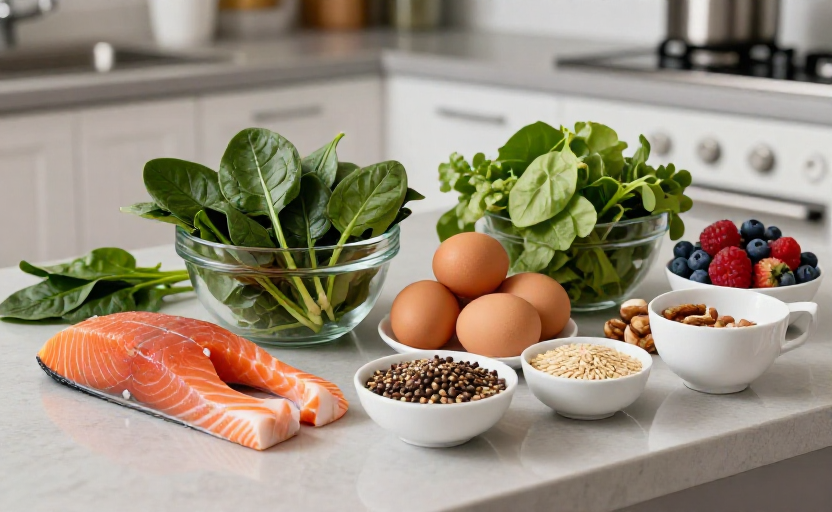
Aim to include a good source of protein with each meal. This doesn’t mean you need to eat massive steaks; diversity is key. Excellent options include eggs (a great source of both protein and biotin), fatty fish like salmon or mackerel (rich in protein, omega-3s, and vitamin D), lean poultry, legumes like lentils and chickpeas (which also provide iron and zinc), and Greek yogurt.
Embrace colorful fruits and vegetables
The antioxidants and vitamins in produce help protect hair follicles. Spinach and kale are packed with iron, folate, and vitamins A and C. Bell peppers, particularly the red and yellow varieties, are exceptionally high in vitamin C. Berries offer antioxidants that may protect follicles from damage. Sweet potatoes provide beta-carotene, which your body converts to vitamin A, essential for sebum production to keep the scalp moisturized.
Incorporate healthy fats and whole grains
Don’t shy away from healthy fats. Seeds like pumpkin and flax are rich in zinc and omega-3s. Avocados offer vitamin E and healthy fats. Nuts, especially almonds and walnuts, provide vitamin E, zinc, and essential fatty acids. For sustained energy and minerals like zinc and iron, choose whole grains like quinoa, oats, and brown rice over refined versions.
Foods to enjoy regularly
To make this practical, here is a concise list of hair-friendly foods to rotate into your weekly shopping list:
- For Protein & Iron: Eggs, salmon, lentils, chickpeas, lean beef (in moderation), spinach.
- For Zinc & Healthy Fats: Pumpkin seeds, oysters, walnuts, almonds.
- For Vitamins & Antioxidants: Bell peppers, strawberries, blueberries, sweet potatoes, avocados.
- For Omega-3s: Fatty fish (salmon, mackerel, sardines), chia seeds, flaxseeds.
What about hydration and lifestyle?
Nutrition is the cornerstone, but it works in concert with other habits. Dehydration can make hair dry and brittle, so drinking enough water throughout the day is a simple yet powerful support. Managing stress through practices like walking, meditation, or adequate sleep is also critical, as high stress can trigger hair shedding. Finally, be patient. Hair grows slowly—about half an inch per month—so dietary changes may take two to three months to show visible results in your hair’s thickness and strength.
Building a diet for thicker hair is about consistent, nourishing choices, not perfection. By filling your plate with a variety of whole foods rich in protein, iron, zinc, and vitamins, you provide the fundamental building blocks your body needs to support strong, healthy hair growth from the root up.