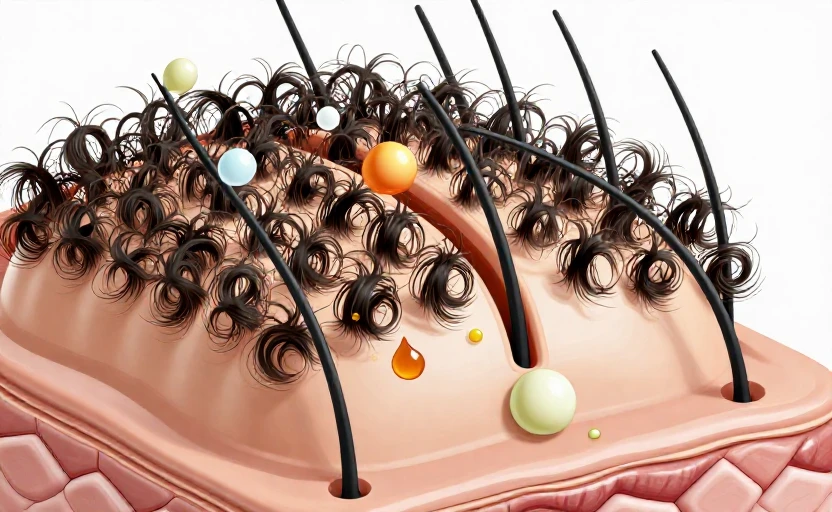
If you have curly hair, you know your scalp has its own unique personality. It can be sensitive, prone to dryness, or easily weighed down. The ingredients you use in your hair care routine don't just coat your curls; they interact directly with the skin they live on. Understanding this interaction is the first step toward a healthier, happier scalp and more vibrant curls.
Think of your scalp as the foundation of a garden. What you put on the soil affects the health of every plant growing from it. For curly hair, this is especially true. The shape of the curl can slow the natural migration of oils from the scalp down the hair shaft, a process called sebum distribution. This often leaves the roots feeling oily or coated while the mids and ends crave moisture. The ingredients in your products either help or hinder this delicate balance.
Why the scalp under curly hair is different
Curly and coily hair textures create a unique microenvironment. The twists and turns can make it harder for shampoos and conditioners to fully rinse away, and for natural oils to travel. This can lead to a buildup of both product and sebum right at the scalp line. Furthermore, the surface area of a curly hair strand is greater than a straight one, which can make it more porous and reactive to ingredients. A scalp that might tolerate anything with straight, fine hair can become irritated or clogged when paired with dense curls.
The goal isn't to fight your scalp's nature, but to work with it. The right ingredients can cleanse without stripping, moisturize without smothering, and define curls without creating a barrier on the skin.
Common ingredient interactions and what they mean
Not all ingredients are created equal when they meet your scalp. Here’s how some common categories behave.
Cleansers: Sulfates vs. Sulfate-Free
Traditional sulfates (like sodium lauryl sulfate) are powerful detergents. They create a rich lather that cuts through oil and product buildup. For a very oily scalp, this might feel deeply cleansing. However, for many with curly hair, sulfates can be overly harsh, stripping away too much of the scalp's natural protective oils. This can trigger a rebound effect, where the scalp produces even more oil to compensate, or lead to dryness, flaking, and irritation.
Sulfate-free cleansers use milder surfactants (like coco-glucoside or decyl glucoside). They clean gently, often without a thick lather, which can be better for maintaining the scalp's moisture barrier. The key is ensuring they are still effective enough for your level of buildup—sometimes a double cleanse is necessary.
A squeaky-clean scalp isn't always the goal. Aim for cleansed but not tight or stripped.
Moisturizers and Oils: Penetration vs. Occlusion
Ingredients like glycerin, aloe vera juice, and panthenol (pro-vitamin B5) are humectants. They attract water to the scalp and hair. In a humid environment, this can be hydrating. In dry air, they might pull moisture from the scalp if not sealed in.
Butters (like shea or mango) and heavy oils (like castor or coconut oil) are occlusives. They create a protective seal over the scalp. For a very dry scalp, this can lock in precious moisture. For a scalp prone to buildup or oiliness, however, these can act like a lid, trapping dead skin cells and sebum, potentially leading to clogged follicles and irritation. Lighter oils, such as argan or grapeseed, often provide moisture without as heavy a seal.
Stylers and Hold Products: The Buildup Factor
Gels, mousses, and creams often contain polymers—ingredients that form a film to hold your curl pattern. While great for definition, these films can accumulate on the scalp over time. If not properly cleansed, this layer can mix with sebum and skin cells, creating a film that may itch or flake. Looking for stylers that are water-soluble or explicitly mention low buildup can make a significant difference in scalp comfort.
Listening to your scalp's signals
Your scalp will tell you what it needs. It's about decoding the messages.
- Itchiness and Flaking: This often signals dryness or irritation. It could be a reaction to a specific ingredient (like a fragrance or preservative), or it could mean your cleanser is too harsh, damaging your scalp's barrier. Switching to a gentler, fragrance-free cleanser and incorporating a light, soothing moisturizer like aloe vera gel can help.
- Greasiness at the Roots, Fast: This usually points to an imbalance. Your cleanser might be too stripping, causing rebound oil production. Or, your conditioner or stylers might be too heavy for your scalp, sitting on top rather than absorbing. Try applying conditioners and creams only from the mid-lengths to ends, keeping them off the scalp itself.
- Visible Buildup or Clogged Follicles: If you see small bumps or feel a waxy coating, you likely need a more effective cleansing routine. Incorporate a clarifying shampoo with chelating agents (like EDTA) once a month to remove mineral and product buildup, followed by a deep conditioner on your lengths.
Building a scalp-friendly curly routine
A thoughtful approach can nurture both your curls and the skin they grow from. Start with a gentle, sulfate-free cleanser and massage it into your scalp with your fingertips—not your nails—to stimulate blood flow and break up buildup. Follow with a conditioner, but keep it focused on your hair, not your roots. When styling, apply products away from the scalp unless you're using a targeted, lightweight treatment.
Once a week, consider a scalp treatment. This could be a simple massage with a few drops of jojoba oil (which closely mimics the skin's sebum) or an application of a watery, soothing toner with ingredients like witch hazel or tea tree oil (diluted) for oily or flaky scalps. The most important step is observation. Give any change in your routine a few weeks, and note how your scalp responds. Its comfort is the ultimate sign you've found harmony.