If you’re managing your blood sugar, you’ve likely heard the advice to limit carbohydrates. But what if the conversation shifted from restriction to strategy? The truth is, carbohydrates are your body’s primary fuel source, and eliminating them isn’t sustainable or necessary for most people. The real key lies not in avoidance, but in thoughtful pairing.
This approach, often called carb pairing or carb combos, is a practical framework for building meals that support steadier glucose levels and longer-lasting energy. It’s about moving beyond the carb itself to consider the entire plate. By combining your carbohydrate choice with specific other nutrients, you can significantly influence how your body processes that food, leading to a gentler, more manageable rise in blood sugar.
Why Pairing Carbs Changes the Game
When you eat a carbohydrate by itself—like a plain piece of toast or a handful of crackers—it’s digested and absorbed relatively quickly. This rapid entry of glucose into your bloodstream can lead to a sharp spike, followed by a potential crash as insulin works to clear the sugar. That crash often brings on fatigue, hunger, and cravings, creating a challenging cycle.
Pairing works by changing the digestive environment. Adding protein, healthy fats, or fiber to your carb slows down the entire process. Think of it like putting a speed bump on a road. These companion nutrients delay gastric emptying and slow the breakdown of the carbohydrate into glucose. The result is a slower, more gradual release of sugar into your bloodstream.
The goal isn't to flatten the curve completely, but to soften its peak and extend its duration for sustained energy.
This gentler rise is easier for your body to manage, demands less insulin, and helps you feel fuller and more satisfied for longer after eating. It turns a potentially disruptive food into a stable source of energy.
The Core Partners for Better Glucose Control
Not all pairings are created equal. To build a glucose-friendly plate, focus on incorporating these three key partners alongside your carbohydrate.
1. Protein: The Stabilizing Force
Protein is incredibly effective at slowing digestion and promoting satiety. It also stimulates the release of hormones that signal fullness to your brain. When paired with a carb, protein helps blunt the glucose spike and provides the building blocks for muscle repair and maintenance, which is crucial for metabolic health.
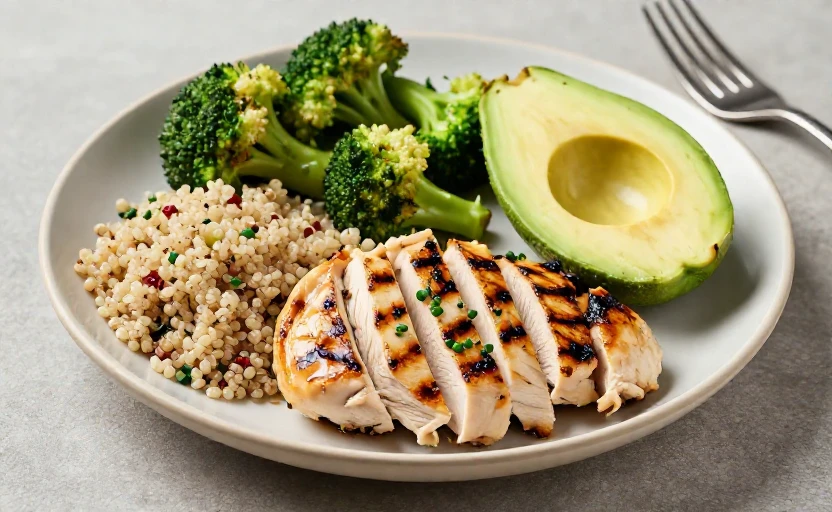
Think: Adding grilled chicken to quinoa, stirring Greek yogurt into oatmeal, topping an apple with almond butter, or including eggs with your toast.
2. Healthy Fats: The Slow-Down Agent
Fats take the longest to digest. Including a source of healthy fat in your meal adds another layer of slowing power, further delaying how quickly the carbohydrate hits your bloodstream. They also add richness and flavor, making your meal more satisfying.
Think: Drizzling olive oil on roasted sweet potatoes, adding avocado slices to a bean burrito bowl, or including nuts and seeds in your fruit salad.
3. Fiber: The Natural Moderator
Fiber, especially soluble fiber, forms a gel-like substance in the gut that physically traps carbohydrate molecules, slowing their absorption. Many high-fiber foods, like beans, lentils, and most vegetables, are also carbohydrates themselves, but their high fiber content makes them excellent choices.
Think: Choosing whole fruits over juice, adding leafy greens and peppers to your pasta, or opting for beans and lentils as your carb source.
Building Your Plate: A Practical Framework
You don’t need a complex formula. Visualize your plate and aim for balance.
- Fill half your plate with non-starchy vegetables. This is your fiber and nutrient foundation—think broccoli, spinach, peppers, mushrooms, and salad greens.
- Dedicate a quarter of your plate to a quality carbohydrate. Opt for fiber-rich, less processed options like quinoa, brown rice, sweet potato, whole-grain bread, or beans.
- Use the remaining quarter for a lean protein. This could be fish, poultry, tofu, tempeh, eggs, or legumes.
- Include a serving of healthy fat. Add this through cooking oil, a handful of nuts, seeds, avocado, or as part of your protein (like fatty fish).
This template naturally creates a paired meal. The vegetables and protein accompany the carbohydrate, while the fat is integrated throughout.
Smart Swaps and Simple Pairing Ideas
Putting this into practice can be simple. It’s often about one intentional addition.
Instead of a plain banana for a snack, try a banana with a small handful of walnuts. The fat and protein in the nuts pair with the fruit's natural sugars.
Instead of a bowl of cereal with milk, try a bowl of oatmeal stirred with a scoop of protein powder or Greek yogurt, topped with berries and chia seeds. You’ve added protein, fiber, and fat.
Instead of a slice of toast with jam, try whole-grain toast with mashed avocado and a sprinkle of everything bagel seasoning, or with nut butter and sliced strawberries.
Instead of a plate of pasta with marinara, try pasta with a meat or lentil bolognese, served with a large side salad dressed in olive oil. You’ve added protein, fiber from the lentils and veggies, and healthy fat.
Listening to Your Body and Personalizing
While these principles are widely applicable, individual responses can vary. Factors like the type of carbohydrate, your activity level, stress, and sleep all play a role. The best guide is how you feel. Do you feel energized and satisfied for hours after a paired meal? Or do you feel sleepy and hungry again quickly?
This approach is meant to be flexible, not rigid. It’s a tool for empowerment, allowing you to enjoy a wide variety of foods while supporting your metabolic health. It encourages you to think about nourishment and balance, fostering a more positive and sustainable relationship with food.