When the thermostat in your own body starts working against you, a good night’s sleep can feel like a distant memory. Hot flashes, restless legs, and the creep of stubborn weight gain around the middle are a few of the less glamorous calling cards of perimenopause and menopause. Many women I speak with feel like they’ve lost control of their own metabolism and their sleep at the same time.
While there is no magic potion for any health concern, a warm cup of something at the end of the day can offer a surprisingly effective ritual—a moment to signal your nervous system that it is safe to rest. Some ingredients may also support metabolic function and temperature regulation better than others. Let’s talk about seven bedtime drinks that address both concerns simultaneously.
Why what you drink at night matters for weight and hot flashes
Estrogen plays a major role in temperature control and glucose metabolism. As levels fluctuate and decline, the hypothalamus becomes less stable in setting your internal thermostat. This instability triggers sudden vasodilation—what you feel as a hot flash or night sweat. Meanwhile, lower estrogen is linked to increased insulin resistance, making it easier to store abdominal fat and harder to burn energy at rest.
A bedtime drink cannot replace lifestyle habits or medical support, but it can work as a gentle adjunct. The right compounds can help regulate blood sugar overnight, support phases of deep sleep, and provide nutrients that assist with thermoregulation.
1. Tart cherry juice
Tart cherry juice is one of the most researched natural aids for sleep. It is a natural source of melatonin and tryptophan, the amino acid precursor to serotonin. A small 2018 study found that drinking tart cherry juice twice a day improved sleep duration and quality in older adults with insomnia. The anthocyanins (the red pigments) also reduce oxidative stress, which plays a role in night sweats by lowering inflammation in the hypothalamus.
How to use it: One small glass (about 4 to 6 ounces) roughly an hour before bed. Look for 100% tart cherry juice without added sugar. Dilute it with still or sparkling water if it tastes too strong.
2. Chamomile and spearmint tea blend
Plain chamomile tea is a classic sleep aid because of apigenin, a flavonoid that binds to benzodiazepine receptors in the brain to mildly calm anxiety. For menopause, I like blending it with spearmint. Spearmint has mild anti-androgenic properties, which can be helpful when estrogen drops and testosterone has a relatively stronger effect—this balance may help with stubborn midsection fat storage patterns. The cooling scent of spearmint also has a subjective cooling effect, which may reduce the sensation of being overheated as you fall asleep.
How to use it: Steep one bag each of chamomile and spearmint in a mug of hot water for 5 to 7 minutes. Sip it while you wind down.
3. Warm golden milk (turmeric latte)
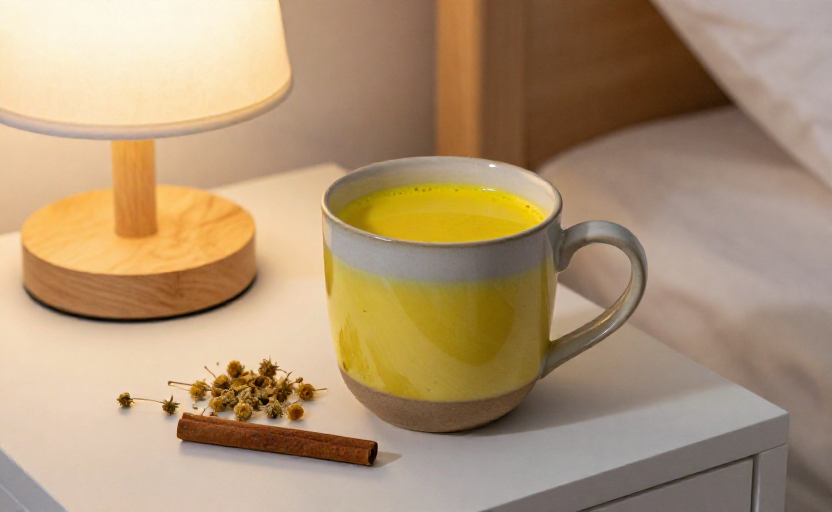
Golden milk is a traditional Ayurvedic drink made from turmeric, black pepper, and a milk of your choice. Curcumin, the active compound in turmeric, is a potent anti-inflammatory that may help cool down the systemic inflammation contributing to hot flashes. Because curcumin is fat-soluble, the fat in whole milk (or full-fat oat milk) enhances absorption. A pinch of black pepper boosts bioavailability by nearly 2000%.
How to use it: Warm one cup of milk gently on the stove. Whisk in ½ teaspoon turmeric powder, a generous pinch of black pepper, and a drop of honey if you want sweetness. Drink twenty minutes before you get into bed.
4. Passionflower tea
Passionflower (Passiflora incarnata) increases levels of gamma-aminobutyric acid (GABA) in the brain, which dampens overactive neural circuits. This makes it a good choice if your hot flashes are triggered by anxiety or racing thoughts at night. In a 2011 clinical trial, passionflower tea improved sleep quality more than a placebo in adults with mild sleep disturbances.
How to use it: Steep 1 to 2 teaspoons of dried passionflower in hot water for 10 minutes. Strain and sip. You can buy it in tea bags as well, but loose leaf gives more potency.
5. Low-sugar kefir (drinkable)
The gut microbiome influences both estrogen metabolism (via the estrobolome) and body weight. Kefir is a fermented dairy drink rich in probiotics and protein. One cup of plain, low-sugar kefir before bed provides casein protein, which releases amino acids slowly overnight—this can stabilize morning blood sugar and reduce cravings for sugary breakfast foods. A 2020 review in Nutrients also linked fermented dairy consumption to lower inflammation markers, which may ease hot flash intensity.
How to use it: Keep it to a half to one cup of plain, unsweetened kefir. Avoid fruited kefir, which is often high in added sugar that can spike insulin and worsen night sweats.
6. Cinnamon and ginger tea
Both cinnamon and ginger are warming spices in their energetic sense, but they actually help cool the body metabolically by improving insulin sensitivity. A 2015 meta-analysis found that cinnamon supplementation reduced fasting blood glucose and improved insulin sensitivity markers. Better blood sugar control directly correlates to smaller waist circumference and fewer nocturnal hot flashes—mainly because blood sugar spikes increase core body temperature.
How to use it: Simmer a 1-inch piece of fresh ginger (sliced) and one cinnamon stick in two cups of water for 10 minutes. Strain and sip one cup half an hour before you sleep.
7. Reishi mushroom tea
Reishi mushroom (Ganoderma lucidum) is an adaptogen used in traditional Chinese medicine for stabilizing mood and sleep. It is high in triterpenes, which have an antihistamine-like effect that may reduce inflammation and help regulate body temperature. Some small studies indicate reishi improves sleep maintenance—meaning you stay asleep longer, with fewer nighttime awakenings from hot flashes. Look for a dual-extracted powder or dried slices to get both the water-soluble and fat-soluble compounds.
How to use it: Simmer dried reishi slices (or 1 teaspoon of powder) in water for 10 to 15 minutes. It has a bitter, earthy taste so you may want to add a little raw honey and a squeeze of lemon.
Simple guidelines for any bedtime drink
- Keep sugar low. Even natural sugars close to bedtime can spike glucose and trigger night sweats in sensitive women. If you need sweetness, use a tiny amount of honey or stevia.
- Mind the timing. Finish your drink at least 30 minutes before lights-out to avoid having to urinate in the middle of the night.
- Temperature matters. Hot or warm beverages tend to feel more calming than cold drinks, but if you are already overheated, let the drink cool to lukewarm.
- Stay consistent. These drinks work best when you use them as part of a predictable evening routine—not as a single experiment.
One last caveat: Herbal teas and natural drinks can interact with medications, especially blood thinners, sedatives, and diabetes medication. Always check with your healthcare provider before adding concentrated herbal preparations like reishi or passionflower to your routine.
Weight gain and night sweats in menopause are not a sign of failure—they are a sign of a major endocrine transition. A warm, intentional drink at bedtime will not overhaul your health alone, but it can restore a small sense of comfort and control. That counts for more than most women give themselves credit for.