
When you think about preserving skin elasticity, your mind likely goes straight to collagen creams, retinol serums, and sunscreen. Those all help. But you might be overlooking a daily factor that works for you—or against you—every single time you eat. The truth is, skin aging doesn’t just happen from the outside in; it happens from the inside out, and your diet is a powerful lever.
As a health editor who spends a lot of time reading the research, I’ve seen a clear pattern: some common foods accelerate the breakdown of collagen and elastin—the two structural proteins that keep your skin firm, bouncy, and resilient. If your goal is to maintain that youthful snap as the years go by, it’s worth looking at what’s on your plate. No need to feel guilty; knowledge here is just practical. Below are six foods that tend to work against skin elasticity, along with smarter swaps that support your skin instead of undermining it.
1. Sugary Drinks and High-Fructose Sweets
This one tops the list because of a biochemical process called glycation. When you consume excess sugar, it binds to collagen and elastin fibers, forming advanced glycation end products (AGEs). Think of AGEs as little cross-links that make your once-supple fibers brittle and stiff. The result? Skin that loses its bounce and sags more easily over time.
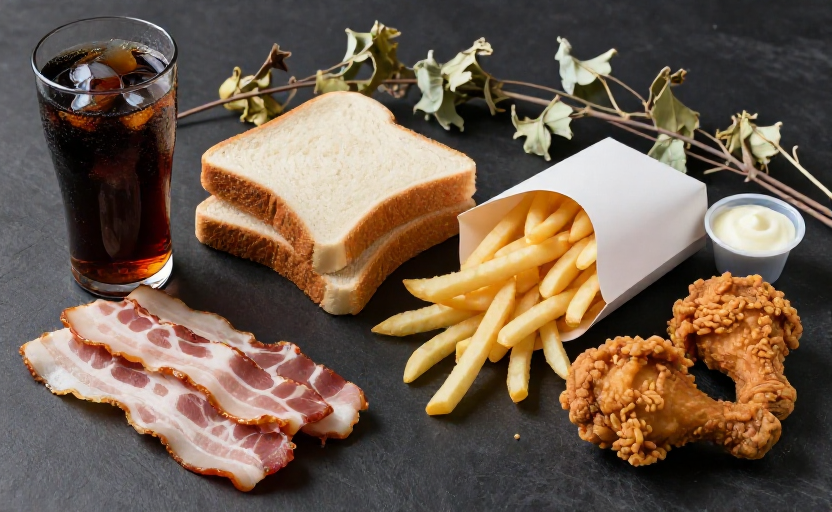
Sodas, sweetened iced teas, fruit punches, and even “healthy” smoothies with added syrups are major culprits. A single can of soda can contain around 30–40 grams of sugar—enough to spike your blood glucose and kick off a glycation cascade.
Better choice: Swap sugary drinks for sparkling water with a splash of lemon, unsweetened herbal iced tea, or plain water infused with cucumber or berries. Your skin will thank you.
2. Ultra-Processed Meats (Bacon, Sausages, and Deli Meats)
Processed meats are loaded with sodium, nitrates, and preservatives that promote chronic inflammation. Inflammation is a known enemy of collagen stability; it activates enzymes (matrix metalloproteinases, if you want the scientific term) that literally chew up collagen and elastin fibers. Frequent inflammation means your skin’s structural matrix is constantly under repair, never fully intact.
Additionally, high sodium causes water retention and puffiness, which stretches the skin and can contribute to long-term laxity.
Better choice: Opt for fresh, lean proteins like grilled chicken, wild-caught fish (salmon is great for omega-3s that support skin), or plant-based options like lentils and chickpeas.
3. Refined Vegetable Oils (Soybean, Corn, Sunflower, and Canola)
These oils dominate restaurant cooking and packaged foods. They are high in omega-6 fatty acids without enough omega-3s to balance them. While your body needs both, a heavy tilt towards omega-6s promotes a pro-inflammatory state in your tissues, including your skin. Over time, this low-grade oxidative stress degrades collagen and impairs the skin’s ability to repair itself.
French fries cooked in industrial seed oils, many salad dressings, crackers, and even “healthy” veggie chips often contain these oils.
Better choice: Cook with olive oil, avocado oil, or coconut oil. For dressings and cold uses, extra-virgin olive oil is a winner for its anti-inflammatory polyphenols.
4. High-Glycemic White Carbs (White Bread, Pasta, White Rice)
Refined carbohydrates spike your blood sugar quickly, just like sugar does, which means they also contribute to glycation. White bread, sugary cereals, crackers, and instant white rice are rapidly digested, leading to insulin spikes that can accelerate aging at the cellular level—including in your skin.
A 2020 study in the Journal of the American Academy of Dermatology linked high-glycemic diets to increased wrinkles and loss of skin firmness in middle-aged women. The connection is real.
Better choice: Replace white rice with quinoa or brown rice; swap white bread for 100% whole grain or sourdough; choose legume-based pastas. The fiber helps slow glucose absorption and protects skin proteins.
5. Fried Foods and Charred Meats
The issue here isn’t just fat—it’s the advanced glycation end products created during high-heat cooking. When proteins and sugars in food react under intense heat (frying, grilling, broiling), they form dietary AGEs. Unlike the AGEs your body makes internally, these ingested AGEs are absorbed into your system, where they increase oxidative stress and directly damage skin collagen.
Fried chicken, crispy bacon, grilled burgers with char marks, and heavily toasted bread are common sources.
Better choice: Use gentler cooking methods like steaming, poaching, or slow-cooking. When you do grill, marinate meat in acidic ingredients like lemon juice or vinegar (this can reduce AGE formation by up to 50%).
6. Excessive Alcohol
Alcohol in moderation is one thing, but regular or heavy consumption takes a toll on skin elasticity. Alcohol is a diuretic—it dehydrates you, and dehydrated skin looks less plump and shows fine lines more prominently. More importantly, alcohol metabolism in your liver creates acetaldehyde, a toxic compound that damages collagen and elastin fibers. It also depletes vitamin A, an essential nutrient for skin regeneration and collagen synthesis.
Those morning-after puffy eyes? They are a sign of inflammation and fluid imbalance, both of which stretch the skin’s support structure over time.
Better choice: Limit alcohol to an occasional glass—not daily. If you do drink, have a glass of water for every alcoholic drink, and prioritize red wine (in small amounts) for its antioxidant resveratrol.
Putting It Into Perspective
You do not need to eliminate all of these foods forever. Skin elasticity is built over months and years, not ruined by one meal. Think of this list as a guide for habitual patterns—if you notice your daily diet leans heavily on processed meats, sugary drinks, or fried snacks, those are the levers to adjust. Every swap you make in the direction of whole, unprocessed foods supports your collagen bank.
Combine these dietary tweaks with good sun protection, adequate protein intake (your body needs amino acids to build collagen), and hydration, and you are setting your skin up for a much more graceful journey through the decades.