Menopause brings a host of changes, and two of the most frustrating can be the persistent bloat and the gradual, stubborn weight gain that seems to appear overnight. While hormones are the primary drivers, the foods you choose can either work against you or become powerful tools for relief. The goal here is not a restrictive diet, but strategic additions that support your body's new rhythm.
Below are six research-backed foods that target the specific mechanisms behind menopausal bloating and weight gain—helping you feel lighter, more comfortable, and more in control.
Why menopause triggers bloating and weight gain
Before we get to the foods, it helps to understand why this happens. Declining estrogen levels impact our metabolism, insulin sensitivity, and how our body stores fat (shifting from hips and thighs to the abdomen). Estrogen also influences water retention and gut motility. Lower progesterone can slow digestion, leading to gas and that uncomfortable distended feeling. These foods are chosen because they address these root causes—not just the symptoms.
1. Fermented foods for gut harmony
Think of your gut microbiome as a control center for inflammation and digestion. During menopause, the diversity of beneficial bacteria can decrease, which worsens bloating and can even encourage fat storage. Fermented foods are a direct way to re-seed that microbiome with live, helpful cultures.
- Kimchi and sauerkraut (refrigerated, unpasteurized varieties) provide probiotics that help break down food more efficiently, reducing gas production.
- Yogurt and kefir offer a double benefit: protein for satiety (which helps with weight management) and probiotics that ease bloating.
A small serving of sauerkraut or a single cup of plain kefir daily can noticeably reduce mid-day abdominal distension within a week or two for many women.
2. Oats: the steady-energy anchor
Blood sugar volatility is a major, underappreciated driver of menopausal weight gain. When blood sugar spikes and crashes, it triggers insulin release, which signals the body to store fat—especially around the middle. Oats, specifically steel-cut or rolled oats, are rich in beta-glucan, a soluble fiber that slows glucose absorption.
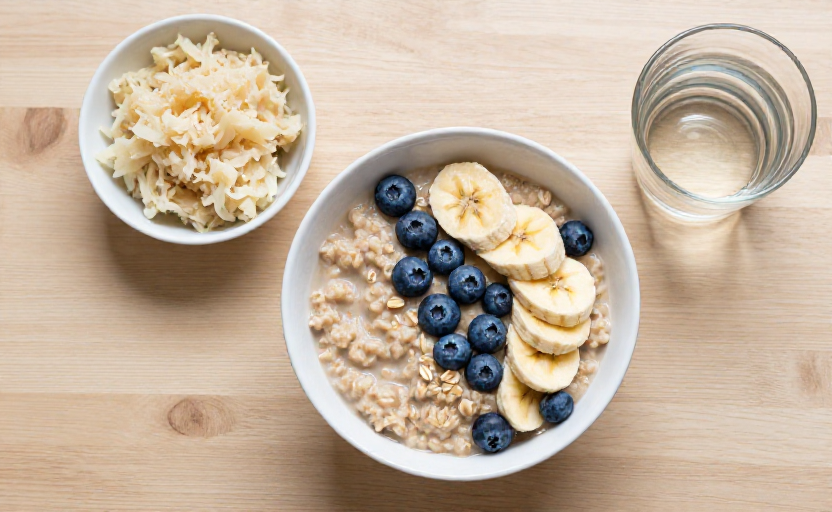
This steady energy release also curbs the sugar cravings that often lead to overeating. The fiber itself binds to water in the digestive tract, adding bulk to stool and relieving constipation-related bloating. A bowl of oatmeal for breakfast (topped with berries and nuts) can be a simple swap that stabilizes your whole day.
3. Bananas: the potassium powerhouse
One of the most immediate causes of menopausal bloating is water retention driven by sodium sensitivity. Potassium helps counteract this by balancing fluids inside and outside your cells. A medium banana provides about 9% of your daily potassium needs.
Bananas are also a prebiotic—they feed the good bacteria in your gut, supporting the digestive benefits of fermented foods. For women who experience bloating after meals, a banana as a snack or sliced onto that morning oatmeal helps flush out excess fluid without needing to drastically cut salt.
4. Leafy greens: magnesium for muscle relief
Magnesium is a mineral that often dips during perimenopause and menopause. Low magnesium contributes to muscle cramping, constipation, and even worsened water retention. Dark leafy greens like spinach, Swiss chard, and kale are dense sources of this mineral.
The high water content and fiber in greens also mechanically push waste through the digestive tract, reducing the feeling of being "stuck" and bloated. Aim for at least two servings of cooked or raw leafy greens per day. Cooking them slightly (like sautéed spinach) actually makes the magnesium more bioavailable.
5. Lean protein for metabolic support
Losing muscle mass is an unfortunate part of aging and menopause, and muscle burns more calories at rest than fat does. This is a direct contributor to the metabolic slowdown that makes weight gain so common. Protein supports muscle maintenance, but it also plays a role in satiety and blood sugar regulation.
- Fish like salmon or cod provide high-quality protein plus omega-3 fatty acids, which have been shown to reduce inflammation and improve insulin sensitivity.
- Chicken breast, tofu, or lentils can be swapped in depending on your preferences. The key is including a palm-sized portion of protein at every meal.
Many women find that increasing protein to at least 25–30 grams per meal helps them feel satisfied with fewer calories overall, directly supporting weight management without hunger.
6. Berries: antioxidant defense
Weight gain during menopause is not just about calories—it is also about inflammation. Estrogen has anti-inflammatory properties, so when its levels drop, chronic low-grade inflammation can increase. This inflammation makes it harder for your body to lose weight and can amplify bloating.
Berries (blueberries, strawberries, raspberries) are packed with antioxidants called anthocyanins that directly combat this inflammation. They are also low in sugar relative to other fruits, so they won't spike blood sugar. A handful of berries with breakfast or as a dessert can help dial down the internal fire that worsens menopausal symptoms.
Practical ways to combine these foods
You do not need to eat all six every single day. Start with one or two additions that feel easy. For example:
- Start your morning with a bowl of oatmeal topped with sliced banana and a handful of blueberries. Add a tablespoon of plain yogurt or kefir on the side.
- For lunch, include a large handful of sautéed spinach alongside a palm-sized piece of salmon.
- For a snack, try a small bowl of kimchi or a handful of almonds with a banana.
Consistency matters far more than perfection. Even three days a week of intentional choices can start shifting how you feel.
When to check with your doctor
These foods are supportive, but they are not a substitute for medical advice. If your bloating is severe, painful, or accompanied by changes in bowel habits, or if your weight gain is rapid despite healthy eating, speak with a healthcare provider. Sometimes conditions like thyroid dysfunction, insulin resistance, or food intolerances can mimic or worsen menopausal symptoms.