When we think about firmer skin and softening fine lines, our minds often go straight to serums and creams. But the foundation of resilient, supple skin is built from within, at the cellular level, long before any topical product touches the surface. The nutrients you consume daily provide the raw materials your skin needs to repair, regenerate, and maintain its structure. By focusing on specific, whole foods, you can directly support the biological processes—like collagen synthesis and antioxidant defense—that keep skin looking firm and smooth.
How Food Influences Skin Firmness and Texture
Your skin's firmness relies heavily on two proteins: collagen and elastin. Think of collagen as the scaffolding that provides structure and plumpness, while elastin allows skin to snap back after expressions. As we age, our natural production of these proteins slows, and existing fibers can be damaged by factors like sun exposure and oxidative stress from free radicals. This leads to thinner, less resilient skin and the appearance of fine lines.
The foods you eat can influence this process in several key ways. Some provide the precise amino acids (like proline and glycine) that are the building blocks for collagen. Others deliver potent antioxidants that neutralize free radicals, protecting existing collagen and elastin from breakdown. Certain vitamins act as essential co-factors, enabling your body to actually assemble new collagen. It’s a nourishing, inside-out approach to skin care.
Five Foods to Support Firmer, Smoother Skin
Instead of a long list of superfoods, let’s focus on a handful of accessible, nutrient-dense choices that target skin structure from multiple angles. Incorporating these regularly can make a noticeable difference in your skin’s resilience.
1. Bone Broth
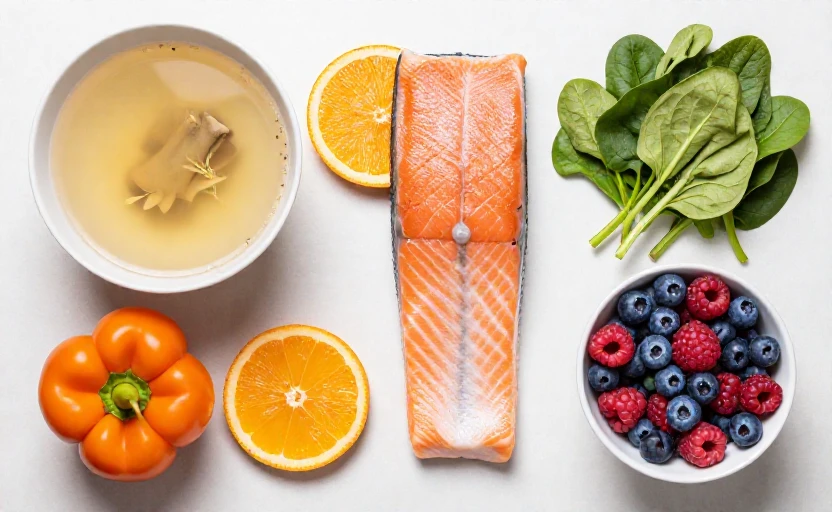
Bone broth has earned its reputation in the wellness world, and for skin firmness, the hype has a basis in science. Simmering animal bones and connective tissue for an extended time extracts collagen, gelatin, and the amino acids proline and glycine. When you consume it, these compounds provide the direct precursors your body uses to build its own collagen.
While your body can produce these amino acids, providing them through diet may ease the metabolic burden, especially as natural production declines.
You can sip it warm, use it as a base for soups and stews, or even incorporate it into sauces. Look for broth simmered for 12+ hours, or make your own for the most nutrient-rich option.
2. Fatty Fish (Salmon, Mackerel, Sardines)
Fatty fish are a powerhouse for skin health, primarily due to their high concentration of omega-3 fatty acids, specifically EPA and DHA. These fats are incorporated into your skin cell membranes, helping to maintain their strength, integrity, and hydration. Well-hydrated, strong cells contribute to a plumper, smoother appearance.
Perhaps more importantly for firmness, omega-3s are powerfully anti-inflammatory. Chronic, low-grade inflammation in the body can accelerate the breakdown of collagen and elastin. By helping to quiet this inflammation, omega-3s from fish help protect your skin's supportive structure. Aim for two servings per week.
3. Citrus Fruits and Bell Peppers
Vitamin C is non-negotiable for firm skin. It’s not just an antioxidant; it’s an essential co-factor in collagen synthesis. Your body literally cannot form collagen without adequate vitamin C. It stabilizes the collagen molecule and promotes the cross-linking of fibers, which is what gives skin its strength and firmness.
While oranges are famous, bell peppers—especially red and yellow ones—actually contain more vitamin C per cup. Kiwis, strawberries, and grapefruit are also excellent sources. Eating a variety ensures you get this critical nutrient alongside other beneficial plant compounds.
4. Dark Leafy Greens (Spinach, Kale, Swiss Chard)
Popeye was onto something. Dark leafy greens are rich in antioxidants like vitamins C and E, which protect skin cells. But their standout for firmness is their high vitamin K content and the presence of a pigment called lutein.
Vitamin K supports vascular health and may help with skin elasticity. Lutein, a carotenoid, acts as a natural internal sunscreen by helping to filter blue light, and studies suggest it can improve skin hydration and elasticity. These greens are also a source of the mineral silica, which is involved in forming collagen and connective tissue.
5. Berries (Blueberries, Strawberries, Raspberries)
Fine lines are often the result of oxidative damage over time. Berries are some of the most antioxidant-rich foods available, packed with vitamin C and a range of phytochemicals like anthocyanins (which give them their vibrant color). These compounds scavenge free radicals generated by UV exposure, pollution, and stress, preventing them from damaging collagen and elastin fibers.
This protective effect helps preserve your skin's existing support structure, slowing the development of new lines and wrinkles.
Frozen berries are just as nutritious as fresh and make a convenient addition to smoothies, oatmeal, or yogurt.
Building a Skin-Supportive Eating Pattern
It’s more effective to think in terms of a consistent dietary pattern than occasional “magic” foods. A diet centered on whole, colorful plants, quality proteins, and healthy fats naturally provides the symphony of nutrients skin needs. Hydration is the other critical pillar. Water helps maintain skin turgor and facilitates the transport of nutrients to skin cells. Herbal teas and water-rich foods like cucumbers and melons also contribute.
Conversely, it’s wise to be mindful of foods that can promote inflammation and potentially undermine skin structure, such as excessive refined sugars, heavily processed carbohydrates, and certain industrial seed oils. These don’t need to be eliminated entirely, but balancing them with the nutrient-dense foods listed above is key.
A Realistic Approach to Diet and Skin Aging
Food is a powerful supportive tool, but it’s not a standalone cure or an instant fix. The benefits are cumulative and work in concert with other lifestyle factors. No amount of salmon can reverse deep wrinkles caused by decades of sun exposure, just as topical retinoids can’t compensate for a diet devoid of essential nutrients.
Think of nourishing your skin from the inside as a fundamental, long-term strategy. It builds a healthier foundation upon which your topical skincare routine can work more effectively. For concerns about significant skin changes or before making major dietary shifts, a conversation with a dermatologist or registered dietitian can provide personalized guidance.
Ultimately, choosing foods that support skin firmness is an act of nourishment that benefits your entire body. The clarity, energy, and vitality that come with that nourishment often shine through just as brightly as any improvement in fine lines.