Waking up to a new sun spot can feel like a permanent mark on your skin's story. While sunscreen and hats are your first line of defense, what you put on your plate plays a surprisingly powerful supporting role. Nutrition can't erase sun damage, but it can help support your skin's natural resilience and repair processes from the inside out, contributing to a more even, radiant complexion over time.
Think of your diet as a daily, gentle intervention. Specific nutrients help combat oxidative stress—a key driver of the hyperpigmentation we see as sun spots—and support your skin's natural renewal cycle. It’s a slow, steady approach to complementing your topical skincare routine.
How Can Food Actually Affect Sun Spots?
Sun spots, or solar lentigines, are primarily caused by cumulative sun exposure. Ultraviolet (UV) light triggers an overproduction of melanin, the pigment that gives skin its color. Over time, this can lead to clusters of pigment that appear as flat, darkened spots. While food won't reverse this process overnight, certain nutrients act in two key ways.
First, they provide antioxidants. UV exposure generates free radicals, unstable molecules that damage skin cells and contribute to pigmentation issues. Antioxidants neutralize these free radicals, helping to mitigate some of the cellular damage. Second, some nutrients support skin cell turnover and health, which can help fade existing discoloration and promote a fresher, more even-toned surface layer.
Your diet is the foundational layer of skin care, working from within to support everything you apply topically.
Foods to Focus On for a Brighter Tone
Instead of a restrictive list, consider weaving these food categories into your regular meals. Consistency is more valuable than occasional feasts.
Leafy Greens (Spinach, Kale, Swiss Chard)
Dark leafy greens are dense with lutein and zeaxanthin, carotenoids that research suggests may help improve skin hydration and elasticity while offering a degree of protection against UV-induced damage. They're also rich in vitamins C and E, a classic antioxidant duo that supports skin repair. Try adding a handful to smoothies, soups, or scrambles for a daily green boost.
Fatty Fish (Salmon, Mackerel, Sardines)
The omega-3 fatty acids (EPA and DHA) in fatty fish are potent anti-inflammatories. Since UV exposure can provoke inflammation in the skin, which may exacerbate pigmentation, including these healthy fats can help calm that response. Omega-3s also contribute to maintaining a strong, healthy skin barrier, which is essential for overall skin function and appearance.
Colorful Berries (Blueberries, Strawberries, Raspberries)
Berries get their vibrant hues from polyphenols like anthocyanins, which have strong antioxidant and anti-inflammatory properties. These compounds help defend skin cells from oxidative stress. Vitamin C, abundant in strawberries especially, is also crucial for collagen synthesis, which keeps skin plump, and it can help inhibit an enzyme involved in melanin production.
Tomatoes and Watermelon
These are standout sources of lycopene, a carotenoid that gives them their red color. Studies indicate that lycopene may help protect the skin against sunburn and the resulting damage. Interestingly, cooking tomatoes (as in sauce or paste) increases the bioavailability of lycopene, making it easier for your body to use.
Green Tea
While not a food, it's a worthy dietary staple for skin health. Green tea is packed with catechins, particularly EGCG, a powerful antioxidant. Research points to its potential to help reduce redness and protect skin cells from UV damage when consumed regularly over time. Enjoy it iced or hot as a hydrating alternative to sugary drinks.
Building a Skin-Supportive Plate
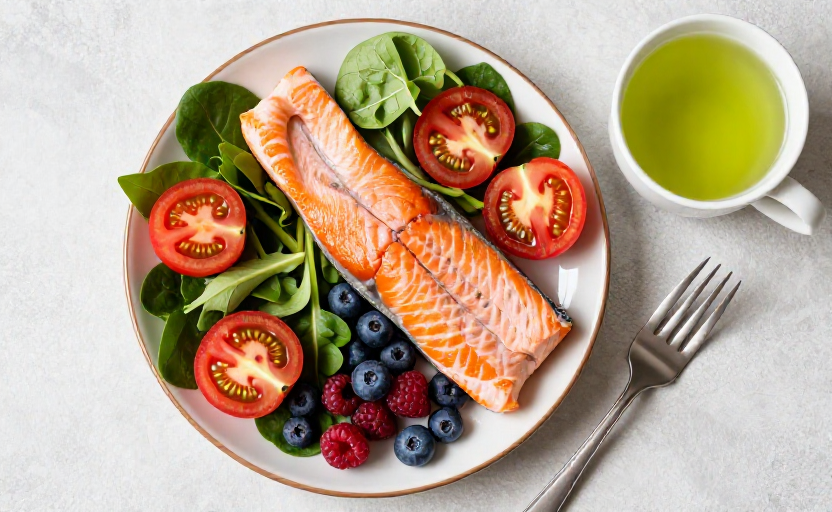
The goal isn't to eat these five things exclusively. It's to create a pattern. A lunch of salmon over a spinach salad with tomatoes, followed by a handful of berries and green tea, hits multiple supportive notes in one meal. Diversity is key—different colored plants offer different protective phytochemicals.
What to Limit for a More Even Complexion
Just as some foods support your skin, others might work against your goals. High-glycemic foods (like sugary snacks, white bread, and sodas) can cause rapid spikes in blood sugar and insulin. This cascade may promote inflammation and has been linked in some studies to skin conditions that affect tone and clarity. Moderating sugar and refined carbs can be a helpful step for overall skin health. Alcohol and very spicy foods can also trigger flushing or inflammation in some people, which might temporarily accentuate redness or uneven tone.
A Realistic Approach to Diet and Skin
It’s important to frame this approach with patience and realistic expectations. Dietary changes support your skin's health at a cellular level, but they work gradually and in concert with other habits. You cannot "eat away" deep, existing sun spots. Think of nutrition as a way to:
- Help prevent new damage by bolstering your skin's defenses.
- Support your skin's natural repair and renewal processes.
- Create an internal environment conducive to overall radiance.
For significant concerns about existing sun spots, a consultation with a dermatologist is the best path. They can assess your skin and discuss professional treatment options like topical retinoids, chemical peels, or laser therapies, which are designed to directly address pigmentation.
Ultimately, feeding your skin well is an act of long-term care. It’s one piece of a holistic picture that includes daily sunscreen, gentle cleansing, and staying hydrated. Together, these habits form a sustainable routine for nurturing brighter, healthier-looking skin for years to come.