Your hair color and scalp health aren't just affected by what you put on your head—they're also influenced by what you put on your plate. Certain foods can accelerate color fading, strip moisture from your scalp, and leave your hair looking dull or brittle. If you've invested in color-treated hair or struggle with a dry, irritated scalp, it's worth taking a closer look at your diet.
Below are five common foods and drinks that can work against your hair color and scalp comfort. Avoiding or limiting them may help your color last longer and keep your scalp's natural moisture balance intact.
1. Salty Snacks and High-Sodium Foods
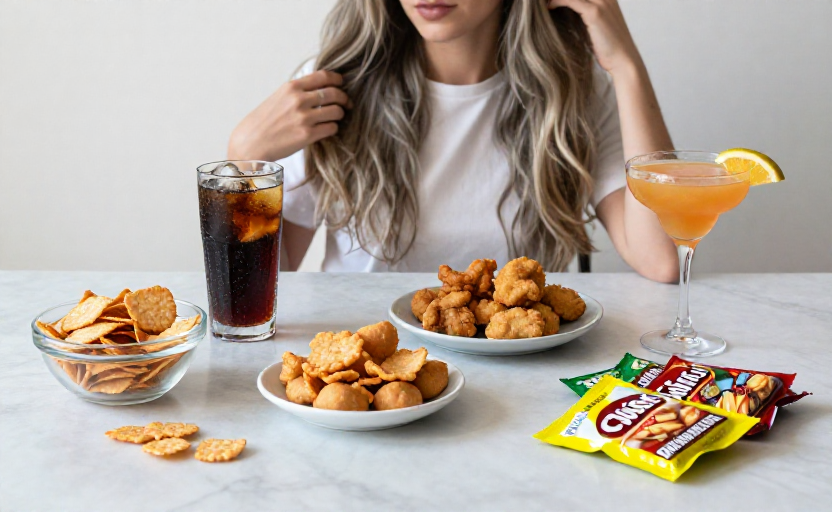
Pretzels, chips, salted nuts, and many processed foods are loaded with sodium. Excess sodium can dehydrate your body—including your scalp. A dehydrated scalp often becomes dry, flaky, and irritated, which can weaken the hair follicle environment. For color-treated hair, dehydration can make strands more porous, causing color molecules to escape more quickly.
Think of it this way: when your scalp is parched, your hair cuticles lift, making it easier for hair color to wash out.
If you regularly eat high-sodium meals, try balancing them with water-rich fruits and vegetables, and drink plenty of water throughout the day. Your scalp—and your color—will thank you.
2. Sugary Drinks and Sweets
High sugar intake can trigger inflammation in the body, and the scalp is no exception. Inflammation can exacerbate conditions like dandruff, seborrheic dermatitis, and general scalp dryness. Additionally, sugar molecules can attach to collagen and elastin fibers in a process called glycation, which can make hair brittle and more prone to breakage—bad news for anyone trying to maintain vibrant color.
Soda, sweetened coffee drinks, and candy are the biggest culprits. If you have a sweet tooth, consider whole fruits or a square of dark chocolate as a lower-sugar alternative.
3. Fried and Greasy Foods
Deep-fried foods and those high in unhealthy trans fats can increase sebum production on your scalp. While some sebum is necessary for protection, too much can clog hair follicles, lead to buildup, and make your scalp feel greasy and uncomfortable. At the same time, these foods may contribute to systemic inflammation, which can worsen scalp dryness and flaking.
For color-treated hair, an oily scalp can cause color to fade unevenly, as excess oil can loosen the bond between color molecules and the hair shaft. Swapping fried foods for baked, grilled, or steamed options can help your scalp stay balanced.
4. Alcohol (Especially Cocktails and Beer)
Alcohol is a diuretic, meaning it increases fluid loss from the body. This can rapidly dehydrate both your hair strands and your scalp. For anyone with color-treated hair, the result is often faster fading and increased frizz. A dehydrated scalp may also become itchy, tight, and prone to flaking.
If you choose to drink, try alternating each alcoholic beverage with a glass of water. This can help minimize dehydration. Also be aware that many mixers contain high amounts of sugar, which adds to the potential damage.
5. Highly Processed Vegetable Oils and Margarine
Some vegetable oils (like soybean, corn, and sunflower oil) are high in omega-6 fatty acids. While the body needs some omega-6s, an imbalance between omega-6 and omega-3 intake can promote inflammation. This inflammatory response can affect the scalp, potentially worsening dryness, sensitivity, and flakiness. It can also compromise the condition of color-treated hair.
Margarine and many packaged baked goods also contain these oils. To support scalp and hair health, focus on getting more omega-3s from foods like salmon, walnuts, chia seeds, and flaxseeds.
Final note: Everyone's body reacts differently. Pay attention to how your scalp and hair respond after certain meals or drinks. If you notice increased dryness, flaking, or faster color fade, consider cutting back on these foods for a few weeks to see if there's a difference. When in doubt, a balanced diet rich in whole foods, healthy fats, and plenty of water is your best bet for maintaining both a healthy scalp and long-lasting hair color.