
Tracking your basal body temperature (BBT) can feel like a puzzle. You take your temperature at the same time every morning, log the number, and hope to see a clear shift that confirms ovulation. But then a restless night, a glass of wine, or a 6:00 AM alarm on a weekend throws everything off. If you have ever stared at a confusing chart and wondered what went wrong, you are not alone.
Small variables can create unreliable readings. The good news is that with a few intentional adjustments, you can make your BBT data far more consistent. Here are five expert-backed tips to help you track with confidence during your cycle.
1. Prioritize three hours of uninterrupted sleep before measuring
Your BBT is most reliable after at least three consecutive hours of sleep. Even a quick trip to the bathroom or tossing and turning can raise your temperature slightly and skew the baseline. If you wake up frequently during the night, consider placing your thermometer on your nightstand before you go to sleep so you do not have to get up to find it. For those with unpredictable sleep schedules, a wearable sensor that tracks throughout the night may offer a more stable average than a single morning reading.
2. Measure at the same time every morning (within a 30-minute window)
Consistency in timing matters as much as consistency in sleep. Your BBT naturally rises as the morning progresses, so taking your temperature at 6:00 AM one day and 8:00 AM the next can create false variation. Set an alarm for the same time each day, including weekends. If you need to adjust for travel or a shift in schedule, do it gradually—move your measurement time by 15 minutes each day until you reach the new time.
3. Use a thermometer designed for BBT, not a standard fever thermometer
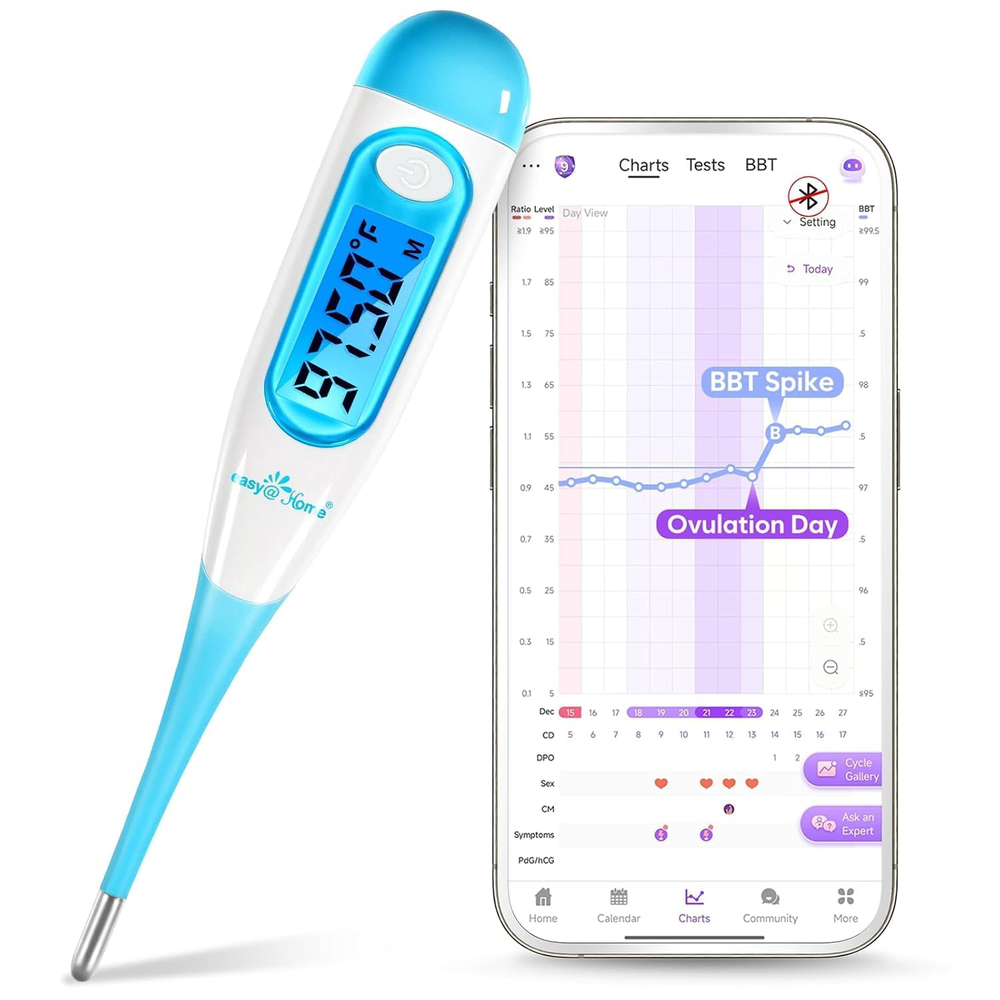
A standard digital thermometer may only read to one decimal place (e.g., 98.6°F), while a basal body thermometer reads to two decimal places (e.g., 98.62°F). That extra digit captures the subtle shifts that matter for fertility tracking. Some trackers now use oral, vaginal, or skin sensors. Whatever device you choose, stick with the same one for the entire cycle to maintain consistency between readings.
4. Log your data immediately and note any disruptions
Memory is unreliable. It is easy to forget whether you remembered to temp before sitting up, or whether you had a restless night. Log your reading as soon as you take it—whether in a paper chart, a dedicated app, or a notes folder. Alongside the temperature, jot down any factors that may affect accuracy: less than three hours of sleep, alcohol the night before, illness, stress, or a late night. These notes help you interpret odd readings later without discarding useful data.
A chart with disruption notes is more useful than a perfect-looking chart with no context.
5. Look for the overall pattern, not a single day's number
One high or low temperature does not mean you ovulated or missed ovulation. BBT charts are most informative when viewed as a full-cycle trend. Typically, you will see a lower range of temperatures before ovulation, a clear thermal shift of at least 0.2°F (0.1°C), and sustained higher temperatures after ovulation. Do not stress over one out-of-place point. Wait until you have at least three consecutive elevated temperatures before confirming ovulation. If your chart consistently looks flat or erratic despite good habits, consider pairing BBT with other fertility signs such as cervical mucus or ovulation predictor kits for a fuller picture.
Reliable BBT tracking is about reducing noise, not achieving perfection. By controlling sleep, timing, equipment, logging habits, and interpretation, you can turn your chart into a trustworthy source of information about your cycle. These five steps give you a strong foundation for more accurate and actionable data each month.