
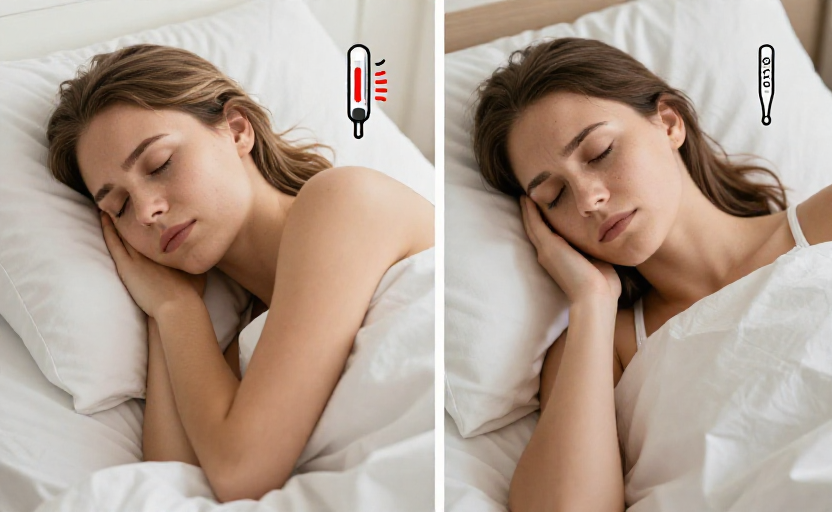
Hot flashes are the hallmark of menopause, but they are not all the same. For many women, they are a manageable inconvenience. For others, they become a daily disruption that erodes sleep, focus, and quality of life. If you have tried hormone therapy, lifestyle changes, or supplements and your symptoms are still running the show, it may not be a sign of failure. It may be a sign that your current plan needs an update.
Recognizing when a treatment approach has stopped working—or was never the right fit—is a critical skill in menopause care. Here are four clear signs that it is time to talk to your healthcare provider about a different strategy.
1. Your hot flashes wake you up more than three nights a week
Sleep disruption is one of the most common and frustrating consequences of hot flashes. Waking up drenched, changing sheets, or lying awake with a racing heart after a night sweat is not just uncomfortable. Over weeks and months, the sleep debt accumulates and contributes to memory problems, mood swings, and higher cortisol levels.
If you are waking with night sweats three or more times per week, your current treatment is not providing adequate coverage. Standard hormone therapy often reduces vasomotor symptoms significantly, but dose timing or absorption can fall short during the overnight hours. A different formulation—such as a transdermal patch rather than an oral pill—or a non-hormonal medication like fezolinetant (a neurokinin 3 receptor antagonist) may be worth exploring.
Night sweats are not just a nuisance. Consistent sleep loss from vasomotor symptoms is a legitimate medical reason to escalate or change treatment.
2. Your hot flashes are accompanied by a racing heart or severe anxiety
A classic hot flash involves a sudden wave of heat, flushing, and sweating. But when that wave also includes palpitations, chest tightness, or an intense sense of dread, the symptom profile has changed. This is sometimes described as a panic flash or adrenaline hot flash, and it suggests that your autonomic nervous system is reacting more strongly than usual.
Standard estrogen therapy typically calms the thermoregulatory center in the hypothalamus. But if your hot flashes are producing a significant adrenal response, the treatment may need to target the nervous system as well. Low-dose beta-blockers, certain antidepressants like paroxetine, or gabapentin can be effective options—especially for women who cannot or choose not to take hormones. Your provider should assess whether the treatment is addressing the full symptom cluster, not just the heat.
3. You are still having 7 or more moderate-to-severe hot flashes per day
Guidelines from the North American Menopause Society define severe vasomotor symptoms as seven or more episodes per day that significantly interfere with daily life. If you are still counting double-digit hot flashes despite being on a treatment regimen, the intervention is insufficient.
Many women hesitate to speak up because they assume hormone therapy is the only option or that side effects are inevitable. But the treatment landscape has expanded. Non-hormonal prescription options now include fezolinetant, which targets the same brain pathway as hot flashes without hormones. Low-dose compounded bioidentical hormones are another path, though evidence on their superiority remains mixed. The point is: persistent daily frequency is a measurable reason to request a re-evaluation.
| Severity level | Daily frequency | When to reassess |
|---|---|---|
| Mild | 1–3 | Monitor |
| Moderate | 4–6 | Consider adjustment |
| Severe | 7+ | Strongly recommend reassessment |
4. Your current treatment causes side effects that feel worse than the original symptom
Nausea from oral estrogen, breast tenderness from progestin, bloating, headaches, or a return of spotting are common complaints. For some women, these side effects fade after a few weeks. But if they persist for more than two to three months—or if they feel severe enough that you are considering stopping treatment altogether—that is a red flag, not a normal trade-off.
Low-dose vaginal estrogen has fewer systemic side effects than oral or transdermal estrogen, but it mainly treats genitourinary symptoms, not hot flashes. A progestin-intrauterine device (IUD) can reduce systemic progestin exposure for women who need combined therapy. Alternatively, switching from an oral pill to a transdermal patch or gel can lower liver metabolism issues and reduce nausea. The key is recognizing that side effects are treatable—not just something to tolerate.
If any of these four signs sound familiar, it is time to have a detailed conversation with your healthcare provider. Treatment for hot flashes is not one-size-fits-all, and menopause care evolves over time. Keep a symptom diary for two weeks that tracks frequency, severity, sleep disruption, and any side effects. Bring that log to your appointment. The goal is not to eliminate every hot flash—it is to restore your function and comfort. If your current approach is not doing that, there is likely a better one waiting to be tried.