
You know the feeling: a little click in the knee when you stand up, a vague ache in the shoulder after a heavy pressing day, or a low-grade throb in the elbow that just won't quit. For anyone who trains with consistency—especially in strength training—these sensations can be easy to dismiss. We tend to chalk them up to getting older, to sleeping funny, or to just the price of admission for pushing hard.
But here's the thing your body is trying to tell you: joints are not muscles. Muscles recover relatively quickly after a workout. A pulled hamstring or a sore quad screams for attention. Joints, however, are quieter. They are complex structures—cartilage, ligaments, synovial fluid, and connective tissue—all of which repair on a much slower timeline. When you ignore the early signs that your joints are falling behind on recovery, you risk moving from manageable irritation into a full-blown overuse injury that can bench you for months.
Below are three specific warning signs that your joints are telling you they need more rest between sessions. If you recognize any of these, it is time to adjust your training, not abandon it.
1. Pain That Lingers After Your Warm-Up
A little morning stiffness or initial creakiness is normal, especially as we get after it in the gym. Healthy joints often feel better after a few minutes of movement because the synovial fluid warms up and lubricates the joint surfaces. This is the difference between a joint that is ready to work and a joint that is still irritated.
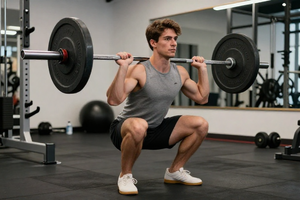
The warning sign is when that initial ache or sharpness does not fade. If your knees still hurt five minutes into your squat warm-up, or your shoulder still catches during arm circles, that is a red flag. The joint is inflamed or under-recovered, and extra blood flow alone is not enough to fix it. Continuing to load that joint with heavy weights is like pressing on a bruise and wondering why it hurts.
What to do: When pain persists through your warm-up, that session is a candidate for deloading or substitution. Swap a squat for a leg press, or replace overhead pressing with a neutral-grip dumbbell press. The goal is to keep training without exposing the irritated joint to full range-of-motion under heavy load.
2. A Dull, Deep Ache That Shows Up Hours After Training
Muscle soreness tends to peak 24 to 48 hours after a workout. Joint pain operates on a different clock. A classic sign that a joint is struggling to recover is a dull, deep ache that emerges not during the workout, but several hours later—or even the next morning. You might feel fine right after lifting, but by evening you notice a persistent throb in your wrist, elbow, or hip that does not feel like muscle soreness.
This type of delayed pain often points to irritation of the joint capsule or the ligaments that stabilize the joint. Unlike muscle tissue, which repairs relatively quickly, these connective tissues have poor blood supply. They take much longer to recover. If you feel this kind of pain consistently after certain movements, your training frequency for those exercises is outpacing your joint's ability to heal.
3. Reduced Range of Motion or Stiffness That Feels Mechanical
You may not feel sharp pain at all. Instead, you notice that your usual range of motion is shrinking. Maybe your squat feels shallow, or you cannot fully extend your elbow after tricep work. This mechanical stiffness—as if something is physically blocking the movement—is often a sign of joint swelling or capsular tightness. It is your body's way of immobilizing a joint to protect it from further damage.
Compare this to muscle tightness, which typically loosens up with stretching and movement. If your joint feels locked or limited no matter how much you stretch or foam roll, the issue is likely inside the joint itself, not the surrounding muscle. Pushing through this feeling to reach depth is a fast track to impingement or tendinopathy.
How to Fix It: Practical Recovery Adjustments
Recognizing the signs is only half the battle. The next step is to modify your training so your joints can catch up. Here are three concrete strategies that do not require a complete break from the gym:
- Increase rest days between same-joint movements. If you squat heavy three times per week, try going to twice per week, or even once every five days. The muscle may be ready, but the joint may not be. For upper body, avoid pressing two days in a row.
- Lower the load and focus on tempo. Going lighter (70% of your max) with a 3-second eccentric phase can strengthen connective tissue without the peak forces that aggravate joints.
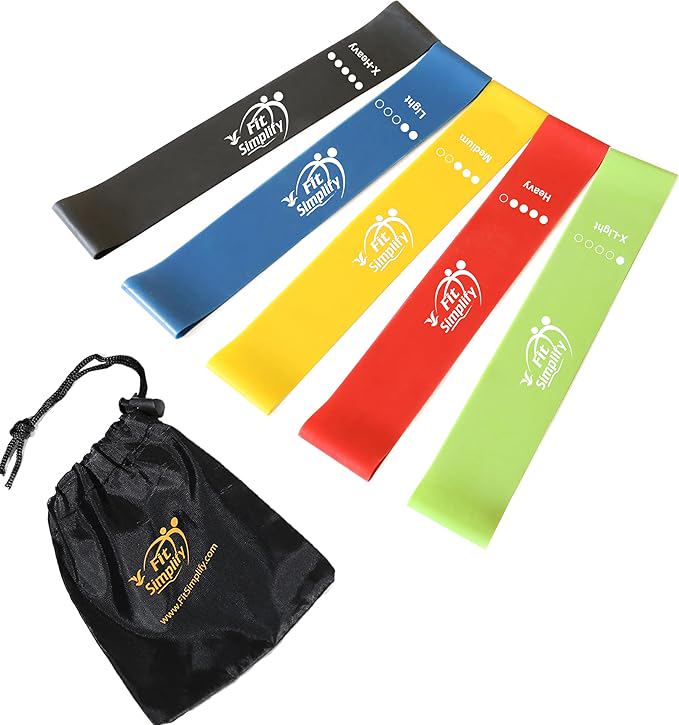
- Add a dedicated prehab or mobility block. Five minutes of controlled articular rotations (CARs) or blood flow movement (like band pull-aparts or leg swings) before your workout primes the joint for load. It is not optional once you see these warning signs.
Remember that joint health is a long game. You cannot bank recovery the way you can bank volume. These three warning signs are your body's early warning system—pay attention, adjust, and keep training smart for the long haul.