
Dandruff can be a persistent nuisance. Many people reach for an anti-dandruff shampoo at the first sign of flakes, expecting the problem to resolve within a few washes. But what if the usual routine isn't working anymore? What if those white specks on your shoulders are actually signaling that the condition is progressing, rather than improving?
Recognizing the difference between a mild, manageable scalp situation and one that requires a shift in your approach is key. Here are three clear warning signs that your dandruff is not just lingering but getting worse, along with what you can do about it.
1. The flakes have changed: from small and dry to large and greasy
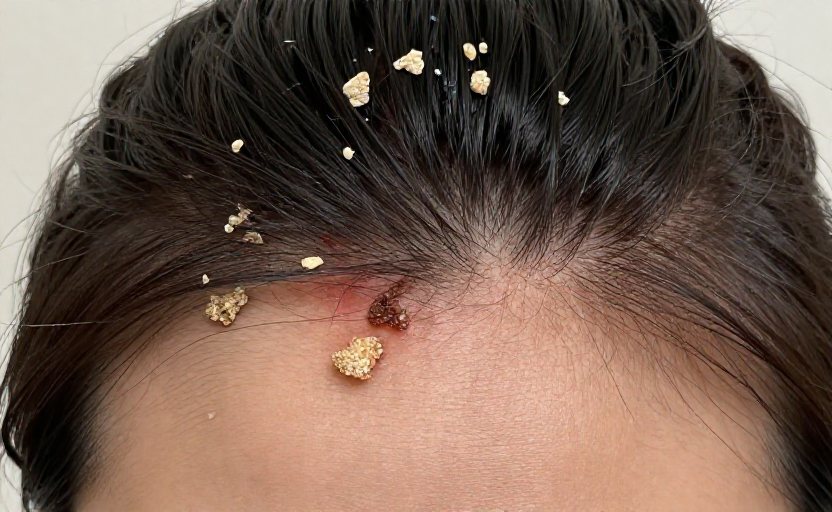
Not all flakes are created equal. In the early stages of common dandruff (pityriasis simplex capillitii), the flakes are typically small, white, and dry. They dust off easily and may be barely noticeable. A clear sign that things are heading in the wrong direction is when those flakes morph into larger, yellowish, and distinctly greasy clumps that stick to your scalp and hair shaft.
This shift often points to an overgrowth of a yeast called Malassezia. When this yeast feeds on the natural oils (sebum) on your scalp, it produces byproducts that can irritate the skin. If your scalp responds by producing even more oil, you enter a cycle of irritation and buildup. The result is those stubborn, waxy scales that don't brush off easily. If you find yourself picking at larger, oilier flakes, it's time to take notice.
2. The itching has intensified, and your scalp feels sore or burning
Mild itching is a common companion to standard dandruff. However, there is a difference between occasional itching and a persistent, maddening urge to scratch. A major warning sign is when the itching becomes intense enough to disrupt your sleep, your concentration at work, or your general comfort.
Worse still is the arrival of soreness, tenderness, or a burning sensation on your scalp. This suggests that the skin barrier is becoming compromised. Constant scratching can create micro-tears in the skin, opening the door for bacteria. The sensation might feel like a tight, irritated scalp rather than just a bit of itch. If your scalp feels angry or painful to the touch, this is a strong indicator that simple dandruff is evolving into a more inflammatory condition, possibly seborrheic dermatitis.
A sore or burning scalp is not a normal part of dandruff—it is a clear signal to change your approach.
3. You are seeing redness and inflammation beyond the scalp line
While dandruff is largely contained to the scalp, a worsening condition often doesn't stay put. Pay close attention to the areas around your hairline, the back of your neck, behind your ears, and even your eyebrows or the sides of your nose. If you notice red, inflamed patches of skin in these areas, the condition has likely progressed to seborrheic dermatitis.
This is a more severe and chronic form of dandruff where the inflammation is systemic and visible. The redness is a direct sign of irritation and immune response. When this happens, your regular shampoo is probably no longer enough to keep the yeast and inflammation under control, and a more targeted treatment plan is necessary.
What to do next
If these signs sound familiar, don't just reach for a stronger dandruff shampoo from the drugstore. Start by re-evaluating your current routine. Are you leaving the medicated shampoo on your scalp for the full recommended time (usually 3–5 minutes)? Are you using it too frequently, stripping the scalp of its natural moisture? Sometimes, less is more, or a different active ingredient is needed.
Consider rotating between shampoos with different active ingredients like pyrithione zinc, salicylic acid, selenium sulfide, or ketoconazole. This can prevent the yeast from becoming resistant. If the redness, soreness, or large greasy flakes persist for more than two weeks despite these changes, it is wise to consult a dermatologist. They can prescribe stronger topical treatments and rule out other conditions like psoriasis or contact dermatitis.
Knowing these three warning signs helps you stop treating worsening dandruff as a simple annoyance. By recognizing a change in flake texture, an escalation of itching to soreness, and the spread of redness, you can take a more informed and effective approach to getting your scalp health back on track.