Your skeleton is living tissue that constantly remodels itself. In childhood and young adulthood, you build bone faster than your body breaks it down, reaching peak bone mass around age 30. After that, the balance slowly shifts. For many women, this process accelerates during menopause because estrogen, a key protector of bone, declines sharply.
Bone loss happens silently for years. There are no early aches or pains in the bones themselves. But once mineral density drops below a certain threshold, the body begins to send signals. Some of these signals are easy to brush off as normal aging or a minor strain. Others are more specific. Here are three warning signs that bone thinning has progressed enough that a medical checkup is warranted.
1. You Lost Height or Your Posture Is Changing
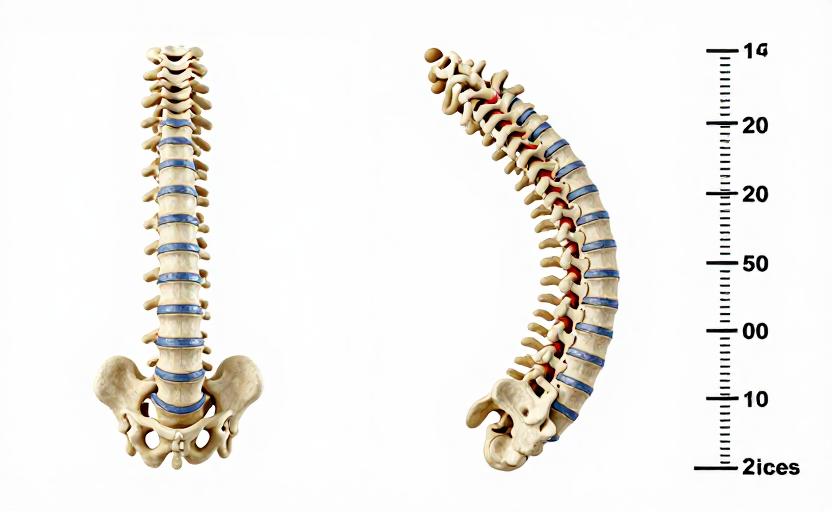
Osteoporosis often first shows up in the spine. The vertebrae are made largely of spongy, trabecular bone, which is especially vulnerable to estrogen withdrawal. When these small bones weaken, they can gradually compress or collapse — sometimes without any acute pain moment.
The result is a subtle but real loss of height. You might notice your clothes don't fit quite the same way, or that your head no longer reaches the same mark on the wall you used for measuring the kids. A loss of 1.5 inches or more from your tallest adult height is considered clinically significant and warrants a bone density scan (DXA).
You may also see a postural shift — what is sometimes called a dowager's hump or kyphosis. This forward curvature of the upper spine can develop as the front edges of the vertebrae collapse more than the back edges. If you notice your shoulders rolling forward or your chin jutting out to look straight ahead, that's a structural change worth investigating. It's not always fixable with posture exercises alone, because the underlying issue is bone strength, not just muscle habit.
2. A Fracture Happened After a Minor Fall or Impact
A broken bone after a major accident — a car crash, a fall from a ladder — tells you little about bone health. The threshold for concern is different. The classic fragility fracture occurs from a standing height or less. Think tripping on a curb, slipping on a wet floor, or stepping off a curb wrong. These events should not break a healthy adult bone.
The most common sites for a fragility fracture are the wrist, hip, and spine (vertebrae). A broken wrist from catching yourself during a stumble is often the first visible sign that bones are thinner than they should be.
If you are over 50 and break any bone from a low-impact event, current guidelines recommend a bone density test. Even if the fracture healed fine, the underlying weakness remains and needs assessment. A hip fracture in particular is a life-changing event for older adults, often reducing mobility and independence. Detecting bone loss before that first break gives you a real chance to intervene with lifestyle changes, nutrition, or medical therapy.
It is also worth noting that not all spinal fractures are felt as a sudden snap. Some happen gradually. Others cause sudden, severe back pain that fades over weeks. If you had a spell of unexplained back pain in the past that lasted several weeks and then resolved, it could have been a vertebral compression fracture. A DXA scan will clarify what is going on.
3. You Have Receding Gums or Loose Teeth
This sign is often overlooked, but your jawbone is bone, too. The same hormonal shifts that thin vertebrae and hip bones also affect the alveolar bone that holds your teeth in place. In some people, significant bone density loss shows up first in the mouth.
Receding gums are common with age and gum disease, but if your hygienist has noted bone loss on your dental X-rays, or if you have noticed that your teeth feel slightly loose or have shifted position, that can be an oral reflection of systemic bone loss. Periodontal disease itself is a risk factor for osteoporosis, and the two conditions share common inflammatory pathways.
Your dentist might be the first health professional to spot a sign of widespread bone thinning. If you are a woman in perimenopause or postmenopause and your dentist comments on jawbone density changes, consider bringing that information to your primary care provider or gynecologist. It is not a diagnosis of osteoporosis by itself, but it is a relevant clue.
What to Do If You Recognize Any of These Signs
Bone density loss is highly treatable, especially when caught early. The first step is simply making an appointment and asking for a DXA scan. This is a quick, painless, low-radiation X-ray that measures bone mineral density at the hip and spine. Results come back as a T-score. A score of -1.0 or above is normal. Between -1.0 and -2.5 is osteopenia (low bone mass). At -2.5 or below, the diagnosis is osteoporosis.
While you wait for an appointment, you can take two concrete steps that support bone health regardless of your T-score. First, ensure adequate calcium and vitamin D intake. Good sources of calcium include dairy, fortified plant milks, canned salmon with bones, and dark leafy greens. Vitamin D is harder to get from food alone; many adults benefit from a modest supplement, but check with your doctor on the right amount for you.
Second, consider weight-bearing exercise. This doesn't mean heavy weightlifting. Walking, stair climbing, dancing, and resistance training with light weights or bands all signal your bones to maintain or build density. Bones adapt to the loads you place on them — a principle known as Wolff's law. If you do nothing, they will continue to thin. If you challenge them appropriately, they respond.
For those already diagnosed with osteopenia or osteoporosis, a range of medications exist — bisphosphonates, selective estrogen receptor modulators (SERMs), hormone therapy, and newer agents like denosumab or teriparatide. Which one is appropriate depends on your age, fracture risk, kidney function, and personal preferences. That conversation belongs with your healthcare team.