
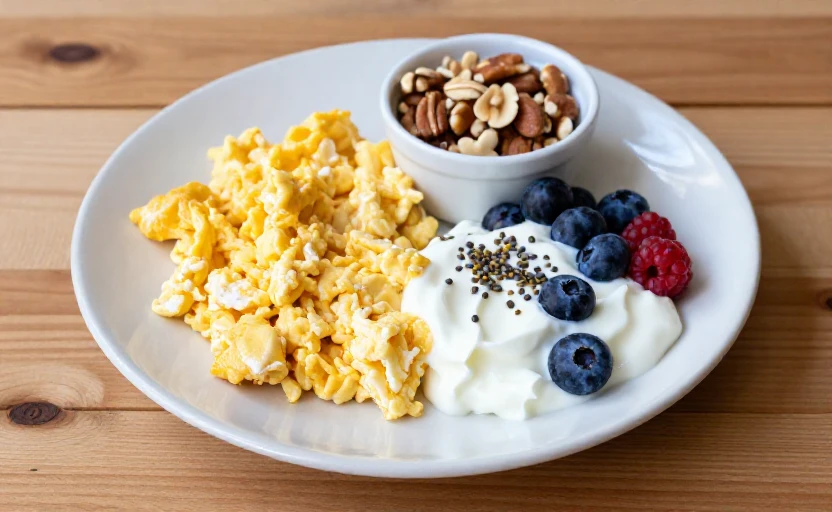
Starting your day with a blood sugar spike can feel like a rollercoaster you never bought a ticket for. You might experience that mid-morning crash, a sudden energy slump, or persistent cravings that make it hard to focus. The good news is that your breakfast plate holds significant power to set a calm, steady tone for the hours ahead. It’s less about restrictive eating and more about strategic pairing—choosing foods that work together to release energy gradually.
We spoke with dietitians to understand the principles behind a blood sugar-friendly morning meal, and they consistently highlighted three foundational food groups. Incorporating these can help you build a satisfying breakfast that supports sustained energy and overall well-being.
What makes a breakfast stabilizing?
Before we get to the specific foods, it helps to understand the simple framework dietitians use. The goal is to avoid a rapid surge of glucose into your bloodstream. To do that, you want to combine foods that provide fiber, protein, and healthy fats. These nutrients slow down the digestion and absorption of carbohydrates, leading to a gentler, more prolonged rise in blood sugar instead of a sharp peak and subsequent drop.
Think of your plate as a team. Carbohydrates provide the immediate energy, while protein, fat, and fiber are the players that manage the pace, ensuring everything is released steadily.
With that in mind, here are the three food categories experts recommend making a regular part of your morning routine.
1. Whole Eggs
Eggs are a classic for good reason. They’re a complete protein, meaning they contain all nine essential amino acids your body needs. Starting your day with a solid source of protein like eggs has a direct impact on satiety and blood sugar management.
“Protein takes longer to digest than simple carbohydrates,” explains a registered dietitian specializing in metabolic health. “When you eat eggs at breakfast, you’re giving your body a sustained source of fuel. This helps blunt the blood sugar response to any other carbohydrate-containing foods on your plate, like toast or fruit.”
Beyond the protein, the fat in the yolk also contributes to this slowing effect. Try pairing two eggs with a slice of whole-grain toast and some avocado for a balanced combination of protein, fat, and fiber.
Simple ways to include them:
- Scrambled with spinach and mushrooms.
- Poached on top of a bowl of beans and sautéed greens.
- Hard-boiled as a portable option alongside a piece of fruit.
2. Plain Greek Yogurt or Skyr
Dairy products like Greek yogurt and skyr are unique because they offer a powerful duo: protein and fat. A single serving of plain, full-fat Greek yogurt can contain up to 15-20 grams of protein. This high protein content is key for glycemic control.
The fermentation process may also offer benefits. Some research suggests that fermented dairy products could be associated with a lower risk of type 2 diabetes, though the mechanisms are still being studied. The primary focus for a stable morning, however, is their macronutrient profile.
It’s crucial to choose plain varieties. Flavored yogurts are often loaded with added sugars, which counteract the stabilizing benefits. You control the sweetness by adding your own whole foods.
Always opt for plain yogurt. The flavored versions can contain more sugar than some desserts, which sets you off on the wrong foot.
How to build a better bowl:
- Start with ¾ cup of plain, full-fat Greek yogurt.
- Add a modest serving of berries (fiber-rich carbohydrates).
- Top with a tablespoon of chia seeds or chopped nuts (for added fiber and healthy fats).
- A drizzle of pure vanilla extract or a light sprinkle of cinnamon can add flavor without spiking sugar.
3. Nuts and Seeds
While often thought of as a snack, nuts and seeds are a secret weapon for breakfast. They are dense sources of healthy fats, plant-based protein, and fiber—the trifecta for slowing digestion. Just a small sprinkle can significantly change the metabolic impact of your meal.
“Adding a handful of almonds or walnuts to your oatmeal, or stirring chia or flax seeds into your yogurt, isn’t just about crunch,” says a dietitian. “You’re adding unsaturated fats and fiber that actively help moderate the rate at which sugars enter your bloodstream from the other meal components.”
They’re also incredibly versatile and require no preparation. Keeping a mix of seeds like pumpkin, sunflower, and flax in your pantry makes it easy to enhance almost any breakfast instantly.
Easy additions:
- Stir a tablespoon of ground flaxseed or chia seeds into your morning smoothie or oatmeal (they’ll thicken it nicely).
- Swap nut butter for jam or butter on whole-grain toast.
- Keep a small jar of mixed nuts by your coffee maker for a quick grab-and-sprinkle.
Putting It All Together on Your Plate
The magic happens in combination. A breakfast centered solely on orange juice and a bagel, for instance, is mostly rapid carbohydrates. But by applying the principle of pairing, you can create a vastly different metabolic response.
Instead of just a bowl of oatmeal (carbohydrate), make it oats cooked with milk (protein/fat), topped with berries (fiber-rich carb) and almonds (fat/fiber).
Instead of just a banana (carbohydrate), have it with a generous scoop of peanut butter (fat/protein/fiber).
Instead of just toast (carbohydrate), top it with mashed avocado (fat/fiber) and an egg (protein).
This approach doesn’t require special foods or complicated recipes. It’s a simple mindset shift: look at your plate and ask if it contains at least two of the three stabilizing elements—protein, healthy fat, and fiber. If it’s leaning heavily on just one, see how you can add another.
A Note on Individual Needs
Nutrition is personal. Factors like your individual metabolism, activity level, and any underlying health conditions play a role in how your body responds to food. These three food groups are widely recognized as beneficial for blood sugar management, but they are a starting point for exploration, not a rigid prescription.
If you have specific concerns about your blood sugar or are managing a condition like diabetes or prediabetes, collaborating with a registered dietitian or your healthcare provider is the best path. They can help you tailor these general principles into a plan that fits your unique life, preferences, and health goals.
Building a stabilizing breakfast is one of the most tangible acts of care you can offer your body each day. By consistently choosing meals that release energy slowly, you’re supporting steady focus, balanced mood, and long-term metabolic health—all before your day really begins.