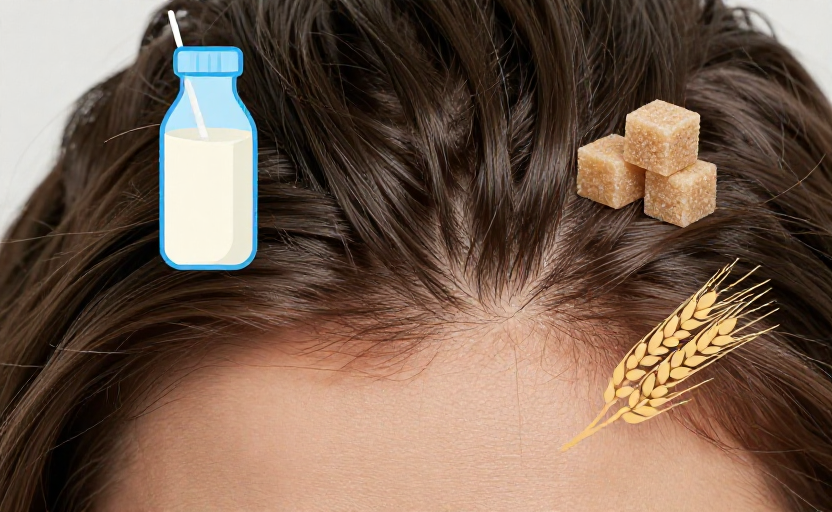
When your scalp feels tight, flaky, or irritated, it's natural to reach for a nourishing oil or a soothing hair mask. But what if the real trigger isn't what you're putting on your hair—but what you're putting on your plate? For some people, a dry, reactive scalp isn't just a surface issue; it can be a sign that certain foods are quietly causing inflammation, which can weaken hair at the root and lead to breakage. If you've been noticing more strands in your brush and a persistently dry scalp, it may be time to look at three common foods that could be the culprits.
How food can affect your scalp and hair strength
A dry scalp creates a poor environment for hair follicles. When the skin on your head lacks moisture and becomes inflamed, it can disrupt the hair growth cycle, making strands more fragile and prone to snapping. This is different from shedding hair from the root—breakage is about the hair shaft itself weakening. For many women, the reaction isn't an allergic response but a low-grade inflammatory one, often triggered by diet. Understanding the link between what you eat and how your scalp behaves is the first step to stopping the breakage cycle.
1. Dairy: A common trigger for scalp inflammation
Dairy products like milk, cheese, and yogurt are some of the most frequently reported food triggers for dry, irritated scalps. For people who are sensitive to lactose or certain proteins in cow's milk, the body can respond with a mild inflammatory reaction. On the scalp, this can show up as dryness, itchiness, or flaking. When the scalp is inflamed, hair follicles don't get the steady flow of nutrients they need, leading to weaker hair that breaks easily.
Reducing or eliminating dairy for a few weeks can help you see if your scalp calms down. If it does, that's a strong sign dairy was playing a role in the breakage. Plant-based alternatives like almond, oat, or coconut milk can be good substitutes to try during that period.
2. Sugar: The inflammation amplifier
High sugar intake is linked to a process called glycation, where sugar molecules bind to proteins in your body, including the keratin in your hair and the collagen in your scalp. This weakens the structural integrity of the hair shaft and decreases the skin's elasticity, making both your scalp and your strands more reactive and brittle. A dry scalp fueled by sugar-induced inflammation can become a cycle: the more you eat, the more irritated the scalp gets, and the more breakage you see.
Keep an eye on hidden sugars in your diet—sauces, dressings, flavored yogurts, and granola bars are common sources. Cutting back on added sugar for a couple of weeks can give your scalp a chance to reset and may lead to noticeably stronger hair.
3. Gluten: A possible sensitivity factor
Even if you don't have celiac disease, some people experience a non-celiac gluten sensitivity that manifests as skin issues, including a dry, scaly scalp. When the immune system reacts to gluten, it can trigger inflammation in the body, and the scalp is a common site for this to show up. This inflammation can weaken the hair follicles, and when combined with a dry, reactive scalp, hair becomes easy to snap off.
Wheat, barley, and rye are the primary sources of gluten. If you suspect gluten might be an issue, try a short elimination period (under the guidance of a healthcare provider) and track whether your scalp feels less tight or flaky. If symptoms improve, it's a good indicator that gluten was contributing to your hair breakage.
Additional factors to consider
While these three foods are common triggers, it's worth noting that everyone's body is different. A food that causes a reaction in one person may be perfectly fine for another. Beyond diet, other factors like stress, harsh hair products, and environmental dryness can also play a role. The key is to be a detective about your own symptoms: keep a simple journal of what you eat and how your scalp and hair feel.
If you're dealing with persistent scalp issues and hair breakage, it's always a good idea to consult with a dermatologist or a registered dietitian. They can help rule out other conditions like seborrheic dermatitis or scalp psoriasis, which may require different treatment approaches. Adjusting your diet can be a powerful tool, but it should be part of a broader plan for hair and scalp wellness.