When we think about protecting our skin, our minds often jump straight to serums, creams, and SPF. But what if one of the most powerful tools for a resilient, glowing complexion is already in your kitchen? The health of your skin barrier—the outermost protective layer that locks in moisture and keeps irritants out—is profoundly influenced by what you eat.
Dietitians emphasize that certain foods provide the specific building blocks your skin needs to repair and fortify itself from the inside out. Here are three foundational food groups that can help strengthen this vital shield.
Fatty Fish: The Omega-3 Powerhouse
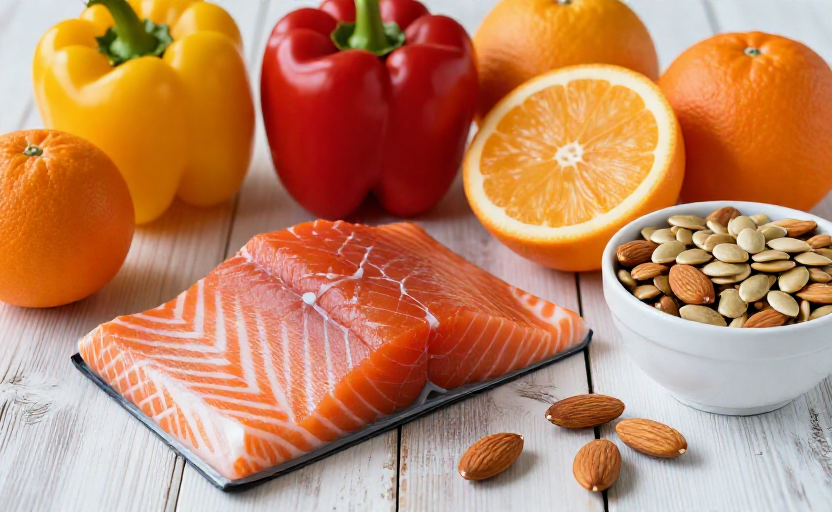
Your skin barrier is largely composed of lipids, or fats. To keep it supple and intact, you need to supply it with the right kinds. Enter fatty fish like salmon, mackerel, herring, and sardines. These are rich in omega-3 fatty acids, specifically EPA and DHA, which are incorporated into your skin cells.
“Omega-3s are anti-inflammatory and help form the skin’s natural oil barrier,” explains a registered dietitian. “This is crucial for hydration. If your skin is dehydrated, it can become more susceptible to damage and sensitivity.” By reducing inflammation and supporting the skin’s lipid matrix, a regular intake of fatty fish can help calm redness, improve moisture retention, and make your barrier more robust against environmental stressors.
Aim to include a serving of fatty fish in your meals at least twice a week for a consistent supply of barrier-supporting fats.
Colorful Bell Peppers & Citrus: The Vitamin C Connection
While often celebrated for immunity, vitamin C plays a starring role in skin barrier health as a cofactor for collagen synthesis. Collagen provides structural support to the skin, but vitamin C’s job doesn’t stop there. It’s also a potent antioxidant that helps protect the barrier from free radical damage caused by UV exposure and pollution.
“Think of antioxidants as your skin’s defense team,” says a nutritionist specializing in dermatology. “Vitamin C helps neutralize the daily assaults that can weaken your skin’s structure over time.” Bell peppers—particularly the red and yellow varieties—are surprisingly one of the richest food sources. A single cup of chopped red bell pepper provides over 150% of the daily value. Citrus fruits, kiwi, broccoli, and strawberries are also excellent choices.
Since vitamin C is water-soluble and not stored in the body, including these foods daily helps maintain the steady supply your skin needs for continuous repair and protection.
Nuts, Seeds, and Leafy Greens: The Vitamin E & Zinc Duo
For a skin barrier to function optimally, it needs to both defend itself and efficiently repair minor, daily breaches. This is where the combination of vitamin E and zinc, found abundantly in almonds, sunflower seeds, spinach, and pumpkin seeds, becomes essential.
Vitamin E is a fat-soluble antioxidant that works synergistically with vitamin C. It resides in the lipid-rich parts of your skin cells, safeguarding the delicate barrier fats from oxidative damage. Zinc, a mineral, is critical for skin cell production, turnover, and healing. “Zinc supports the entire wound-healing process,” notes a dietitian. “A deficiency can lead to a delayed recovery of the skin barrier after it’s compromised.”
A handful of almonds or sunflower seeds makes for a perfect skin-supporting snack, while adding spinach to a smoothie or salad and sprinkling pumpkin seeds on soup or yogurt are easy ways to weave these nutrients into your day.
Ultimately, nourishing your skin barrier is a holistic endeavor. Topical skincare creates an external defense, but the internal nourishment from foods rich in omega-3s, vitamins C and E, and zinc provides the fundamental materials for a strong, resilient foundation. It’s a reminder that the path to healthy skin is as much about what you put on your plate as what you put on your face.