
Starting a strength-training routine is exciting, but it also introduces new stress on your joints. As a beginner, it can be difficult to tell the difference between the normal muscle soreness that signals growth and the subtle warning signs of joint strain. Ignoring the latter can turn a minor issue into a chronic injury that sidelines you for weeks.
While your muscles may feel sore after a good workout, your joints should not. The two key symptoms below are your body's early alerts. Paying attention to them now can help you train smarter and stay on track.
1. A Persistent, Dull Ache Deep in the Joint That Does Not Go Away
Unlike the generalized muscle soreness you feel across a whole muscle group, joint strain often presents as a localized, dull ache that feels like it is coming from inside the joint. Common spots include the shoulders, elbows, knees, or wrists. This ache may be mild at the start of your workout but can linger for days or even weeks, even when you are resting.
What makes this symptom tricky: Beginners often dismiss it as "getting used to lifting." However, a joint that remains tender to the touch, feels stiff after sitting for a while, or hurts when you press directly on the joint line is a red flag. This type of discomfort suggests inflammation within the joint capsule or irritation of the surrounding ligaments and tendons.
Quick check: If you can touch the spot of pain and it feels warm or slightly swollen compared to the other side of your body, consider that a sign to stop and assess your form.
2. Sharp, Stabbing Pain During a Specific Movement
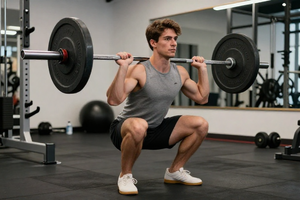
While muscle soreness feels like a general ache, joint strain can produce a sudden, sharp, or pinching sensation during a particular motion. For example, you might feel a sharp jab in your shoulder when lowering the bar during a bench press, or a stabbing pain in your knee when standing up from a squat.
This is distinctly different from the burning sensation of a working muscle. A sharp or stabbing pain is the joint sending an emergency signal, indicating that a structure (such as a ligament, bursa, or tendon) is being compressed, impinged, or overstretched. Continuing to lift through this type of pain often makes the movement more difficult and can lead to a tear or sprain.
- What to do: Stop that specific exercise immediately. Attempt the movement with light or no weight. If the sharp pain persists, do not try to "push through it"—this is not a strength issue, but a mechanical one.
- A helpful analogy: If you closed a car door on your finger, the smart play is to open the door, not to try and close it harder. The same logic applies here: do not force a joint through a painful range of motion.
How to Tell the Difference: Muscle Soreness vs. Joint Strain
Learning to differentiate between the two is a foundational skill for injury prevention.
- Muscle soreness (DOMS) usually begins 12–24 hours after a workout, is felt over the belly of the muscle, is symmetrical (both arms or legs may feel equally sore), and often feels better once you warm up and move around.
- Joint strain is often felt during the workout, is localized to one specific joint, feels deeper or sharper, and may get worse as you continue moving.
If you wake up the day after a heavy deadlift session and your lower back muscles feel sore but your hips feel loose and pain-free, that is normal muscle soreness. If you wake up with a nagging ache in your hip joint that makes it hard to roll over in bed, treat that with caution.
Practical Tips for Beginners to Protect Joints
Preventing joint strain starts with smart training habits, not just avoiding heavy weight.
- Master the setup before adding load. Most joint issues in beginners stem from poor position, not weak muscles. A neutral spine and stable shoulder blades set the stage for safe lifting.
- Control the eccentric phase. Lowering the weight in a controlled manner (2–3 seconds) reduces stress on passive structures like ligaments and allows your muscles to absorb the forces.
- Respect your range of motion. You do not need to go to the absolute end of your joint's range to build muscle. Stopping slightly short of where your joint feels compressed or pinched is a smart strategy for longevity.
- Listen to warming-up discomfort. If a joint feels stiff or painful during your warm-up sets, give it more time with light, dynamic movements before loading it with heavy weight.
When to Seek Professional Help
If either of these symptoms lasts for more than a few days despite rest, or if you notice swelling, redness, or a loss of range of motion, it is wise to check in with a physical therapist or sports medicine professional. Early intervention for joint issues is almost always simpler and faster than waiting until the pain forces you to stop completely.