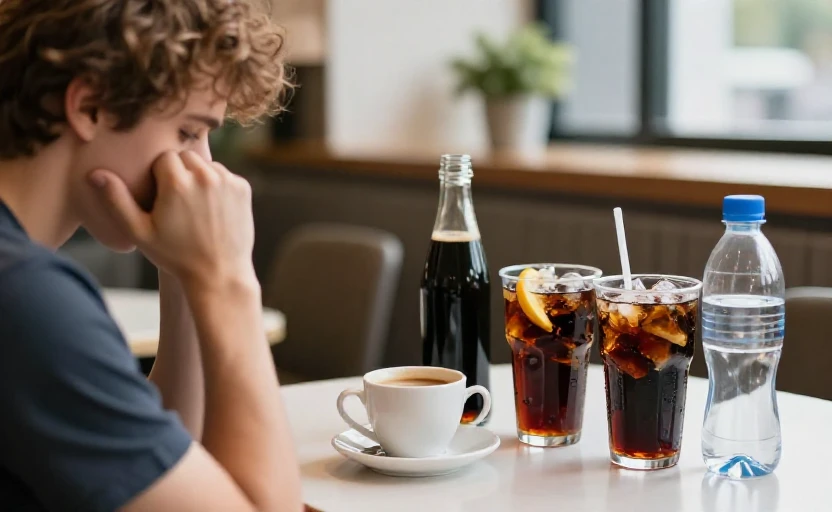
You’re careful about what you eat, maybe you meditate, and you try to get enough sleep. Yet, a low hum of anxiety seems to have become a constant companion. Before you look for bigger, more complex reasons, it might be worth glancing at what’s in your glass. The beverages we choose throughout the day aren’t just about hydration or taste; they’re active participants in our body’s chemistry, often in ways that quietly undermine our sense of calm.
Anxiety isn't always a dramatic event. Sometimes, it's a background feeling—a restlessness you can't place, a slight edge to your thoughts, or a physical tension that seems to have no direct cause. These subtle shifts can be clues, pointing to everyday habits, including drink choices, that are tipping your nervous system out of balance.
What’s the connection between drinks and anxiety?
Every sip sends a message. Drinks deliver compounds that directly interact with your brain and nervous system. Some stimulate the release of stress hormones like cortisol and adrenaline. Others can dehydrate you, thicken your blood slightly, and make your heart work harder, which your body can interpret as a stress signal. Some even interfere with the production or function of GABA, a key neurotransmitter that helps quiet neural activity and promote relaxation.
It’s a biochemical conversation happening in real-time. The goal isn’t to live on water alone, but to become aware of the dialogue so you can make choices that support, rather than sabotage, your peace of mind.
The first subtle sign: Your energy is a rollercoaster
You reach for a drink for a lift, and you get one. But a few hours later, you’re searching for your keys with a frantic energy, your thoughts are scattered, and a vague irritability has settled in. This crash isn’t just about being tired; it’s a physiological drop that can feel remarkably like anxiety.
The usual suspect here is caffeine, but it’s not the only one. High-sugar beverages cause a similar spike and plummet in blood glucose. When your blood sugar crashes, your body releases cortisol and adrenaline to mobilize more energy, mimicking the “fight-or-flight” response. This can manifest as nervousness, shakiness, and a racing heart—symptoms easily confused with an anxiety attack.
If your pick-me-up habit is consistently followed by a crash in mood and focus, your drinks might be creating the very tension you’re trying to avoid.
Watch for this pattern: Do you feel a surge of alertness after your morning coffee or afternoon soda, only to experience a dip in mood, increased worry, or physical jitters a few hours later? That’s your first clue that your beverage routine might be fueling a cycle of anxious energy.
The second subtle sign: Your sleep is restless or you’re wired but tired
You feel exhausted by evening, but the moment your head hits the pillow, your mind kicks into gear. Or perhaps you fall asleep but wake up multiple times, your sleep feeling shallow and unrefreshing. Poor sleep is both a cause and a consequence of anxiety, and your daytime drinks can be a major, yet overlooked, disruptor.
Caffeine has a half-life of about 5-6 hours. That means if you have a coffee at 3 p.m., half the caffeine is still in your system at 8 or 9 p.m., potentially interfering with your ability to fall asleep and the quality of deep, restorative sleep stages. Even if you do sleep, you might wake up feeling like you barely did.
Alcohol is another common culprit. While it might help you fall asleep initially, it severely disrupts the second half of your sleep cycle, reducing crucial REM sleep. The result is a night of fragmented sleep that leaves you more vulnerable to stress and anxiety the next day. Dehydration from alcoholic or sugary drinks can also cause nighttime awakenings.
What to try instead
Be mindful of timing. Consider a caffeine cut-off time in the early afternoon. For evening relaxation, swap out alcohol or sugary drinks for calming herbal teas like chamomile, lemon balm, or passionflower, which are traditionally used to support relaxation. Simply ensuring you’re well-hydrated with water throughout the day can also improve sleep depth.
Making more supportive choices
Awareness is the first step. You don’t need to eliminate anything entirely unless you find it’s a direct trigger for you. The goal is mindful moderation and strategic swaps.
- Audit your intake: For a few days, simply note what you drink and when. Notice how you feel an hour or two later—not just physically, but mentally and emotionally.
- Hydrate first: Often, feelings of low energy or foggy anxiety are simply dehydration. Try drinking a full glass of water before reaching for a caffeinated or sugary beverage.
- Dilute and slow down: If you enjoy coffee or tea, try having one less cup, or make your second cup half-caffeinated. Sip sugary drinks slowly, or dilute juice with sparkling water.
- Explore herbal allies: The world of caffeine-free herbal teas offers many options that can actively support calm, from peppermint (soothing for digestion and nerves) to tulsi (an adaptogen known for helping the body manage stress).
Your relationship with what you drink is just that—a relationship. By paying attention to the subtle signals your body is sending, you can adjust that relationship to be one that fosters steadier energy and a quieter mind. The path to less anxiety might just begin with your next sip.